


The Sukhumi massacre, a brutal and devastating assault on ethnic Georgian civilians, will forever be etched in the collective memory of Abkhazia as a horrific atrocity. This tragic event, which took place during the 1992-1993 Georgian-Abkhazian War, saw the separatist Abkhaz forces, backed by Russian military might, unleash a wave of violence on the civilian population, leaving scores dead, injured, or forced to flee for their lives.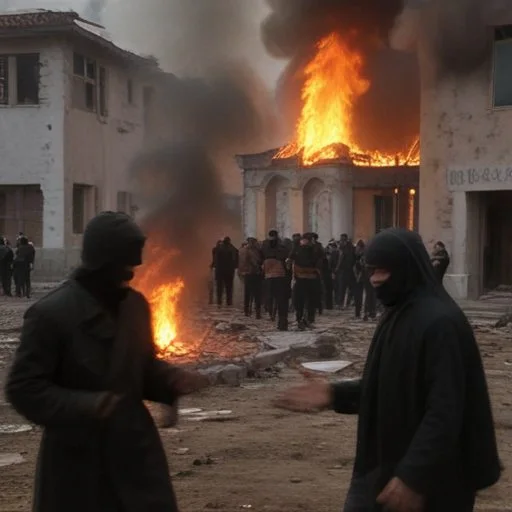
In the aftermath of the Soviet Union's collapse, ethnic tensions between Georgians and Abkhazians in the region began to simmer. The Abkhaz people, who had long felt marginalized and oppressed by the Georgian government, saw an opportunity to assert their independence. As the Georgian government struggled to maintain control over its territory, the Abkhaz separatists, backed by Russia, began to mobilize and arm themselves.
On September 27, 1993, Abkhaz forces, backed by Russian military units, launched a surprise attack on Sukhumi, the capital city of Abkhazia. The assault, which lasted for several days, saw widespread violence, looting, and destruction of property. Ethnic Georgian civilians were specifically targeted, with many being killed, injured, or forced to flee their homes.
The Sukhumi massacre marked a turning point in the Georgian-Abkhazian War, leading to a significant escalation of violence and a humanitarian crisis in the region. The event resulted in the displacement of over 200,000 ethnic Georgians, with many forced to flee to neighboring countries or internally displaced within Georgia. The massacre also led to international condemnation, with many countries and organizations calling for an immediate ceasefire and humanitarian aid to the affected populations.
The Sukhumi massacre had a profound impact on the cultural and social fabric of Abkhazia. The event marked a deepening of ethnic divisions between Georgians and Abkhazians, leading to a polarization of identities and a sense of mistrust that persists to this day. The massacre also led to a cultural revival among the Abkhaz people, with many artists, writers, and intellectuals drawing inspiration from the event to express their sense of national identity and struggle for independence.
The Sukhumi massacre remains a deeply controversial and contentious issue, with many disputed accounts of the events and conflicting narratives about the role of various actors involved. While the Abkhaz separatists and their Russian backers were widely condemned for the massacre, many Georgians and international organizations also criticized the Georgian government for its handling of the crisis. The event has also sparked debates about the role of international organizations, such as the United Nations, in preventing and responding to humanitarian crises.
As we reflect on the Sukhumi massacre, we are reminded of the devastating consequences of ethnic violence and the importance of promoting dialogue, understanding, and reconciliation in the face of conflict. This dark chapter in Abkhazia's history serves as a painful reminder of the need for nations and communities to work towards peace, justice, and human rights for all.
The Sukhumi massacre was not an isolated incident, but rather a culmination of centuries-long ethnic tensions between Georgians and Abkhazians. The Abkhaz people had long felt marginalized and oppressed by the Georgian government, dating back to the Russian Empire's annexation of Abkhazia in the 19th century.
In the early 20th century, Abkhazia was briefly independent, but was soon incorporated into Soviet Georgia. As the Soviet Union began to dissolve, Abkhaz nationalists saw an opportunity to assert their independence and self-determination.
The Georgian government, however, was wary of Abkhazia's separatist ambitions, fearing that it would lead to the disintegration of the newly independent Georgia. This led to a series of clashes and skirmishes between Georgian and Abkhaz forces, eventually escalating into full-scale war.

Vladislav Ardzinba's Rise to Power
Vladislav Ardzinba, the leader of the Abkhaz separatist movement, was born in 1945 in the village of Eshera, Abkhazia. A trained historian and philosopher, Ardzinba became involved in Abkhaz nationalist politics in the 1980s.
As the Soviet Union began to dissolve, Ardzinba saw an opportunity to assert Abkhazia's independence. He was elected as the Chairman of the Abkhaz Supreme Soviet in 1990 and soon became the de facto leader of the Abkhaz separatist movement.
Ardzinba's charismatic leadership and nationalist rhetoric resonated with many Abkhazians, who saw him as a champion of their rights and freedoms.
The Sukhumi massacre is often compared to other ethnic conflicts in the Caucasus region, such as the Nagorno-Karabakh conflict between Armenia and Azerbaijan. While the conflicts share some similarities, such as the role of external powers and the displacement of civilians, they also have distinct differences.
Unlike the Nagorno-Karabakh conflict, the Sukhumi massacre was characterized by a higher level of brutality and violence, with reports of atrocities committed by both sides.
Furthermore, the Sukhumi massacre was marked by a more overt role of external powers, particularly Russia, which provided significant military and political support to the Abkhaz separatists.

The Sukhumi massacre had a profound impact on the cultural and artistic landscape of Abkhazia. Many Abkhaz artists, writers, and intellectuals drew inspiration from the event, using it as a symbol of national resistance and struggle for independence.
In the aftermath of the massacre, Abkhaz literature and art experienced a surge in creativity, with many works exploring themes of identity, nationhood, and trauma.
The massacre also led to the emergence of a new generation of Abkhaz intellectuals, who sought to redefine Abkhaz identity and culture in the face of Georgian and Russian influences.
The Sukhumi massacre took place in a complex geopolitical context, with multiple actors vying for influence in the Caucasus region. The Russian government, seeking to maintain its influence in the region, provided significant support to the Abkhaz separatists.
The Georgian government, meanwhile, was struggling to establish its authority in the face of separatist movements in Abkhazia and South Ossetia.
The international community, led by the United Nations, condemned the massacre and called for a ceasefire, but was ultimately unable to prevent the escalation of violence.