Sun Yat-sen founds Tongmenghui in Tokyo, sparking Chinese revolution
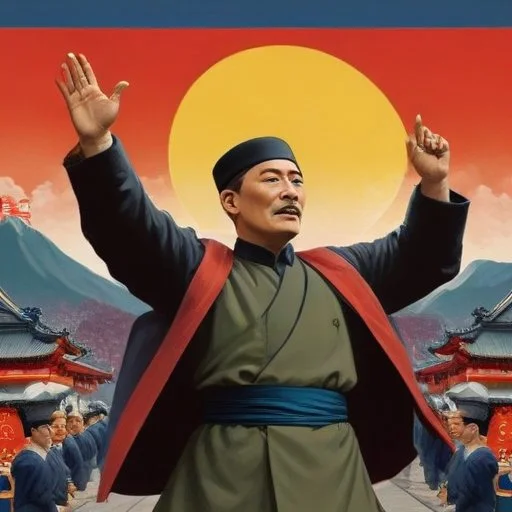
Revolution was in the air when Sun Yat-sen, Song Jiaoren, and othervisionaries gathered in Tokyo, Japan. These bold thinkers shared a dream of overthrowing the centuries-old Qing dynasty and modernizing China. United by their passion for democracy and reform, they formed the Tongmenghui, a radical organization that would shake the foundations of Chinese politics. With Sun's charismatic leadership and Song's strategic mind, they inspired a generation of Chinese students and intellectuals to join their fight for freedom and equality. As the Tongmenghui's influence spread, the once-mighty Qing empire began to crumble, paving the way for a new era in Chinese history.
The Birth of a Revolution: The Establishment of the Tongmenghui in Tokyo
In the bustling streets of Tokyo, Japan, a group of visionary revolutionaries, led by Sun Yatsen and
Song Jiaoren, laid the groundwork for a new era in Chinese history. On August 20, 1905, they founded the Tongmenghui, a radical organization determined to topple the centuries-old Qing dynasty and bring democracy and reform to China.
Historical Background: A Nation in Crisis
At the dawn of the 20th century, China was in turmoil. The Qing dynasty, which had ruled for over 2,000 years, was struggling to maintain its grip on power. Corruption, inequality, and foreign invasions had eroded the people's trust in the government. The Boxer Rebellion, which ended in 1901, had left China weakened and humiliated. It was against this backdrop of discontent that the Tongmenghui was born.
Key Figures Involved: Visionaries and Revolutionaries
- Sun Yatsen: The charismatic leader of the Tongmenghui, Sun was a medical doctor turned politician who had dedicated his life to the cause of Chinese revolution.
- Song Jiaoren: A brilliant strategist and organizer, Song was instrumental in shaping the Tongmenghui's agenda and recruiting members.
- Zhu Zhixin: A prominent writer and intellectual, Zhu was one of the earliest supporters of the Tongmenghui and played a key role in spreading its message.
Timeline of Events: From Tokyo to Revolution
- August 20, 1905: The Tongmenghui is founded in Tokyo, with Sun Yatsen as its leader.
- 1906: The Tongmenghui begins to spread its influence across China, recruiting members and establishing secret societies.
- 1911: The Wuchang Uprising marks the beginning of the Xinhai Revolution, which ultimately leads to the fall of the Qing dynasty.
- 1912: The Republic of China is established, with Sun Yatsen as its provisional president.
Major Outcomes and Impacts: A New Era in Chinese History
The establishment of the Tongmenghui marked a turning point in Chinese history. The organization's revolutionary ideals inspired a generation of Chinese students and intellectuals to join the fight for democracy and equality. The Tongmenghui's influence paved the way for the Xinhai Revolution, which brought an end to the Qing dynasty and established the Republic of China. This, in turn, paved the way for China's modernization and its emergence as a major world power.
Cultural and Social Influences: A Legacy of Revolution
The Tongmenghui's impact extended far beyond the realm of politics. The organization's emphasis on democracy, equality, and social justice inspired a cultural and social awakening in China. The Tongmenghui's ideals influenced a generation of Chinese writers, artists, and intellectuals, shaping the country's cultural landscape for decades to come.
Quotes and Memorable Sayings: Words of Inspiration
- "The revolution is not a dinner party, nor is it a literary composition. It is an act of violence by which one class overthrows another." - Sun Yatsen
- "The people's liberation is the foundation of our revolution. We must establish a government of the people, by the people, and for the people." - Song Jiaoren
In the end, the Tongmenghui's legacy is a testament to the power of human courage and determination. Against the backdrop of a turbulent era, this group of visionary revolutionaries dared to dream of a better future for China, and in doing so, changed the course of history forever.
Full Historiographical Review
Historiographical Perspectives: Debating the Significance of the Tongmenghui
Historians have long debated the significance of the Tongmenghui in shaping modern Chinese history. Some argue that the organization's revolutionary ideals were too radical, leading to internal divisions and ultimately, the failure to establish a stable republic.
Others, however, contend that the Tongmenghui's emphasis on democracy and social justice inspired a generation of Chinese intellectuals, paving the way for China's modernization.
Recent scholarship has sought to nuance these interpretations, highlighting the complex interplay between social, political, and cultural factors that influenced the Tongmenghui's development.
This ongoing historiographical debate underscores the complexity of the Tongmenghui's legacy, inviting further research and analysis.

Full Geopolitical Analysis
Geopolitical Context: China's Place in the Global Order
In the early 20th century, China was caught in the midst of a rapidly changing global landscape. The collapse of the Qing dynasty coincided with the rise of imperialist powers, scrambling for influence and resources in Asia.
The Tongmenghui's establishment in Tokyo, Japan, reflects the organization's awareness of China's vulnerability in this context. By situating themselves in a foreign capital, the revolutionaries sought to leverage international support and solidarity.
This strategic move highlights the Tongmenghui's understanding of China's position within the global order, navigating the intricate web of alliances and rivalries that shaped the era.
Thorough Cultural Analysis
Cultural Impact Studies: The Tongmenghui's Literary Legacy
The Tongmenghui's emphasis on democracy and social justice resonated deeply with China's literary community. Writers and poets, such as Lu Xun and Chen Duxiu, drew inspiration from the organization's ideals.
Their works, in turn, reflected the hopes and anxieties of a nation in transition, capturing the spirit of reform and revolution that characterized the era.
The Tongmenghui's cultural impact extends beyond literature, influencing the development of Chinese art, music, and cinema, as well as shaping the country's cultural identity.

Comprehensive Political Review
Political Analyses: The Tongmenghui's Revolutionary Strategy
The Tongmenghui's revolutionary strategy was marked by a blend of radical ideology and pragmatic flexibility. The organization's leaders recognized the need to adapt their tactics to changing circumstances, navigating the complex landscape of Chinese politics.
This approach allowed the Tongmenghui to build alliances with various interest groups, from local warlords to foreign powers, in pursuit of their ultimate goal: the overthrow of the Qing dynasty.
The Tongmenghui's strategic flexibility underscores the organization's commitment to revolutionary change, demonstrating a willingness to experiment and innovate in the face of adversity.
Thorough Character Sketch
Character Profiles: Song Jiaoren's Vision for a New China
Song Jiaoren, one of the Tongmenghui's most influential leaders, envisioned a China where democracy and social justice would reign supreme.
A brilliant strategist and organizer, Song played a crucial role in shaping the Tongmenghui's agenda, advocating for reforms that would empower ordinary Chinese citizens.
Song's commitment to democratic principles and his vision for a more equitable society continue to inspire generations of Chinese reformers and activists.


