


The Sydney Opera House, one of the most iconic buildings of the 20th century, was officially opened by Queen Elizabeth II on October 20, 1973, marking the culmination of a 14-year construction journey. This majestic edifice, with its striking white sails and picturesque harbor setting, has since become an emblem of Australia and a beacon of cultural excellence.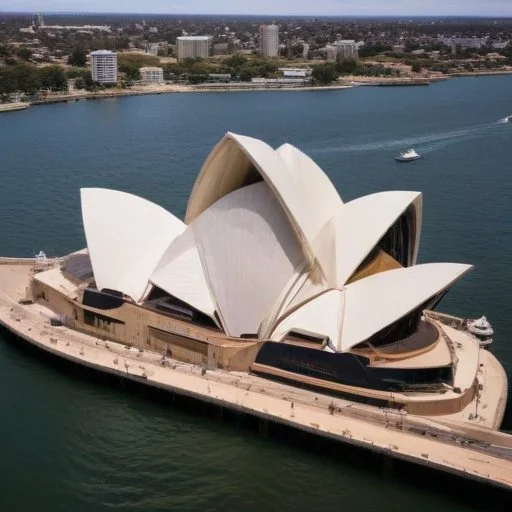
In the late 1940s, the New South Wales Government recognized the need for a dedicated performing arts center in Sydney. After a series of delays and setbacks, an international design competition was held in 1956, attracting 233 entries from 32 countries. The winning design, submitted by Danish architect Jørn Utzon, was chosen for its bold and innovative approach.
Jørn Utzon, a Danish architect, is credited with designing the Sydney Opera House. Utzon's vision was to create a building that would not only serve as a functional performing arts center but also become an iconic symbol of Australia. His design was influenced by the sails of yachts and the shapes of nature, resulting in a structure that is both aesthetically pleasing and structurally innovative.
The Sydney Opera House's opening ceremony, attended by Queen Elizabeth II, marked a new era in Australian cultural history. The building's striking design, combined with its picturesque harbor setting, made it an instant icon of Australia and a symbol of cultural excellence.
The Sydney Opera House has had a profound impact on the cultural and economic landscape of Australia. It has:
The Sydney Opera House has inspired countless artists, architects, and designers around the world. Its unique design has influenced the development of modern architecture, and its cultural significance has transcended national boundaries.
For Jørn Utzon, the Sydney Opera House was a labor of love, driven by his passion for innovation and creativity. His vision has inspired generations of architects, designers, and artists, reminding us that even the most ambitious dreams can become a reality with perseverance and dedication.
The Sydney Opera House continues to thrive, hosting over 2,000 performances each year and attracting millions of visitors. As a symbol of Australian cultural excellence, it remains an iconic landmark, inspiring generations to come.
The Sydney Opera House has had a profound impact on Australian culture, contributing to the country's sense of identity and national pride. It has become an iconic symbol of Australia, featuring on everything from postcards to passports. The building's design and construction have inspired a new generation of architects, engineers, and artists, showcasing the country's creative and innovative spirit.
Moreover, the Sydney Opera House has played a significant role in promoting cultural diversity and exchange. It has hosted performances by artists from around the world, introducing Australians to new and diverse forms of music, dance, and theater. This has helped to break down cultural barriers and foster greater understanding and appreciation between different communities.
In addition, the Sydney Opera House has been a catalyst for urban renewal and regeneration in Sydney. Its construction led to the redevelopment of the surrounding area, transforming a formerly industrial zone into a vibrant cultural and tourist hub. This has had a positive impact on the local economy, generating new jobs, businesses, and opportunities for growth.
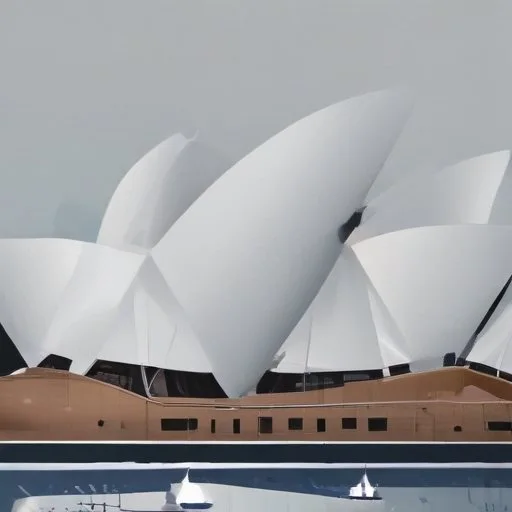
Jørn Utzon's early life and experiences played a significant role in shaping his design philosophy and approach to architecture. Born in Denmark in 1918, Utzon grew up in a family of sailors and shipbuilders, which instilled in him a love of the sea and a fascination with the shapes and forms of ships and yachts.
Utzon's passion for sailing and the ocean is reflected in the design of the Sydney Opera House, which was inspired by the billowing sails of yachts and the shapes of the natural world. His design philosophy was centered around the idea of creating buildings that were not only functional but also beautiful and emotionally resonant.
Utzon's unique approach to architecture earned him international recognition and acclaim. He was awarded numerous honors and accolades, including the Pritzker Architecture Prize, and was hailed as one of the most innovative and influential architects of the 20th century.
The construction of the Sydney Opera House was marked by numerous delays, setbacks, and controversies. The project was initially estimated to take four years to complete, but it ultimately took 14 years to finish, with costs ballooning from £3.5 million to £14.5 million.
One of the main reasons for the delay was the complexity of the building's design, which required the development of new engineering techniques and technologies. The opera house's distinctive roof structure, comprising over 2,000 pre-cast concrete sections, was particularly challenging to construct.
Despite the challenges, the construction of the Sydney Opera House was a testament to the ingenuity and determination of the engineers, architects, and workers involved. Their hard work and perseverance paid off, resulting in a building that has become an iconic symbol of Australia and a masterpiece of modern architecture.

The Sydney Opera House has been compared to other iconic buildings around the world, including the Eiffel Tower in Paris and the Guggenheim Museum in Bilbao. While these buildings share some similarities with the opera house in terms of their innovative design and cultural significance, they also have some notable differences.
Unlike the Eiffel Tower, which was designed primarily as a structural marvel, the Sydney Opera House was designed as a functional performing arts center. This required Utzon to balance aesthetic considerations with practical requirements, such as acoustics, functionality, and accessibility.
In contrast to the Guggenheim Museum, which was designed as a self-contained work of art, the Sydney Opera House was designed as a part of its surroundings, blending seamlessly into the natural beauty of the harbor. This highlights the opera house's unique relationship with its environment and its role as a cultural icon in the heart of Sydney.
The Sydney Opera House was a technological marvel in its time, featuring cutting-edge engineering and design innovations. The building's roof structure, comprising over 2,000 pre-cast concrete sections, was a major technological achievement, requiring the development of new manufacturing techniques and materials.
The opera house's construction also involved the use of advanced computer simulations and modeling techniques, which were relatively new at the time. These innovations enabled architects and engineers to test and refine their designs, reducing errors and improving the building's performance.
Today, the Sydney Opera House continues to push the boundaries of technology, with ongoing upgrades and renovations incorporating the latest advancements in areas such as sustainability, accessibility, and digital infrastructure.