


The Tbilisi Massacre, a pivotal event in Georgia's struggle for independence, will forever be etched in the minds of those who witnessed the brutal display of force on April 9, 1989. On that fateful day, the Soviet Army's assault on a peaceful demonstration and hunger strike left 20 innocent lives lost and hundreds injured, sending shockwaves throughout the nation and beyond.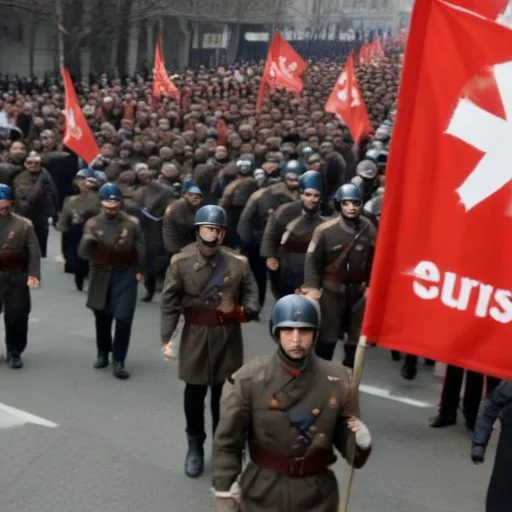
In the weeks leading up to the massacre, Tbilisi's streets had become a hotbed of resistance against Soviet rule. Intellectuals, students, and workers, united in their desire for national sovereignty, had been protesting peacefully, calling for the restoration of Georgia's independence. The demonstrations, which began on April 4, 1989, were a culmination of years of pent-up frustration and discontent with the Soviet government's oppressive policies.
As the protesters, many of whom were women and children, gathered in the city center, Soviet troops, armed with batons, tear gas, and live ammunition, moved in to disperse the crowd. The scene that unfolded was one of utter chaos and brutality. Witnesses described seeing soldiers beating protesters mercilessly, while others were trampled beneath the feet of advancing troops. The sound of gunfire and screams filled the air as panic set in.
In the immediate aftermath of the massacre, the Soviet government attempted to downplay the severity of the incident, claiming that only a few protesters had been injured. However, as news of the brutality spread, outrage and condemnation poured in from around the world. The international community was shocked by the Soviet Union's callous disregard for human life and its blatant disregard for the principles of democracy and human rights.
The Tbilisi Massacre marked a watershed moment in Georgia's struggle for independence. The event galvanized the nation, sparking widespread protests and demonstrations that would eventually lead to the country's independence from Soviet rule in 1991. The sacrifice of those who lost their lives on that fateful Sunday would not be in vain, as their bravery and determination paved the way for a new era of freedom and self-determination for the Georgian people.
Today, the Tbilisi Massacre is remembered as a poignant reminder of the importance of standing up against oppression and fighting for one's rights. The event has become an integral part of Georgia's national identity, with April 9th designated as a national day of mourning. The massacre also serves as a powerful symbol of the struggle for human rights and democracy, inspiring generations to come.
The Tbilisi Massacre has had a profound impact on Georgian culture and society. The event has inspired numerous works of literature, art, and music, and has become an integral part of the nation's collective memory. The massacre has also strengthened the bonds between Georgians, fostering a sense of national unity and solidarity.
The roots of the Tbilisi Massacre can be traced back to the 1920s, when Georgia was forcibly annexed by the Soviet Union. The country's rich cultural heritage and national identity were suppressed, and the Georgian language was relegated to secondary status. As the Soviet grip on the country tightened, a sense of resentment and frustration grew among the Georgian people.
In the 1980s, Mikhail Gorbachev's reform policies of glasnost and perestroika created an atmosphere of relative freedom, which emboldened nationalistic movements in the Soviet republics. Georgia was no exception, and a new generation of intellectuals and activists began to demand greater autonomy and eventually independence.
The Tbilisi Massacre was a culmination of these simmering tensions, and it marked a turning point in Georgia's struggle for independence. The event galvanized the nation, and the sacrifice of those who lost their lives on that fateful Sunday paved the way for a new era of freedom and self-determination for the Georgian people.

Zviad Gamsakhurdia, a charismatic Georgian nationalist and democrat, was one of the key figures involved in organizing the protests that led to the Tbilisi Massacre. Born in 1939, Gamsakhurdia was a brilliant writer and philosopher who was deeply committed to the cause of Georgian independence.
Gamsakhurdia's leadership played a significant role in mobilizing the masses, and his impassioned speeches and writings helped to inspire a generation of Georgians to demand freedom and democracy. Despite facing intense persecution and harassment, Gamsakhurdia remained steadfast in his commitment to the cause, and his bravery and determination paved the way for Georgia's eventual independence.
The Tbilisi Massacre bears eerie parallels to other violent crackdowns on democratic movements in Soviet history, such as the Tiananmen Square protests in China and the suppression of the Prague Spring in Czechoslovakia.
Like these events, the Tbilisi Massacre was a brutal display of force by an authoritarian regime determined to crush dissent and maintain its grip on power. The use of disproportionate force, the targeting of peaceful protesters, and the subsequent cover-up are all hallmarks of a regime that was willing to do whatever it took to maintain its control.
Despite these similarities, the Tbilisi Massacre stands out for its significance in the context of Georgia's struggle for independence. The event marked a watershed moment in the country's history, and it paved the way for a new era of freedom and self-determination.

The Tbilisi Massacre has had a profound impact on Georgian culture and society. The event has inspired numerous works of literature, art, and music, and has become an integral part of the nation's collective memory.
In the aftermath of the massacre, Georgian artists and intellectuals responded with a flurry of creative works that captured the trauma and outrage of the event. Novels, poems, and songs poured out, each one a testament to the nation's resilience and determination.
Today, the Tbilisi Massacre is remembered as a powerful symbol of the struggle for human rights and democracy. The event has become an integral part of Georgia's national identity, and its legacy continues to inspire generations to come.
The Tbilisi Massacre occurred at a critical juncture in Soviet history, when the empire was facing unprecedented challenges to its authority.
The event was a major embarrassment for the Soviet government, which was already reeling from the fallout of its disastrous war in Afghanistan and the declining economy. The international community was shocked by the brutality of the Soviet response, and the event marked a significant turning point in the Cold War.
In the aftermath of the massacre, the Georgian independence movement gained momentum, and the Soviet government was forced to confront the reality of its own decline. The event was a harbinger of the Soviet Union's eventual collapse, and it paved the way for a new era of freedom and self-determination in Eastern Europe.