


On a fateful winter's day in 1170, the tranquil atmosphere of Canterbury Cathedral was shattered by the brutal assassination of Thomas Becket, the Archbishop of Canterbury, at the hands of four knights loyal to King Henry II. This heinous act of violence would etch Becket's name in the annals of history, cementing his sainthood in both the Anglican Communion and the Catholic Church.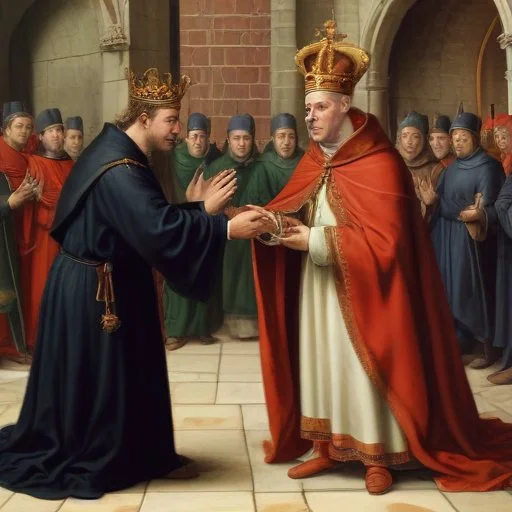
Thomas Becket's journey to martyrdom began with his unlikely rise to power. Born in Cheapside, London, around 1118, Becket's early life was marked by poverty and hardship. However, his intellect and charisma propelled him through the ranks of the clergy, eventually landing him the position of Chancellor to King Henry II. Becket's unwavering loyalty and administrative prowess earned him the king's trust, and in 1162, Henry II appointed him Archbishop of Canterbury.
The appointment sparked a power struggle between the crown and the church. Becket, now a high-ranking clergyman, found himself at odds with the king over issues of ecclesiastical authority and the limits of royal interference. The tension escalated when Henry II demanded that Becket agree to the Constitutions of Clarendon, a set of laws that would have curtailed the church's power and authority. Becket's refusal to comply with the king's demands ignited a chain of events that would ultimately lead to his downfall.
In December 1170, King Henry II's infamous outburst – "Will no one rid me of this turbulent priest?" – was misinterpreted by four knights as a call to action. On the 29th of December, Reginald FitzUrse, Hugh de Morville, William de Tracy, and Richard le Breton arrived at Canterbury Cathedral, seeking to apprehend Becket. When the Archbishop refused to flee or surrender, the knights brutally murdered him on the altar, unleashing a maelstrom of outrage and grief throughout Christendom.
The repercussions of Becket's assassination were far-reaching. The Catholic Church swiftly canonized him a saint, and his martyrdom galvanized opposition to the English monarchy's attempts to curb ecclesiastical power. The Angevin Dynasty, to which Henry II belonged, would struggle to recover from the reputational blow, while Becket's legacy would inspire generations of Christians to stand up against tyranny and oppression. Today, his shrine in Canterbury Cathedral stands as a testament to the enduring power of faith and conviction in the face of overwhelming adversity.
Thomas Becket's martyrdom serves as a poignant reminder of the dangers of unchecked power and the importance of standing up for one's beliefs, even in the face of overwhelming odds. As we reflect on this pivotal moment in history, we are compelled to ask: What would we be willing to sacrifice for our convictions? Would we, like Becket, risk everything to defend the principles we hold dear?
Thomas Becket's martyrdom has inspired numerous works of art, literature, and music throughout the centuries. From T.S. Eliot's play Murder in the Cathedral to the hauntingly beautiful stained-glass windows of Canterbury Cathedral, Becket's legacy continues to captivate and inspire artists and audiences alike.
In conclusion, the assassination of Thomas Becket serves as a powerful reminder of the enduring struggle for power and authority that has shaped human history. As we reflect on this pivotal moment, we are forced to confront the darker aspects of our collective past, even as we draw inspiration from the unwavering courage and conviction of a man who gave his life for his beliefs.
Thomas Becket's assassination has been a subject of intense historiographical debate, with historians interpreting the event through various lenses. Some have viewed it as a turning point in the struggle for power between the Church and State, while others have seen it as a manifestation of the personal dynamics between Becket and Henry II.
Noted historians such as Edward Grim and William FitzStephen have provided firsthand accounts of the event, offering valuable insights into the motivations and actions of the key players. Meanwhile, later historians like David Knowles and Frank Barlow have offered more nuanced interpretations, situating Becket's martyrdom within the broader context of medieval politics and society.
These contrasting perspectives demonstrate the ongoing relevance of Becket's story, which continues to captivate historians and inspire new lines of inquiry.
King Henry II, the monarch who uttered the fateful words that led to Becket's assassination, remains an enigmatic figure in history. A ruler of immense energy and ambition, Henry II was driven by a desire to consolidate power and establish the dominance of the crown.
Yet, despite his strong-willed nature, Henry II was also a man of deep religious conviction, who was deeply troubled by the consequences of his own actions. His alternating displays of piety and rage have led historians to question the sincerity of his faith, and the true motivations behind his treatment of Becket.
Through Henry II's complex personality, we gain a glimpse into the psychological tensions that have shaped the course of history.Thomas Becket's assassination has inspired some of the most iconic works of art and literature in Western culture. From the breathtaking stained-glass windows of Canterbury Cathedral to T.S. Eliot's haunting play Murder in the Cathedral, Becket's story has captivated the imagination of artists and writers across the centuries.
Their creations, in turn, have helped to cement Becket's status as a cultural hero, symbolizing the struggle for justice and freedom in the face of tyranny. As we reflect on the power of Becket's legacy, we are reminded of the transformative role that art and literature can play in shaping our understanding of the past.
Becket's martyrdom has become an enduring symbol of resistance, inspiring generations of artists and writers to explore the human experience.
The assassination of Thomas Becket took place against a backdrop of complex geopolitical rivalries and alliances. The Plantagenet dynasty, to which Henry II belonged, was engaged in a struggle for dominance with the French monarchy, while the Catholic Church was grappling with its own internal divisions and rivalries.
In this treacherous landscape, Becket's defiance of the crown was seen as a challenge to the very foundations of royal authority. His murder, in turn, was viewed as a grave threat to the stability of the entire region, sparking a chain reaction of diplomatic crises and power struggles.
Through Becket's story, we gain insight into the intricate web of interests and alliances that have shaped the course of history.The reliquary of Thomas Becket's shrine, housed in Canterbury Cathedral, is a priceless artifact that offers a unique window into the past. This exquisite piece of medieval craftsmanship, adorned with precious stones and intricate design, serves as a powerful symbol of Becket's enduring legacy.
As we examine the reliquary, we are struck by the reverent craftsmanship that has gone into its creation. Every detail, from the delicate filigree to the vibrant hues of the enamel, speaks to the devotion and faith of the medieval artisans who created it.
The reliquary is a tangible connection to the past, a reminder of the craftsmanship, creativity, and devotion that have shaped our collective heritage.