


In the scorching summer of 1964, three courageous civil rights workers, Andrew Goodman, James Chaney, and Michael Schwerner, were brutally murdered in Neshoba County, Mississippi, by members of the Ku Klux Klan. This heinous crime, which became known as the Mississippi Burning murders, would shake the very foundations of the nation and become a rallying cry for the civil rights movement.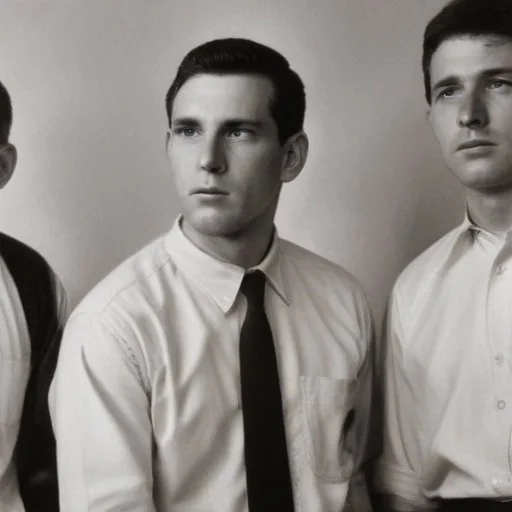
The three men, all in their early twenties, had embarked on a mission to register African American voters in Mississippi, a state notorious for its racial segregation and voter suppression. Goodman, a white volunteer from New York, and Chaney, a black Mississippian, were working with Schwerner, the director of the Council of Federated Organizations (COFO), to empower local African Americans to exercise their constitutional right to vote.
On June 21, 1964, the trio was stopped by Deputy Sheriff Cecil Price, who arrested them on trumped-up charges of speeding. After being released from prison, they were intercepted by a group of Klansmen, who brutally assaulted and murdered them. Their bodies were found 44 days later, buried in an earthen dam.
The discovery of the bodies sparked widespread outrage and mourning across the country. The FBI, under pressure from President Lyndon B. Johnson, launched a massive investigation, and the perpetrators were eventually brought to justice. The crime galvanized the civil rights movement, with hundreds of volunteers flocking to Mississippi to continue the work of the three martyrs.
The Mississippi Burning murders led to a significant shift in public opinion, with many Americans finally acknowledging the brutality of racial segregation and the need for drastic change. The crime also led to the passage of the Civil Rights Act of 1964 and the Voting Rights Act of 1965, landmark legislation that aimed to protect the rights of African Americans.
"The martyrs of Mississippi have given their lives to the struggle for freedom and human dignity. Their sacrifice will not be in vain."
— Martin Luther King Jr.
The Mississippi Burning murders will forever be remembered as a brutal chapter in the civil rights movement. However, the sacrifice of Goodman, Chaney, and Schwerner has inspired generations of activists to continue the fight for racial equality and social justice. Their legacy lives on, a testament to the power of courage and conviction in the face of overwhelming adversity.
Michael Schwerner, also known as Mickey, was born on November 6, 1939, in New York City. He grew up in a family deeply committed to social justice, with his parents actively involved in the labor movement. This upbringing instilled in him a strong sense of empathy and a desire to fight for the rights of the oppressed. Schwerner's early life was marked by a strong connection to his Jewish heritage, which further solidified his commitment to social justice.
Schwerner's passion for civil rights was ignited during his college days at Cornell University, where he became involved in the Student Nonviolent Coordinating Committee (SNCC). His leadership skills and dedication to the cause eventually led to his appointment as the director of the Council of Federated Organizations (COFO) in Mississippi.

The brutal murder of the three civil rights workers sent shockwaves across the nation, evoking widespread outrage and disbelief. The event was a stark reminder of the grim reality of racial segregation and the atrocities committed against African Americans in the deep south. The tragedy sparked a cultural awakening, as many Americans began to confront the harsh realities of racism and discrimination.
The Mississippi Burning murders inspired a plethora of artistic works, including songs, films, and literature. The event was immortalized in the 1988 film "Mississippi Burning," which won several Academy Awards and brought the story to a wider audience.
The murder of the three civil rights workers had significant political implications, as it galvanized public opinion and prompted swift action from the federal government. President Lyndon B. Johnson, under intense pressure, launched a massive FBI investigation into the crime, which led to the eventual conviction of the perpetrators.
The event also had a profound impact on the passage of the Civil Rights Act of 1964 and the Voting Rights Act of 1965. The tragedy served as a catalyst for legislative change, as lawmakers were forced to confront the brutal realities of racial segregation and discrimination.

The Mississippi Burning murders took place against the backdrop of a tumultuous period in American history. The civil rights movement was gaining momentum, with protests and demonstrations erupting across the nation. The event was also set against the Cold War, as the United States and the Soviet Union engaged in a global struggle for ideological supremacy.
The murder of the three civil rights workers was a stark reminder of the failures of American democracy, and it sparked widespread criticism from the international community. The event further galvanized the civil rights movement, as activists called for greater federal intervention to protect the rights of African Americans.
The FBI's investigation into the Mississippi Burning murders was one of the largest and most complex in the agency's history. Led by Director J. Edgar Hoover, the investigation involved hundreds of agents and spanned several months. The FBI's efforts were hampered by local law enforcement officials, who were either complicit in the crime or refused to cooperate.
The breakthrough in the case came when an FBI informant, a local Klansman, provided crucial information about the location of the bodies. The FBI's subsequent digging and excavation efforts led to the discovery of the bodies, which were found buried in an earthen dam.