


The Treaty of Allahabad, signed on August 12, 1765, is a pivotal event in Indian history that marked the beginning of Company rule in India and solidified the British East India Company's foothold in the subcontinent. This treaty, negotiated by Robert Clive, the Governor of Bengal, and Shah Alam II, the Mughal Emperor, transferred control of Bengal, Bihar, and Orissa to the British, signaling a significant power shift in the region.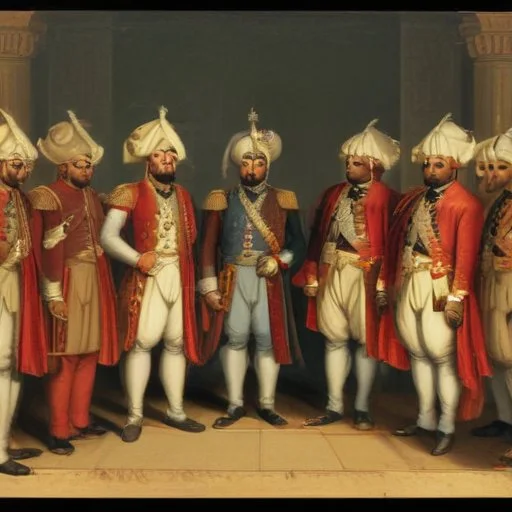
In the mid-18th century, the Mughal Empire, once a dominant power, was struggling to maintain its grip on India. The death of Emperor Aurangzeb in 1707 had sparked a succession crisis, and the empire was plagued by internal conflicts, corruption, and declining economic fortunes. Meanwhile, the British East India Company, which had established its presence in India in the early 17th century, saw an opportunity to expand its influence and exploit the power vacuum.
Here's a brief timeline of events leading up to the Treaty of Allahabad:
The Treaty of Allahabad had far-reaching consequences for India and the British Empire:
The Treaty of Allahabad had significant cultural and social implications for India:
Robert Clive, in his letters, described the negotiations leading up to the Treaty of Allahabad as a delicate balancing act between asserting British power and avoiding open conflict with the Mughal Empire. He wrote, "I am afraid we shall be obliged to take more of the King's territories, than we shall know how to govern."
In conclusion, the Treaty of Allahabad was a pivotal moment in Indian history, marking the beginning of Company rule and the slow decline of the Mughal Empire. As we reflect on this event, we are reminded of the complex and often fraught nature of colonialism, which continues to shape our world today.
Robert Clive, the Governor of Bengal, was the brains behind the Treaty of Allahabad. Born in 1725, Clive was a clever and ambitious British officer who saw an opportunity to expand British influence in India. He was instrumental in the Battle of Plassey, which led to the defeat of Siraj-ud-Daula, and subsequently, the British East India Company gained control of Bengal.
Clive's diplomatic prowess and military victories earned him the respect of Shah Alam II, who was willing to negotiate with him. Clive's ability to balance British interests with the need to maintain a fragile peace with the Mughal Empire was crucial in the negotiations leading up to the Treaty of Allahabad.
Despite his achievements, Clive's legacy is complex, with some historians portraying him as a cunning manipulator who exploited the weaknesses of the Mughal Empire. Nevertheless, his role in shaping the course of Indian history cannot be overstated.

The Treaty of Allahabad was signed against the backdrop of a rapidly changing geopolitical landscape. The Mughal Empire, once the dominant power in India, was in decline, creating a power vacuum that the British East India Company was eager to fill.
The Seven Years' War (1756-1763) had drained the British treasury, and the British government was keen to expand its territory and revenues in India. The Company's victory in the Battle of Plassey and subsequent control of Bengal provided a foothold for British expansion in the region.
The Treaty of Allahabad marked a significant shift in the balance of power, with the British emerging as the dominant force in India. The treaty also had implications for the global balance of power, as it marked the beginning of British colonial expansion in Asia.
The Treaty of Allahabad had far-reaching economic implications for India and Britain. The British East India Company's control of Bengal, Bihar, and Orissa gave it access to the rich natural resources of the region, including textiles, indigo, and saltpeter.
The treaty facilitated the growth of trade between India and Britain, with the Company establishing a monopoly over the Indian textile industry. This led to the destruction of Indian industries and the creation of a new class of Indian entrepreneurs who collaborated with the British.
The treaty also marked the beginning of the drain of wealth from India to Britain, a phenomenon that would continue for centuries. The exploitation of Indian resources and labor would contribute to India's economic stagnation and dependence on colonial powers.

The Treaty of Allahabad marked the beginning of a significant cultural shift in India. The influx of British culture and values led to a gradual erosion of traditional Indian customs and practices.
The British introduced Western education, which eventually led to the emergence of a new Indian elite. This elite, educated in British institutions, would go on to play a crucial role in shaping Indian politics and culture in the centuries to come.
The treaty facilitated the growth of Indian-British cultural exchange, with Indian artists, writers, and intellectuals interacting with their British counterparts. However, this exchange was often unequal, with Indian culture being shaped by British values and norms.
The Treaty of Allahabad was a masterclass in political realpolitik. The British East India Company, represented by Robert Clive, negotiated a treaty that served its interests while appearing to respect the sovereignty of the Mughal Empire.
The treaty marked a significant shift in the balance of power in India, with the British emerging as the dominant force. However, the treaty also created a fiction of Mughal sovereignty, allowing the British to claim that they were merely protecting the Mughal Empire from other European powers.
The treaty set a precedent for future British expansion in India, with the British using a combination of diplomacy and military force to expand their territory. It also marked the beginning of a complex and often fraught relationship between the British and the Indian people.