


The Treaty of Crdoba, signed on August 24, 1821, in Crdoba, Veracruz, Mexico, marked the triumphant conclusion of Mexico's War of Independence from Spain, birthing a new nation and cementing its place in the annals of history.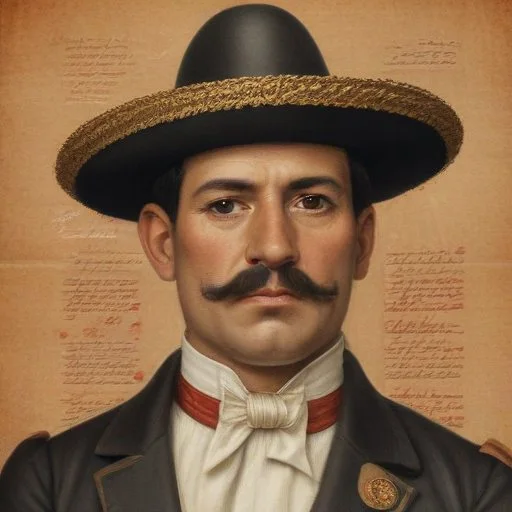
In the early 19th century, Mexico was a Spanish colony, groaning under the yoke of colonial rule. The Mexican people, fueled by a growing sense of nationalism and a desire for self-governance, began to resist the Spanish crown. This sentiment was galvanized by the arrival of Napoleon Bonaparte's troops in Spain, which created a power vacuum that Mexican patriots were eager to fill.
The Plan of Iguala, a three-point program that advocated for independence, equality, and the protection of the Catholic Church, sparked a chain reaction of military victories across Mexico. As the Spanish Viceroyalty teetered on the brink of collapse, Iturbide and Guerrero's forces marched towards the city of Crdoba, where the Spanish authorities were forced to negotiate.
The Treaty of Crdoba, signed on August 24, 1821, officially ended the Mexican War of Independence, recognizing Mexico as a sovereign nation, free from Spanish rule. This watershed moment marked the culmination of a long and bloody struggle, paving the way for Mexico's growth into a modern nation-state.
The Treaty of Crdoba's impact was profound, ushering in a new era of Mexican independence and self-determination. The treaty inspired similar movements across Latin America, contributing to the eventual collapse of Spanish colonial rule throughout the region. Today, the Treaty of Crdoba remains a potent symbol of Mexican pride and a testament to the nation's unwavering spirit.
"I am not a rebel, I am a patriot, and my only desire is to see my country free and happy." - Vicente Guerrero
The Treaty of Crdoba was signed in the same city where Hernn Cortés, the Spanish conquistador, had defeated the Aztec Empire centuries earlier, marking a poetic reversal of fortunes in the struggle for Mexican independence.
| 1810 | Mexican War of Independence begins |
| 1821 | Treaty of Crdoba signed, ending the war |
The Treaty of Crdoba serves as a beacon of hope for nations struggling to assert their independence, reminding us that even in the darkest of times, courage, determination, and a shared vision can overcome even the most formidable obstacles.
The Treaty of Cordoba's impact on Mexican culture was profound, shaping the nation's identity and informing its artistic expression. The struggle for independence inspired a new wave of creative works, including literature, music, and visual arts that celebrated the country's heritage.
In the years that followed, Mexican folklore flourished, with stories of heroes like Iturbide and Guerrero becoming an integral part of the national narrative. These stories were often told through traditional music and dance, such as the jarabe tapatío, which became a symbol of Mexican pride.
The treaty also had a lasting impact on Mexico's architectural landscape, with many colonial-era buildings being repurposed for new, nationalistic uses. The Palacio de Bellas Artes, for example, was originally intended as an opera house but was later converted into a museum celebrating Mexico's independence struggle.
Agustín de Iturbide, the cunning and charismatic Mexican general, was a master strategist and a skilled politician. Born in 1783, Iturbide was a member of the Mexican aristocracy and served in the Spanish army before joining the insurgents.
Iturbide's Early Life and Career
Iturbide's early life was marked by privilege and opportunity. His family was wealthy, and he received a good education, studying law and literature. However, he soon turned to a military career, serving in the Spanish army during the Napoleonic Wars.
His later years were marked by controversy and eventually, tragedy. After serving as the first Emperor of Mexico, Iturbide was overthrown and exiled, eventually meeting his death in 1824.
The Treaty of Cordoba was signed during a time of great upheaval in the global geopolitical landscape. The Napoleonic Wars had weakened the Spanish Empire, creating an opportunity for Mexican patriots to strike for independence.
The treaty also occurred against the backdrop of the Latin American wars of independence, which saw countries across the region throwing off the shackles of colonial rule. The Mexican War of Independence was part of a broader struggle for self-determination that would shape the region's future.

Historians have long debated the significance of the Treaty of Cordoba, with some viewing it as a turning point in Mexican history and others seeing it as a compromise between rival factions.
One school of thought, led by historians like Lucas Alamán, has emphasized the treaty's role in shaping Mexico's national identity. They argue that the treaty marked a decisive break with Spanish colonial rule and paved the way for Mexico's growth into a modern nation-state.
The Treaty of Cordoba had a profound impact on Mexico's economy, marking a transition from a colonial to a national economy.
The treaty led to the abolition of the colonial tax system, which had long been a source of grievance for many Mexicans. This, in turn, led to a growth in domestic trade and investment, as Mexicans began to take control of their own economic destiny.
The treaty also paved the way for Mexico's integration into the global economy, with the country establishing trade relationships with other nations and becoming a major exporter of goods like silver and cotton.