


On March 31, 1992, a historic gathering of Russian leaders in Moscow marked a significant turning point in the country's history. The signing of the Treaty of Federation, also known as the Federal Treaty, marked a bold move towards decentralization and regional autonomy, granting 86 regions more control over their economic and political affairs.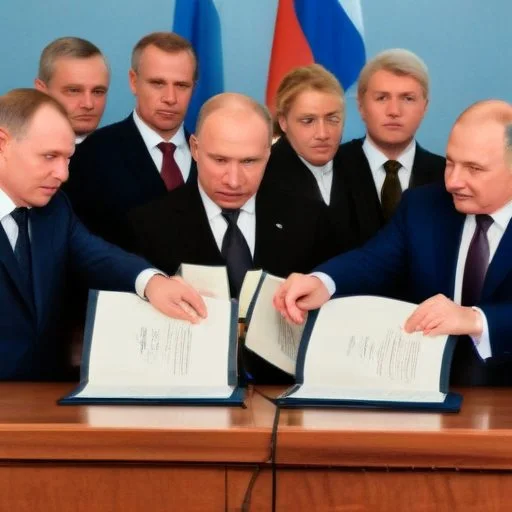
The treaty's signing was a culmination of efforts to redefine the country's landscape, recognizing the unique cultural and economic needs of each region. This landmark agreement aimed to stabilize the country's tense territorial relationships, paving the way for a more unified, yet diversified, Russia.
At the forefront of this historic moment was Boris Yeltsin, Russia's president, who played a crucial role in shaping the treaty. Joining him were representatives from 86 regions, each putting their signature on the document that would change the course of their region's future.
The signing of the Treaty of Federation had far-reaching consequences, including:
The Treaty of Federation not only reshaped Russia's political landscape but also had a profound impact on the country's cultural and social fabric. The recognition of regional autonomy allowed for a greater celebration of local customs and traditions, enriching Russia's cultural heritage.
As one local resident expressed, "The signing of the treaty marked a new era of freedom for our region. We could finally preserve our cultural identity and shape our own future."
The Treaty of Federation bears similarities to other decentralization efforts around the world, such as:
While each of these events has its unique context, they share a common thread – the recognition of regional autonomy as a key factor in promoting stability, cooperation, and prosperity.
The Treaty of Federation had a profound impact on Russia's cultural heritage, allowing for the preservation and celebration of regional customs and traditions. For instance, the autonomous region of Tatarstan was able to revive its ancient literary language, which had been suppressed during the Soviet era. This recognition of regional autonomy also led to a resurgence of interest in local folklore, music, and art.
Furthermore, the treaty enabled the regions to promote their unique cultural identities, fostering a sense of regional pride and unity. This cultural renaissance has played a significant role in shaping modern Russia's diverse cultural landscape.

Boris Yeltsin, the architect of the Treaty of Federation, was a shrewd politician who navigated the complex web of regional interests with remarkable skill. His ability to build alliances and compromise with regional leaders was instrumental in securing the treaty's success.
Despite his shortcomings, Yeltsin remains a significant figure in Russian history, credited with initiating the country's transition towards decentralization and regional autonomy.
The Treaty of Federation had a significant impact on Russia's economic landscape, granting regions greater control over their natural resources and economic affairs. This led to an increase in regional investment and entrepreneurial activity, as regions were able to capitalize on their unique economic strengths.
The treaty also enabled regions to establish their own economic relationships with foreign countries, fostering greater economic cooperation and exchange.

The Treaty of Federation shares similarities with other decentralization efforts around the world, such as the devolution of power in the United Kingdom. Both initiatives recognized the importance of regional autonomy in promoting stability and cooperation.
However, the Russian experience is unique in its post-Soviet context, highlighting the challenges of transitioning from a centralized to a decentralized system of governance.
Historians have interpreted the Treaty of Federation as a turning point in Russia's transition towards decentralization and regional autonomy. Some have argued that the treaty marked a decisive shift away from the Soviet era's centralized system of governance.
Others have highlighted the treaty's limitations, noting that it failed to fully address the country's underlying economic and social challenges.