


The Turkish invasion of Cyprus in 1974 is an infamous episode in modern history, marked by a devastating conflict that displaced hundreds of thousands and left the island divided to this day. The event is remembered for the massive military intervention by Turkey, which responded to a coup d'état against President Makarios, orchestrated by the Greek junta, sparking a crisis that would forever alter the trajectory of Cypriot politics and identity.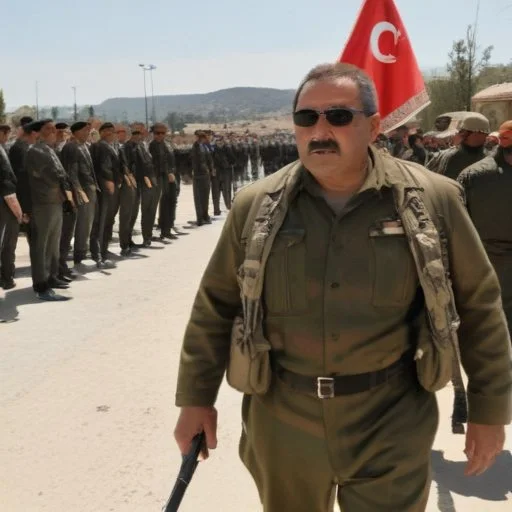
In the aftermath of World War II, Cyprus, a strategic island in the Eastern Mediterranean, was a British colony. As the decolonization movement gained momentum, Cyprus sought independence, which was finally achieved in 1960. However, the transition was marred by inter-communal violence between Greek and Turkish Cypriots, culminating in the signing of the Zurich Agreement, recognizing the island as a federation of Greek and Turkish Cypriot states.
July 15, 1974: The Greek junta launches a coup against President Makarios, replacing him with Nikos Sampson, a hard-line nationalist.
July 20, 1974: Turkey, invoking the 1960 Treaty of Guarantee, invades Cyprus, citing the need to protect Turkish Cypriots from Greek oppression.
August 1974: The international community, led by the United States and the United Kingdom, impose an arms embargo on both Greece and Turkey, but fail to stem the conflict.
September 1974: The Turkish army advances, capturing 37% of the island, including the northern coastal city of Kyrenia, and the port city of Famagusta.
The Turkish invasion led to the displacement of over 200,000 Greek Cypriots and 50,000 Turkish Cypriots, resulting in a de facto partition of the island.
The international community recognized the Republic of Cyprus as the sole legitimate government, while Turkey established the Turkish Republic of Northern Cyprus (TRNC), recognized only by Ankara.
The invasion had a profound impact on Cypriot culture, with the division of the island leading to a loss of cultural heritage and shared traditions.
The conflict also sparked a wave of nationalism and identity politics on both sides, exacerbating existing tensions and foreclosing opportunities for reconciliation.
The Turkish invasion remains a contentious issue, with critics accusing Turkey of aggression and occupation, while Ankara justifies its actions as a necessary intervention to protect Turkish Cypriots.
The event continues to affect public perception, with many Cypriots feeling a deep sense of injustice and trauma, while others see it as a necessary step towards independence and self-determination.
The Turkish invasion of Cyprus serves as a stark reminder of the ongoing struggle for identity, territoriality, and sovereignty in the modern world.
As we reflect on this event, we are forced to confront the complexities of power, politics, and human nature, and the devastating consequences of unresolved conflicts.
Brigadier General Dimitrios Ioannidis, the mastermind behind the coup against President Makarios, was a complex figure with a chequered past. Born in 1923, Ioannidis rose through the ranks of the Greek military, becoming a key figure in the Greek junta that seized power in 1967.
Ioannidis's motivations for the coup were multifaceted. On the surface, he claimed to be acting to prevent a communist takeover of Cyprus, but many believed he was driven by a desire to unify Cyprus with Greece, fulfilling a long-held dream of enosis, or union.
Ioannidis's Role in the CoupIoannidis's role in the coup was instrumental, using his influence to orchestrate the removal of President Makarios. However, his plan ultimately backfired, as the Turkish invasion led to the bifurcation of the island.

The Turkish invasion of Cyprus had a profound impact on the island's cultural landscape, leading to the development of a new Cypriot identity. Music played a significant role in this process, as artists sought to express the pain, trauma, and resilience of the Cypriot people.
Traditional Cypriot music, such as the bourd kryiou and fantasia, was infused with new influences, as musicians incorporated elements of rock, folk, and protest music. This fusion gave voice to a generation of Cypriots seeking to assert their identity in the face of division.
Laika, a popular music genre, became a powerful medium for storytelling, with lyrics that addressed the themes of displacement, longing, and hope.The Turkish invasion of Cyprus unfolded against the backdrop of the Cold War, with superpowers vying for influence in the Eastern Mediterranean. The United States, keen to maintain its strategic interests in the region, supported the Turkish intervention, while the Soviet Union backed the Greek Cypriot government.
The invasion sparked a proxy war, with the two superpowers providing military aid and diplomatic support to their respective allies. The conflict highlighted the limits of détente, as the world teetered on the brink of a wider conflict.
A Regional Powder KegThe Cyprus crisis had far-reaching implications for regional security, as neighboring countries scrambled to respond to the new reality. The invasion reinforced the importance of the Eastern Mediterranean as a key flashpoint in the Cold War, with Cyprus becoming a pawn in the superpowers' game of geostrategic chess.

Historians have long debated the causes and consequences of the Turkish invasion of Cyprus, with competing narratives emerging from different perspectives. Some have framed the event as a humanitarian intervention, while others view it as an act of aggression and occupation.
Recent scholarship has challenged traditional accounts, highlighting the complexities of Cypriot identity and the role of international actors in the lead-up to the invasion. This reframing has sparked controversy, as different historiographical camps vie for dominance.
Towards a More Nuanced UnderstandingBy engaging with diverse perspectives, historians can move beyond simplistic or partisan explanations, instead acknowledging the multifaceted nature of the Turkish invasion. This nuanced approach can facilitate a more informed understanding of the past, illuminating the ongoing struggle for identity, sovereignty, and reconciliation on the island.
Cyprus, situated at the confluence of Europe, Asia, and Africa, has long been a strategic prize in the Eastern Mediterranean. The island's location makes it a critical hub for trade, energy, and security, with regional powers vying for influence.
The Turkish invasion of Cyprus highlighted the island's importance as a military base, with the Turkish Republic of Northern Cyprus (TRNC) serving as a key outpost for Ankara's regional ambitions. The conflict also underscored the significance of Cyprus as a gateway to the Middle East and Africa, with implications for energy security and trade routes.
A Regional Fault LineThe Cyprus crisis exposed the fault lines of regional politics, as Greece, Turkey, and other regional actors jockeyed for position. The invasion reinforced the importance of the Eastern Mediterranean as a critical theatre for geopolitical competition, with Cyprus at its centre.