


The Union of Soviet Socialist Republics (USSR) is known for being the world's first socialist state, formed when the Russian Soviet Federative Socialist Republic merged with three other republics in 1922. This historic union marked a significant milestone in the pursuit of communism, with Vladimir Lenin at the helm as its first head of government.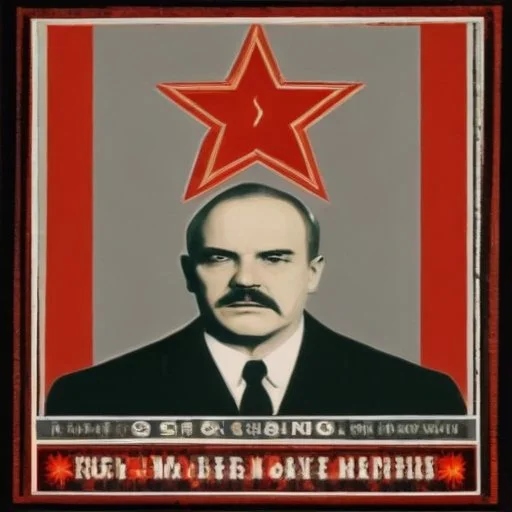
Following the October Revolution of 1917, the Russian Empire was in a state of flux. The Bolsheviks, led by Lenin, had seized power and were determined to establish a socialist state. The Russian Civil War, which lasted from 1918 to 1922, had left the country devastated, but the Bolsheviks had emerged victorious. The need for a unified government and economic system was imperative, and the creation of the USSR was the next logical step.
Vladimir Lenin, the founder of the Soviet Union, was a key figure in the formation of the USSR. His vision for a communist state guided the union's early years. Other notable figures involved in the formation of the USSR include Leon Trotsky, Joseph Stalin, and Mikhail Kalinin, who all played important roles in shaping the new government.
The formation of the USSR had far-reaching consequences, both domestically and internationally. The USSR became a major-player in global politics, and its communist ideology inspired socialist movements around the world. The USSR's emergence also led to the formation of the Eastern Bloc, a group of Soviet-aligned states in Eastern Europe.
The USSR had a profound impact on Russian culture and society. The government promoted socialist ideals through art, literature, and music, and the state-controlled media disseminated propaganda to shape public opinion. The USSR also made significant contributions to science, technology, and education, and it invested heavily in these areas.
The USSR was not without its controversies. The government's authoritarian nature and human rights abuses were widely criticized, and the Soviet Union's involvement in international conflicts, such as the Cold War, raised concerns about its intentions. Despite these controversies, the USSR remained a powerful symbol of socialism and communism, and its legacy continues to influence contemporary politics.
"The goal of socialism is communism."
- Vladimir Lenin
The formation of the USSR is often compared to the French Revolution, which also sought to establish a new social order. While the two events share some similarities, the USSR's focus on socialism and communism sets it apart from the more liberal ideals of the French Revolution.
The Union of Soviet Socialist Republics' formation marked a significant shift in the global political landscape, and its legacy continues to shape contemporary politics and society. As a symbol of socialism and communism, the USSR remains an important part of modern history.
Vladimir Lenin, the founder of the Soviet Union, was a complex figure with a multifaceted personality. Born in 1870, Lenin was exposed to radical ideologies from an early age, which shaped his vision for a socialist state. Throughout his life, Lenin was driven by a conviction that the proletariat would eventually overthrow the bourgeoisie, leading to a classless society.
Lenin's leadership during the Russian Revolution and the subsequent formation of the USSR was marked by his pragmatism and strategic thinking. He was known for his ability to adapt to changing circumstances, often compromising with other factions to achieve his goals.

The USSR recognized the power of art and propaganda in shaping public opinion. The government invested heavily in promoting socialist ideals through various forms of art, including literature, music, and film. The Soviet regime understood that by controlling the narrative, they could influence people's perceptions and attitudes.
Posters, in particular, became an effective tool for disseminating propaganda. Vibrant and colorful, they adorned streets and public spaces, promoting the virtues of socialism and glorifying the Soviet Union's achievements. Soviet artists, such as Alexander Deineka and Viktor Deni, created iconic works that continue to be celebrated today.
The formation of the USSR was deeply influenced by the global political landscape of the time. The aftermath of World War I had created a power vacuum, allowing the Bolsheviks to seize control of Russia. The Russian Civil War, which lasted from 1918 to 1922, was a critical factor in the union's creation, as it led to the consolidation of power and the establishment of a socialist government.
The USSR's emergence also coincided with the rise of other ideologies, such as fascism and liberalism. The interwar period saw a surge in nationalist sentiment, which contributed to the USSR's isolation and its eventual involvement in World War II.

The formation of the USSR had a profound impact on the Russian economy. The country's transition from a capitalist to a socialist system led to the nationalization of key industries, such as banking and manufacturing. The government also implemented a series of five-year plans, aimed at rapid industrialization and modernization.
The USSR's economic model, based on state-owned enterprises and central planning, was distinct from the capitalist systems of Western Europe and the United States. This led to a significant divergence in economic performance, with the USSR experiencing rapid growth in the 1930s, but also facing challenges such as inefficiencies and shortages.
Historians have long debated the significance and implications of the USSR's formation. Some have argued that the union marked a necessary step towards socialism, while others have viewed it as a deviation from the principles of Marxism-Leninism.
The role of key figures, such as Lenin and Stalin, has also been the subject of much debate. While Lenin is often portrayed as a visionary leader, Stalin's legacy is more controversial, with some viewing him as a ruthless dictator who betrayed the ideals of the Russian Revolution.