


In the midst of World War II, on July 23, 1940, the United States Under Secretary of State, Sumner Welles, issued a declaration that sent shockwaves across the globe. Welles boldly declared that the United States would not recognize the Soviet Union's forced annexation and incorporation of Estonia, Latvia, and Lithuania, marking a significant shift in American foreign policy.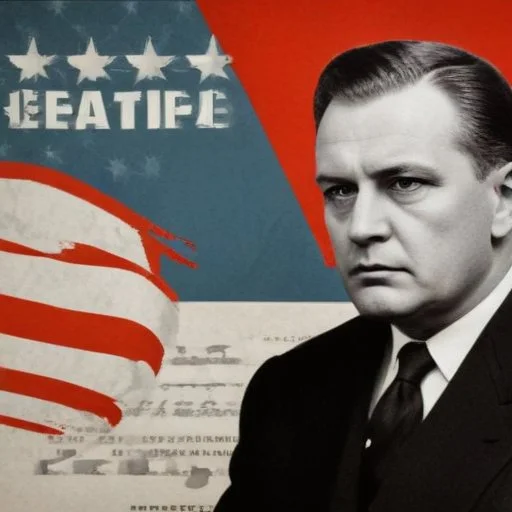
This courageous move was a beacon of hope for the Baltic states, whose sovereignty was brutally snatched by the Soviet juggernaut. As the world watched, the Soviet Union's aggressive expansion seemed unchecked, but Welles' declaration sent a strong message that the United States would not condone such actions.
In the early 1940s, the world was embroiled in chaos. The Nazi-Soviet Pact of 1939 had created an uneasy alliance between two of the world's most powerful nations, leaving smaller countries vulnerable to their whims. Estonia, Latvia, and Lithuania, nestled in the Baltic region, found themselves caught in the crossfire of European politics.
Sumner Welles, a seasoned diplomat and expert on international relations, was a key figure in shaping the United States' foreign policy during World War II. As Under Secretary of State, Welles played a crucial role in crafting the country's response to the Soviet Union's aggressive expansion.
The Welles declaration had far-reaching implications, both for the Baltic states and the United States. The declaration:
The Welles declaration remains an important milestone in the history of international relations. It demonstrated the United States' commitment to upholding the principles of sovereignty and self-determination, and served as a precursor to the country's future foreign policy initiatives.
As we reflect on this pivotal moment in history, we are reminded of the importance of standing up against aggression and oppression. The Welles declaration serves as a testament to the power of diplomacy and the enduring spirit of those who fought for freedom and independence.
Behind the Welles declaration was a complex web of political alliances and rivalries. The United States, still reeling from the shock of the Nazi-Soviet Pact, was keen to assert its influence in Europe and counter the Soviet Union's expansionist policies. The declaration was also a calculated move to gain favor with the Baltic states, whose strategic location made them crucial to the war effort.
The Soviet Union, on the other hand, viewed the Welles declaration as a provocation, and responded with a surge in propaganda and diplomatic pressure on the United States. The move also strained relations between the two superpowers, setting the tone for the Cold War era that would follow.
The Welles declaration, in essence, marked a turning point in the great power rivalry between the United States and the Soviet Union.
Sumner Welles was a seasoned diplomat with a passion for international relations. Born into a wealthy family, Welles was educated at Groton and Harvard, before joining the Foreign Service in 1915. He served in various postings, including Tokyo and Buenos Aires, before becoming Under Secretary of State in 1937.
Welles was a master of diplomacy, known for his calm and measured approach to crisis situations. He played a crucial role in shaping the United States' response to the Soviet Union's aggression, and his declaration of nonrecognition was a testament to his commitment to upholding the principles of sovereignty and self-determination.
Despite his many achievements, Welles' personal life was marked by controversy, including a series of extramarital affairs and a struggle with alcoholism.
The Welles declaration came at a time of great geopolitical flux. Europe was in chaos, with Nazi Germany and Fascist Italy on the march, and the Soviet Union expanding its territories through a series of annexations and occupations.
The Baltic states, caught in the crossfire of great power rivalries, were vulnerable to the whims of their larger neighbors. The Soviet Union's occupation of Lithuania, Latvia, and Estonia was seen as a key component of its strategy to dominate Eastern Europe.
The Welles declaration, in this context, was a bold statement of American intent to challenge Soviet hegemony in the region.
The Welles declaration was circulated to the international community through a series of diplomatic cables and communiqués. One of the most significant documents related to the declaration is a memorandum prepared by the State Department, outlining the legal and diplomatic implications of nonrecognition.
The memorandum, dated July 23, 1940, provides a fascinating insight into the thinking behind the Welles declaration. It cites various international treaties and conventions, including the Hague Conventions and the Kellogg-Briand Pact, to argue that the Soviet Union's occupation of the Baltic states was illegal and illegitimate.
The memorandum concluded that the United States had a moral and legal obligation to uphold the sovereignty and territorial integrity of the Baltic states.
The economic implications of the Welles declaration were far-reaching. The Soviet Union's occupation of the Baltic states had disrupted trade and commerce in the region, with significant consequences for the global economy.
The United States, by refusing to recognize the Soviet Union's annexation, was able to maintain trade relations with the Baltic states, albeit indirectly. This helped to sustain the economies of Estonia, Latvia, and Lithuania, and provided a vital lifeline to the people of these countries.
The Welles declaration, in essence, helped to create a breathing space for the Baltic states to rebuild and recover from the devastating effects of war.