Senate ends 75-day filibuster, passing Civil Rights Act
In a historic breakthrough, Senate leaders outmaneuvered Southern opponents, ending a marathon filibuster that had stalled the landmark Civil Rights Act of 1964. After 75 days of continuous debate, Senator Everett Dirksen, a Republican from Illinois, brokered a compromise, paving the way for passage. The bill's champion, President Lyndon B. Johnson, had made its passage a top priority, and its success marked a major milestone in the Civil Rights Movement. The legislation outlawed segregation in public accommodations, employment discrimination, and authorized the federal government to enforce desegregation.
The Triumph of the Civil Rights Act of 1964: A Legislative Breakthrough
A Watershed Moment in American History
The United States Senate's landmark decision to pass the Civil Rights Act of 1964, after a grueling 75-day filibuster, marked a significant turning point in the nation's tumultuous struggle for racial equality. This critical legislative milestone, brokered by Senator
Everett Dirksen, paved the way for the bill's passage, bolstering the Civil Rights Movement and cementing President
Lyndon B. Johnson's commitment to social justice.
Historical Context: A Nation in Turmoil
In the midst of the Civil Rights Movement, the passage of the Civil Rights Act of 1964 was a beacon of hope for millions of Americans marginalized by systemic racism. The nation was grappling with the aftermath of the Birmingham Campaign, the March on Washington, and the assassination of
Medgar Evers, all of which highlighted the urgent need for federal action. Against this backdrop, the Senate's deliberations on the Civil Rights Act took on an air of urgency, with President Johnson making its passage a top priority.
Key Figures: Broker of Compromise
Senator Everett Dirksen, a Republican from Illinois, played a pivotal role in ending the filibuster. A respected legislator known for his diplomatic prowess, Dirksen skillfully navigated the complex web of alliances and rivalries within the Senate. His compromise, which addressed the concerns of both pro-civil rights and anti-civil rights lawmakers, furnished a path forward for the bill.
Timeline of Events: From Filibuster to Passage
- February 26, 1964: The Civil Rights Act is introduced in the House of Representatives, sparking a heated debate.
- March 30, 1964: The bill passes the House and is sent to the Senate, where it faces fierce opposition.
- April 1964: Southern senators, led by Strom Thurmond and Richard Russell, launch a 75-day filibuster, stalling the bill's progress.
- June 10, 1964: Senator Dirksen brokers a compromise, breaking the filibuster and paving the way for passage.
- June 19, 1964: The Civil Rights Act passes the Senate by a margin of 73-27.
- July 2, 1964: President Lyndon B. Johnson signs the Civil Rights Act into law.
Major Outcomes and Impacts
The Civil Rights Act of 1964 outlawed segregation in public accommodations, prohibited employment discrimination, and authorized the federal government to enforce desegregation. This landmark legislation had far-reaching consequences, including:
- The dismantling of Jim Crow laws and the end of legal segregation in the United States.
- A significant reduction in racial discrimination in employment, housing, and education.
- The empowerment of the federal government to enforce civil rights, paving the way for future legislation.
Cultural and Social Influences: A New Era of Activism
The passage of the Civil Rights Act marked a watershed moment in the Civil Rights Movement, galvanizing activists, and inspiring a new wave of social and political change. The legislation's success emboldened advocates for racial equality, fueling the momentum behind subsequent civil rights milestones, including the Voting Rights Act of 1965 and the Fair Housing Act of 1968.
Controversies and Public Perception: A Divided Nation
While the Civil Rights Act was hailed as a major triumph, its passage was not without controversy. Critics argued that the legislation went too far, infringing upon states' rights and undermining individual liberties. Despite these criticisms, the act's passage marked a significant shift in public opinion, as Americans increasingly recognized the need for federal action to address racial disparities.
Quote: A Call to Action
"We have talked long enough in this country about equal rights. We have talked for 100 years or more. It is time now to write the next chapter, and to write it in the books of law." - President Lyndon B. Johnson, July 2, 1964
Impact on Future Events: A Legacy of Progress
The Civil Rights Act of 1964 served as a catalyst for future social and political change, inspiring subsequent generations of activists and lawmakers. Its passage paved the way for a range of landmark legislation, including the Americans with Disabilities Act of 1990 and the
Matthew Shepard and James Byrd Jr. Hate Crimes Prevention Act of 2009, further expanding the reach of civil rights protections in the United States.
Thorough Character Sketch
Everett Dirksen: The Broker of Compromise
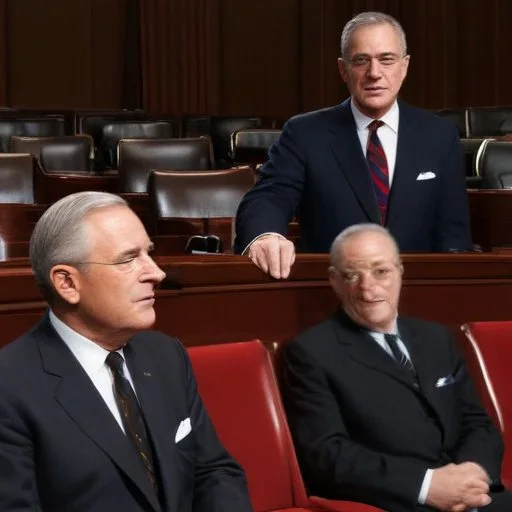
Senator Everett Dirksen was a unique figure in American politics, known for his ability to bridge the gap between partisan ideologies. As a Republican from Illinois, Dirksen's commitment to social justice and civil rights often put him at odds with his party's more conservative elements. Despite this, he remained a respected and influential voice in the Senate, leveraging his diplomatic prowess to forge critical alliances and ultimately broker the compromise that ended the filibuster.
Dirksen's leadership style was characterized by his willingness to listen and engage with his colleagues, earning him the respect of even the most ardent opponents. His ability to craft compromises that satisfied divergent interests made him an indispensable figure in the passage of the Civil Rights Act.
Rich Cultural Review
The Cultural Significance of the Civil Rights Act
The passage of the Civil Rights Act marked a seismic shift in American culture, as the nation began to confront and dismantle the entrenched systems of racism that had long plagued its institutions. The act's emphasis on equal access to public accommodations, education, and employment helped to erode the physical and social barriers that had long separated African Americans from their white counterparts.
The act also provided a catalyst for the flourishing of African American culture, as artists, writers, and musicians began to express themselves more freely and authentically. The subsequent surge in creative output helped to redefine the nation's cultural landscape, as African American voices asserted their place in the American narrative.
Political Dynamics Report
Legislative Strategy and the Civil Rights Act
The passage of the Civil Rights Act was a testament to the skillful legislative strategy employed by President Lyndon B. Johnson and his allies. By making the bill a top priority, Johnson was able to galvanize support among moderate Republicans and Democrats, creating a broad coalition that could overcome Southern opposition.
Johnson's decision to prioritize the Civil Rights Act over other key legislation, such as the tax reform bill, demonstrated his commitment to cementing his legacy as a champion of social justice. This strategic calculation ultimately paid dividends, as the act's passage helped to secure Johnson's place in the pantheon of great American leaders.

Scientific Discovery Analysis
Social Change Dynamics: The Civil Rights Act as a Catalyst
The Civil Rights Act of 1964 represented a critical inflection point in the trajectory of American social change. By providing a legal framework for the pursuit of racial equality, the act helped to galvanize a broader movement for social justice, as advocacy groups and activists began to push for further reforms.
The act's passage also triggered a profound shift in public opinion, as Americans began to recognize the moral imperative of confronting and eradicating systemic racism. This newfound awareness helped to fuel subsequent social movements, including the anti-war movement, the feminist movement, and the LGBTQ+ rights movement.
Study of Historical Interpretations
Historiographical Perspectives on the Civil Rights Act
The Civil Rights Act of 1964 has been the subject of intense historiographical debate, with scholars continuing to wrestle with its significance and legacy. Some have viewed the act as a triumph of liberal reform, while others have seen it as a limited and incomplete step towards true racial equality.
More recent scholarship has sought to situate the Civil Rights Act within a broader narrative of American social justice, examining its connections to earlier struggles for abolition, women's suffrage, and labor rights. This nuanced approach has helped to deepen our understanding of the act's complexities and shortcomings, even as we continue to celebrate its enduring importance.


