


On August 7, 1964, the United States Congress passed the Gulf of Tonkin Resolution, granting President Lyndon B. Johnson unprecedented authority to wage war against North Vietnam in response to purported attacks on American forces. This pivotal moment marked a significant escalation of U.S. involvement in the Vietnam War, drawing the country deeper into a conflict that would last over a decade.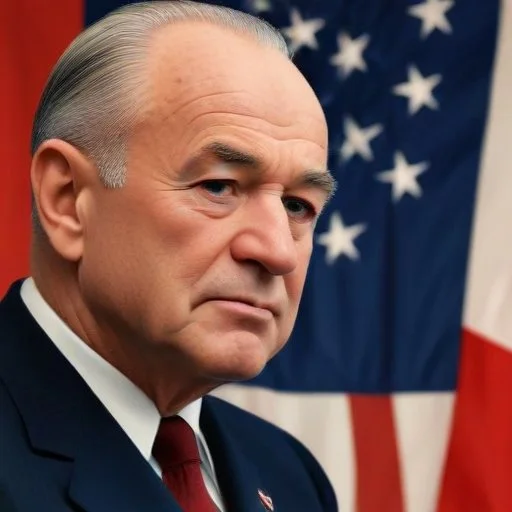
In the early 1960s, the North Vietnamese government, backed by communist China and the Soviet Union, sought to reunify the divided country under communist rule. The United States, committed to containing the spread of communism, responded by increasing its military presence in South Vietnam. Tensions escalated in 1964, with both sides engaging in a series of naval skirmishes in the Gulf of Tonkin.
On August 2, 1964, the U.S. destroyer USS Maddox, conducting electronic signals intelligence operations in the Gulf of Tonkin, reportedly came under attack by North Vietnamese torpedo boats. Two days later, the Maddox and another U.S. destroyer, the USS Turner Joy, allegedly repelled a second attack. These incidents prompted President Johnson to seek congressional approval for a resolution authorizing military action against North Vietnam.
The Gulf of Tonkin Resolution, passed with near-unanimous support in Congress, authorized the President to "take all necessary measures to repel any armed attack against the forces of the United States and to prevent further aggression." This sweeping mandate granted Johnson the power to launch military operations in Vietnam without further congressional approval, paving the way for a dramatic escalation of U.S. involvement in the war.
The Gulf of Tonkin Resolution marked a significant turning point in the Vietnam War, leading to a profound escalation of U.S. military involvement and a corresponding increase in casualties. The resolution also set a precedent for executive power, allowing the President to bypass congressional oversight in matters of war.
The Gulf of Tonkin Resolution and the subsequent escalation of the Vietnam War had far-reaching cultural and social implications, contributing to a growing anti-war movement and widespread protests against U.S. involvement in Vietnam.
Declassified documents later revealed that the Gulf of Tonkin incidents were likely exaggerated or fabricated, casting doubt on the legitimacy of the U.S. intervention in Vietnam. The controversy surrounding the resolution has endured, fueling ongoing debates about the role of executive power in times of war.
"We are not about to send American boys nine or ten thousand miles away from home to do what Asian boys ought to be doing for themselves." - President Lyndon B. Johnson, 1964
This pivotal moment in U.S. history serves as a powerful reminder of the complexities and challenges of international relations, while also underscoring the importance of transparency and accountability in government.
The Gulf of Tonkin incident was not an isolated event, but rather part of a larger pattern of escalation in the Vietnam War. In the years leading up to the incident, the North Vietnamese government, backed by communist China and the Soviet Union, had been engaging in a series of guerrilla attacks against the South Vietnamese government and its American allies. The United States, committed to containing the spread of communism, responded by increasing its military presence in South Vietnam and providing financial and military aid to the government.
The Gulf of Tonkin incident marked a turning point in this escalation, as it provided the Johnson administration with a pretext to seek congressional approval for a resolution authorizing military action against North Vietnam. However, the incident was also part of a broader pattern of naval skirmishes and intelligence gathering operations in the Gulf of Tonkin, which had been ongoing for months.
The USS Maddox, the American destroyer involved in the incident, was conducting electronic signals intelligence operations in the Gulf of Tonkin, intercepting North Vietnamese communications and providing intelligence to the South Vietnamese government. This intelligence gathering operation was part of a larger effort by the United States to gather information on North Vietnamese military operations and to disrupt their supply lines.
The Gulf of Tonkin incident was also influenced by the broader geopolitical context of the time. The Cold War was at its height, and the United States was engaged in a global struggle against communism. The Johnson administration was determined to prevent the fall of South Vietnam to communism, and the Gulf of Tonkin incident provided a pretext for escalating American involvement in the war.
Admiral U.S. Grant Sharp Jr., the commander of U.S. forces in the Pacific, played a crucial role in shaping the events leading up to the Gulf of Tonkin incident. Sharp, a decorated naval officer and veteran of World War II, had a reputation for being a skilled strategist and a strong leader.
As the commander of the U.S. Pacific Fleet, Sharp was responsible for overseeing American naval operations in the Gulf of Tonkin. He was also a key advisor to the Johnson administration, providing military counsel on the escalating situation in Vietnam.
Sharp's role in the Gulf of Tonkin incident is still a matter of debate among historians. Some have argued that he deliberately provoked the North Vietnamese into attacking the USS Maddox, in order to provide a pretext for escalated American involvement in the war. Others have portrayed him as a scapegoat for the Johnson administration's own mistakes and miscalculations.
Regardless of his motivations, Sharp's actions in the lead-up to the Gulf of Tonkin incident had significant consequences for the course of the Vietnam War.
The Gulf of Tonkin incident had a profound impact on American culture and society in the 1960s. The incident helped to galvanize public opinion against the war, as many Americans began to question the official narrative of the incident and the broader goals of American involvement in Vietnam.
The incident also helped to fuel the growing anti-war movement, as activists and protesters began to organize against the war. The students for a Democratic Society, a prominent anti-war group, organized protests and demonstrations across the country, calling for an end to American involvement in Vietnam.
The Gulf of Tonkin incident also had an impact on popular culture, as musicians and artists began to incorporate anti-war themes into their work. Bob Dylan's song "Blowin' in the Wind," released in 1963, became an anthem for the anti-war movement, while films like "Dr. Strangelove" and "Apocalypse Now" critiqued the military-industrial complex and the folly of American involvement in Vietnam.
The Gulf of Tonkin incident continues to be a powerful symbol of the dangers of military escalation and the importance of questioning government narratives.
The Gulf of Tonkin incident marked a significant shift in the Johnson administration's approach to the Vietnam War. Prior to the incident, the administration had been focused on providing financial and military aid to the government of South Vietnam, while avoiding direct American involvement in the conflict.
However, the Gulf of Tonkin incident provided a pretext for the administration to seek congressional approval for a resolution authorizing military action against North Vietnam. This resolution, passed with near-unanimous support, granted the President sweeping authority to conduct military operations in Vietnam without further congressional approval.
The Gulf of Tonkin incident also marked a turning point in the relationship between the Johnson administration and Congress. The administration's decision to seek congressional approval for the resolution helped to establish a precedent for executive power, allowing the President to bypass congressional oversight in matters of war.
The incident also had significant consequences for the balance of power between the executive and legislative branches of government. The Gulf of Tonkin resolution marked a shift towards a more imperial presidency, in which the President wielded greater authority over foreign policy and national security matters.
The Gulf of Tonkin incident was influenced by the broader geopolitical context of the time. The Cold War was at its height, and the United States was engaged in a global struggle against communism. The Johnson administration was determined to prevent the fall of South Vietnam to communism, and the Gulf of Tonkin incident provided a pretext for escalated American involvement in the war.
The incident was also influenced by the complex web of alliances and rivalries in Southeast Asia. The North Vietnamese government was backed by communist China and the Soviet Union, while the South Vietnamese government was supported by the United States and its allies in the region.
The Gulf of Tonkin incident marked a significant escalation of American involvement in the war, as the United States began to take a more active role in supporting the government of South Vietnam. However, it also highlighted the limitations of American power in the region, as the North Vietnamese government continued to receive support from its communist allies.
The incident continues to be relevant today, as a reminder of the complexities and challenges of international relations in the era of globalization.