


The Vietnam War, a brutal and divisive conflict that had ravaged the nation for over a decade, finally saw its last gasps as the remaining 200-odd US combat soldiers boarded planes and bid farewell to the war-torn nation. This marked the long-awaited end to America's direct involvement in the war, leaving the South Vietnamese to fend for themselves against the North.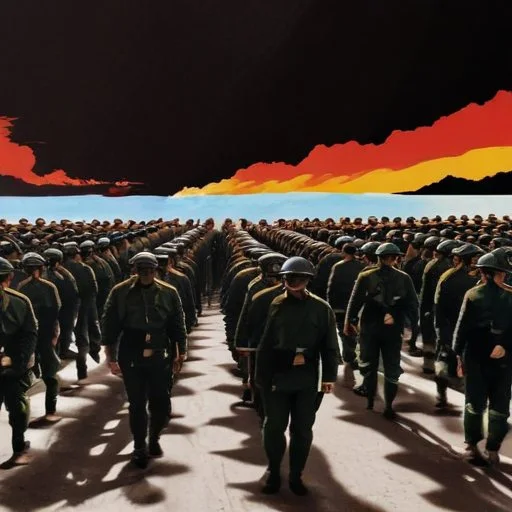
In the early 1970s, public dissent and anti-war sentiment in the United States had reached an all-time high. Protests, sit-ins, and demonstrations became the norm, as Americans grew weary of the seemingly endless conflict. In response, the Nixon administration initiated a policy of "Vietnamization," aimed at gradually transferring military responsibility to the South Vietnamese.
This strategy, coupled with secret peace talks in Paris, paved the way for the eventual withdrawal of US combat troops. On March 29, 1973, the last remnants of the US military presence departed South Vietnam, bringing an end to America's direct involvement in the war.
The Vietnam War had left an indelible mark on American society. The conflict had polarized the nation, pitting hawks against doves, and sparking heated debates about patriotism, loyalty, and the role of the military in foreign policy.
As the last US soldiers departed, a mix of emotions filled the air. There was relief, yes, but also anxiety and uncertainty about the future. Would the South Vietnamese be able to withstand the North's aggression? Would America's withdrawal signal a complete abandonment of its allies?
The Vietnam War had exacted a devastating toll on humanity. Over 58,000 American soldiers had lost their lives, with over 300,000 wounded. Vietnamese civilian casualties were staggering, with estimates ranging from 1 to 3 million.
The war had also left a lasting impact on the soldiers who had fought. Many returned home grappling with the physical and emotional scars of combat, only to face a skeptical and often hostile public.
The withdrawal of US combat troops from South Vietnam marked a turning point in American foreign policy. The event signaled a shift towards a more pragmatic, realist approach, one that prioritized national interest over ideological crusades.
The fall of Saigon in 1975, just two years after the US withdrawal, would serve as a poignant reminder of the war's unresolved legacy. Yet, in the years that followed, America would slowly rebuild its relations with Vietnam, eventually normalizing diplomatic ties in 1995.
"We will not be driven out of Vietnam by a strategy of attrition. We will not be defeated by a war of frustration. We will not be divided by a campaign of terror." - Richard Nixon, 1970
"The war in Vietnam is ending. The war in America is just beginning." - Anti-war activist, 1973
The withdrawal of US combat troops from South Vietnam was a complex, multifaceted event that marked the end of a tumultuous chapter in American history. As we reflect on this pivotal moment, we are reminded of the human cost of war, the power of public opinion, and the enduring legacy of a conflict that continues to shape our world today.
The Vietnam War was fought against the backdrop of the Cold War, with the United States and the Soviet Union engaged in a global ideological struggle. The communist North Vietnam, backed by China and the Soviet Union, sought to reunify the country under communist rule, while the United States and its allies supported the anti-communist government of South Vietnam.
The war was also influenced by the Domino Theory, which posited that if one Southeast Asian country fell to communism, others would follow. This fear prompted the United States to intervene in Vietnam, hoping to prevent a communist takeover of the region.
The Vietnam War had a profound impact on American culture, with the conflict inspiring a wide range of artistic and literary works. Musicians like Bob Dylan and Joan Baez wrote protest songs, while writers like Norman Mailer and Kurt Vonnegut wrote about the war and its effects on American society.
The war also influenced film and television, with movies like "Apocalypse Now" and "Platoon" offering critical portrayals of the conflict. The war even influenced fashion, with the hippie movement's embrace of bell-bottom jeans and tie-dye shirts reflecting the anti-war sentiment of the era.
Historians have debated the significance of the Vietnam War, with some viewing it as a misguided attempt to stop the spread of communism, while others see it as a noble effort to protect democracy and freedom.
Revisionist historians like Gabriel Kolko have argued that the war was a product of American imperialism, while traditionalists like Guenter Lewy have seen it as a necessary response to communist aggression. More recent historians, like Fredrik Logevall, have taken a more nuanced approach, highlighting the complexities and ambiguities of the conflict.

The Vietnam War played a significant role in American politics, with the conflict shaping the course of presidential elections and congressional debates. The war helped to divide the Democratic Party, with anti-war liberals like Eugene McCarthy and George McGovern challenging the hawkish policies of President Lyndon B. Johnson.
The war also influenced the rise of conservatism, with Ronald Reagan using the war as a campaign issue in his 1966 gubernatorial campaign. Reagan's tough stance on communism and his support for the war effort helped to establish him as a leading figure in the conservative movement.
The Pentagon Papers, a secret study of the war commissioned by Secretary of Defense Robert McNamara, revealed the depths of government deceit and manipulation in the Vietnam War. The Papers, leaked by Daniel Ellsberg in 1971, showed that the Johnson administration had knowledge of the war's futility, but continued to escalate the conflict nonetheless.
The Papers also revealed the extent of the US military's violations of international law, including the use of napalm and Agent Orange. The revelations sparked widespread outrage and protests, further eroding public support for the war.