


In a shocking turn of events, three high-ranking officials of the Nixon administration were sentenced to prison, marking the culmination of the Watergate scandal, one of the most infamous political scandals in American history. On February 21, 1975, former United States Attorney General John N. Mitchell, former White House Chief of Staff H. R. Haldeman, and former White House advisor John Ehrlichman received prison sentences for their roles in the cover-up of the Watergate break-in.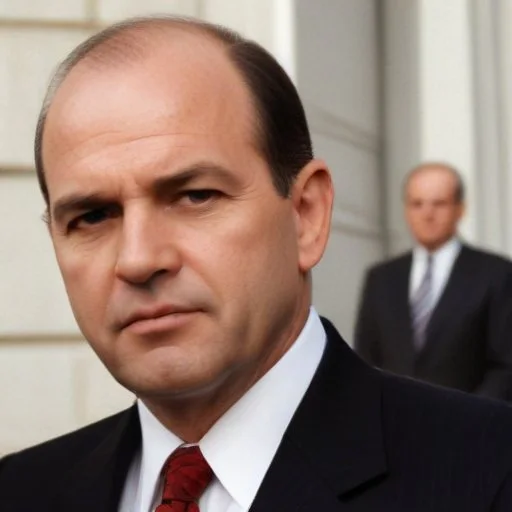
The Watergate scandal began on June 17, 1972, when five men were arrested for breaking into the Democratic National Committee headquarters at the Watergate complex in Washington D.C. The investigation that followed revealed a web of deceit and corruption that went all the way to the top of the Nixon administration.
John N. Mitchell, former Attorney General of the United States, played a pivotal role in the cover-up, using his position to obstruct the investigation. H. R. Haldeman, White House Chief of Staff, and John Ehrlichman, White House advisor, were instrumental in orchestrating the cover-up and destroying evidence.
The sentencing of Mitchell, Haldeman, and Ehrlichman marked a significant milestone in the Watergate scandal, as it held the highest-ranking officials of the Nixon administration accountable for their actions. The scandal led to the resignation of President Richard Nixon on August 9, 1974, and undermined the public's trust in government.
The Watergate scandal had far-reaching cultural and social implications, with many Americans questioning the integrity of their government. The scandal inspired a new era of investigative journalism, with reporters like Bob Woodward and Carl Bernstein becoming household names.
"I am not a crook" - Richard Nixon, November 17, 1973, at a press conference
The Watergate scandal is often compared to other notable political scandals, such as the Iran-Contra affair and the Monica Lewinsky scandal. However, the sheer scope and repercussions of Watergate set it apart as one of the most significant political scandals in American history.
The Watergate scandal led to a re-evaluation of presidential powers and the importance of checks and balances within the government. It also paved the way for future investigations and reforms, such as the passage of the Ethics in Government Act of 1978.
The Watergate scandal serves as a reminder of the importance of accountability and transparency in government. It highlights the critical role of a free press and the need for vigilance in protecting democratic institutions.
In the words of Carl Bernstein, "The Watergate scandal was a defining moment in American history, a moment that exposed the dark underbelly of politics and reminded us that even the most powerful among us are not above the law."
The night of June 17, 1972, was one of high anxiety for the five men who broke into the Democratic National Committee headquarters at the Watergate complex. The group, led by G. Gordon Liddy, a former FBI agent, and E. Howard Hunt, a CIA operative, had been planning the operation for weeks.
Their mission was to install wiretaps on the phones of key Democratic officials, but things didn't go as planned. The burglars were caught by security guard Frank Wills, who noticed tape covering the latch on a stairwell door. The ensuing investigation would unravel a web of deceit that would shake the foundations of American politics.
The burglars were found to have sophisticated espionage equipment, including wiretapping devices, cameras, and lock-picking tools. The investigation that followed revealed a complex network of secret funds, cash payments, and clandestine meetings, all leading back to the White House.

John N. Mitchell, the 67th Attorney General of the United States, was a key figure in the Watergate scandal. As Nixon's campaign manager and closest advisor, Mitchell was instrumental in planning and executing the cover-up.
Born on September 5, 1913, in Detroit, Michigan, Mitchell was a graduate of Fordham University and served in the Navy during World War II. He practiced law in New York before entering politics, becoming a close friend and advisor to Richard Nixon.
Mitchell's involvement in the Watergate scandal led to his conviction on February 21, 1975, on charges of conspiracy, obstruction of justice, and perjury. He served 19 months in prison, becoming the first U.S. Attorney General to do so.
), {CIS
The Watergate scandal pushed the United States to the brink of a constitutional crisis, as President Nixon's assertion of executive privilege clashed with the judiciary's notion of the rule of law.
The iconic Supreme Court case, United States v. Nixon, pitted the President against the judiciary, forcing a showdown over the limits of presidential power.
The Court's 8-0 decision in favor of the special prosecutor, Archibald Cox, established a crucial precedent, upholding the principle that no one, not even the President, is above the law.

The Watergate scandal was marked by a series of crucial documents that exposed the Nixon administration's deceit. One such document was the "smoking gun" tape, recorded on June 23, 1972, which revealed Nixon's direct involvement in the cover-up.
The tape, along with other key documents like the Road Map, a detailed plan for the cover-up, and the Haldeman Notes, a set of damning notes from Haldeman's diary, provided irrefutable evidence of the administration's wrongdoing.
These documents, along with others, formed the basis of the prosecution's case against Nixon's top aides, ultimately leading to their convictions and Nixon's resignation.