


In 1776, the world of economics was forever changed with the publication of The Wealth of Nations, a landmark work by Scottish philosopher and economist Adam Smith. This foundational text introduced the concept of the "invisible hand," a revolutionary idea that continues to shape the global economy to this day.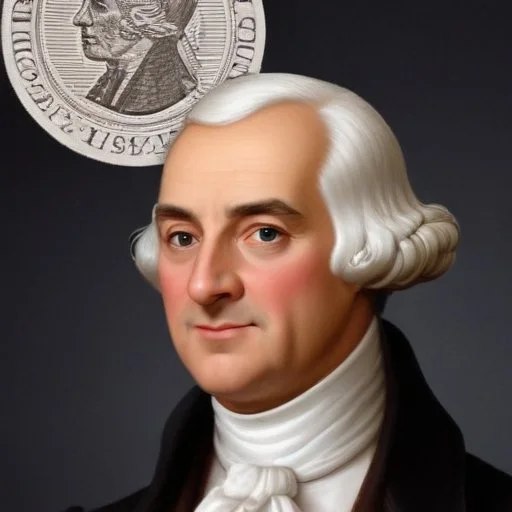
Sometime in the mid-1760s, Adam Smith began working on his magnum opus, pouring over a decade of research and observation into the manuscript. The result was a comprehensive treatise that challenged conventional mercantilist views and paved the way for a more liberal approach to trade and commerce.
Smith's work marked a significant departure from the prevailing mercantilist views of the time, which emphasized government control and protectionism. Instead, The Wealth of Nations presented a vision of economics as a dynamic, self-regulating system that could function optimally with minimal government intervention.
The Wealth of Nations went on to influence some of the most prominent thinkers and policymakers of the time, including Thomas Jefferson, Benjamin Franklin, and Karl Marx. The book's ideas continue to shape economic policy and debate, making it one of the most enduring and influential works in the history of economics.
The publication of The Wealth of Nations had far-reaching consequences, contributing to the development of modern capitalism and shaping the global economy as we know it today. As Adam Smith himself wrote, "It is not from the benevolence of the butcher, the brewer, or the baker that we expect our dinner, but from their regard to their own interest."
"The natural effort of every individual to better his own condition, when suffered to exert itself with freedom and security, is so powerful a principle, that it is alone, and without any assistance, capable of carrying on the greater part of the business of life."
— Adam Smith, The Wealth of Nations
The Wealth of Nations did not only contribute to the development of economics as a discipline, but it also had a profound impact on the cultural and social fabric of the time. The book's ideas resonated with the values of the Enlightenment, emphasizing individual liberty, reason, and progress.
More than two centuries after its publication, The Wealth of Nations remains a foundational text in the field of economics, a testament to the power of ideas to shape our understanding of the world and our place within it. As we continue to grapple with the complexities of the global economy, Adam Smith's masterpiece remains an essential reading, offering timeless insights into the nature of human society and the pursuit of prosperity.
In the mid-18th century, Scotland was experiencing a cultural and intellectual explosion, known as the Scottish Enlightenment. It was during this time that Adam Smith, a young professor at the University of Glasgow, began to develop his ideas on economics and politics.
This era saw a convergence of thinkers, writers, and scientists who were driven by a passion for reason, individual liberty, and the pursuit of knowledge. The likes of David Hume, François Quesnay, and James Hutton were all part of this vibrant intellectual community, which laid the groundwork for Smith's magnum opus.
The Wealth of Nations was, in many ways, a product of this fertile intellectual environment, where innovative ideas were encouraged and debated.
Adam Smith, born in 1723, was a soft-spoken and introspective individual who spent much of his life studying and teaching. Despite his reserved nature, Smith was an astute observer of human behavior and a prolific writer.
His early years as a professor at the University of Glasgow saw him develop a strong interest in moral philosophy and economics. It was during this time that he began to formulate his ideas on the "invisible hand" and the benefits of free markets.
Smith's personal life was marked by simplicity and frugality, reflecting his commitment to living a life of virtue and moderation.
The publication of The Wealth of Nations in 1776 was more than just an economic treatise – it was a cultural phenomenon. The book's ideas resonated with the values of the Enlightenment, emphasizing individual liberty, reason, and progress.
The book's influence extended beyond the realm of economics, permeating literature, art, and politics. Authors like Charles Dickens and Jane Austen drew inspiration from Smith's ideas, while artists like J.M.W. Turner captured the spirit of industrialization and progress.
The Wealth of Nations became a cultural touchstone, symbolizing the dawn of a new era in human history.
The publication of The Wealth of Nations had far-reaching economic consequences, shaping the course of modern capitalism. The book's ideas on free markets, division of labor, and the "invisible hand" became the cornerstones of classical economics.
The book's influence can be seen in the policies of governments and institutions, from the British Parliament to the World Bank. Its ideas have been debated and refined by economists, policymakers, and business leaders for centuries.
At its core, The Wealth of Nations is a deeply philosophical work, rooted in Adam Smith's understanding of human nature, morality, and the pursuit of happiness.
Smith's concept of the "invisible hand" is, in essence, a philosophical argument for the benefits of individual liberty and the unintended consequences of human action.
The Wealth of Nations reflects Smith's commitment to the principles of Enlightenment thought, emphasizing reason, individualism, and the pursuit of progress.