


The year was 1920, and the tide of change had finally reached the shores of the United States. On June 4th, the U.S. Congress APPROVED a historic milestone that would alter the course of American democracy: the 19th Amendment to the United States Constitution, guaranteeing women the fundamental right to vote.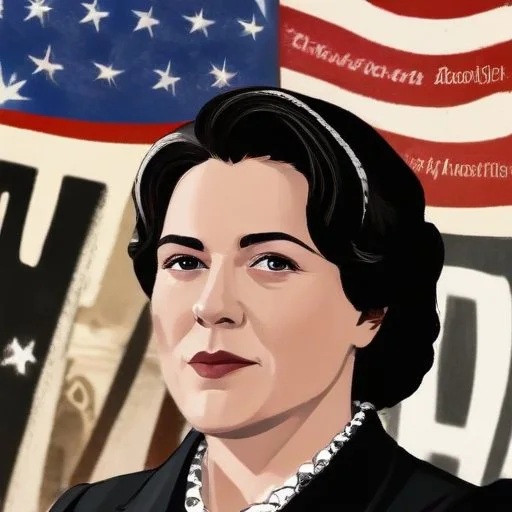
Seeds of this revolution were sown decades earlier, when pioneering women like Elizabeth Cady Stanton, Susan B. Anthony, and Alice Paul took up the mantle of equality. Their unwavering dedication to the cause, despite facing ridicule, arrests, and even violence, paved the way for this groundbreaking moment.
In the late 19th century, women's rights activists began organizing conventions, petitions, and marches to demand equal voting rights. The pioneering work of these trailblazers laid the foundation for the 19th Amendment, which would finally give women a voice in the democratic process.
The 19th Amendment's ratification marked a seismic shift in American politics, as women finally gained a seat at the table. This hard-won victory opened doors to new opportunities, allowing women to participate in the democratic process and shape their own destinies.
"The right of citizens of the United States to vote shall not be denied or abridged by the United States or by any State on account of sex." - 19th Amendment to the United States Constitution
The 19th Amendment's impact extended far beyond the ballot box. It paved the way for women to assume leadership roles in politics, education, and the workforce, ultimately reshaping the social and cultural fabric of the United States.
Today, as we celebrate this milestone, we honor the unwavering spirit of those who fought tirelessly for equality. Their crusade for justice continues to inspire generations, reminding us that the power of collective action can shape the course of history.
Elizabeth Cady Stanton, Susan B. Anthony, and Alice Paul were just a few of the trailblazing women who dared to challenge the status quo. Their courage, perseverance, and unwavering commitment to equality continue to inspire us today.
As we look back on this pivotal moment in American history, we are reminded that the struggle for equality is never truly won, but constantly evolving. The 19th Amendment's legacy serves as a beacon, illuminating the path forward as we continue to strive for a more just and equitable society.
Alice Paul: The Architect of the 19th Amendment
Alice Paul was a pioneering suffragist who played a crucial role in the passage of the 19th Amendment. Born in 1885, Paul was a fiercely determined individual who dedicated her life to the cause of women's suffrage. She was a leader of the National Woman's Party and organized numerous protests and demonstrations to draw attention to the issue.
Paul's determination and strategic thinking were instrumental in convincing President Woodrow Wilson to support the 19th Amendment. Her efforts ultimately led to the amendment's passage, securing a major victory for women's rights in the United States.

The Cultural Significance of the 19th Amendment
The 19th Amendment's impact extended far beyond the political realm, having a profound influence on American culture. It marked a significant shift in societal attitudes towards women, acknowledging their contributions and perspectives as valuable and necessary.
The amendment's passage also paved the way for women to participate more fully in the arts, literature, and education, leading to a flourishing of female creatives and intellectuals in the decades that followed.
The Historiographical Significance of the 19th Amendment
The 19th Amendment's passage has been the subject of extensive historiographical analysis, with scholars examining its significance in the context of American democracy and the struggle for women's rights.
Historians have argued that the amendment's passage marked a critical moment in the development of American democracy, expanding the franchise and paving the way for future social and political reforms.

The Economic Impact of the 19th Amendment
The 19th Amendment's passage had significant economic implications for women and society as a whole. With the right to vote, women gained greater control over their economic lives, enabling them to participate more fully in the workforce and make informed decisions about their financial futures.
The amendment's passage also led to increased economic independence for women, allowing them to pursue educational and career opportunities previously denied to them.
The Social Change Dynamics of the 19th Amendment
The 19th Amendment's passage was a critical moment in the struggle for women's rights, marking a significant shift in the dynamics of social change in the United States.
The amendment's passage demonstrated the power of collective action and grassroots organizing, inspiring future generations of social activists to work towards creating a more just and equitable society.