


The World Trade Center bombing on February 26, 1993, is etched in the collective memory of Americans as a day of unspeakable horror. On that fateful day, a truck bomb parked below the North Tower of the World Trade Center in New York City exploded, claiming six innocent lives and injuring over 1,000 people.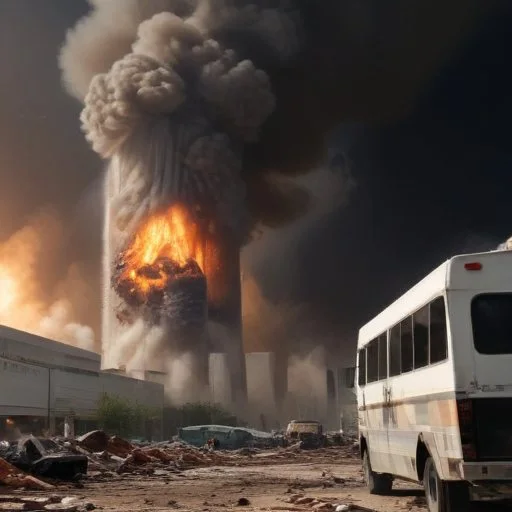
The concept of Jihad, or holy war, had been gaining momentum in the Islamic world since the 1980s. The 1991 Gulf War, in which the United States led a coalition of nations against Iraq, exacerbated the situation. A group of radical Islamic extremists, led by Ramzi Yousef, saw the bombing as an opportunity to exact revenge on the United States.
Ramzi Yousef, the mastermind behind the bombing, was a Pakistani-Kuwaiti terrorist affiliated with the Islamist group al-Qaeda. Yousef's uncle, Khalid Sheikh Mohammed, would later become one of the key planners of the 9/11 attacks.
The bombing led to a significant overhaul of security measures in the United States. The FBI established a dedicated Counterterrorism Division, and the country's intelligence agencies began to share information more effectively. The bombing also sparked a renewed focus on combating terrorism, with the passage of the 1994 Omnibus Crime Bill, which included provisions for combating terrorism.
The World Trade Center bombing marked a turning point in the American psyche, fostering a sense of vulnerability and insecurity. The event also led to a surge in Islamophobia, with many Americans struggling to distinguish between radical Islamists and peaceful Muslims.
Although the bombing was widely condemned, some critics argued that the FBI's investigation was marred by incompetence and miscommunication. The agency was accused of missing opportunities to foil the plot and of withholding information from the public.
One of the most poignant stories to emerge from the bombing was that of John DiGiovanni, a 45-year-old firefighter who lost his life in the blast. DiGiovanni's bravery has been remembered and honored in the years since, with his sacrifice serving as a testament to the courage of New York City's first responders.
The World Trade Center bombing served as a precursor to the 9/11 attacks, which would claim nearly 3,000 lives eight years later. The bombing also influenced the development of the USA PATRIOT Act, passed in response to the 9/11 attacks, which expanded the authority of law enforcement agencies to gather intelligence and conduct surveillance.
The World Trade Center bombing was a watershed moment in American history, one that would have far-reaching consequences for national security, international relations, and the global war on terror. As we remember the victims and heroes of that fateful day, we are reminded of the importance of vigilance, resilience, and unity in the face of terrorism.
The World Trade Center bombing was not an isolated incident, but rather part of a broader trend of terrorist activity in the 1990s. In the years leading up to the bombing, there were several other notable attacks, including the 1991 assassination attempt on Egyptian President Hosni Mubarak and the 1992 bombing of the Israeli embassy in Buenos Aires. The bombing of the World Trade Center was a key moment in this escalating cycle of violence, marking a shift towards more spectacular and devastating attacks.
The roots of this trend can be traced back to the 1980s, when Islamist groups like al-Qaeda began to coalesce around a shared ideology of jihad. The 1991 Gulf War, in which the United States led a coalition of nations against Iraq, further fueled this sense of grievance and mobilization. In this context, the World Trade Center bombing was not only a act of revenge against the United States, but also a declaration of war against the Western world.

Ramzi Yousef, the mastermind behind the World Trade Center bombing, was a Pakistani-Kuwaiti terrorist with a complex and multifaceted identity. Born in 1967, Yousef was raised in a family of Islamist activists and was educated in Islamic schools in Pakistan. He later attended college in Wales, where he became radicalized and began to plot his revenge against the West. Yousef's involvement with al-Qaeda led him to collaborate with other notorious terrorists, including his uncle Khalid Sheikh Mohammed, who would later become one of the key planners of the 9/11 attacks.
The World Trade Center bombing marked a significant turning point in the cultural and social landscape of the United States. In the aftermath of the bombing, there was a surge in Islamophobia, with many Americans struggling to distinguish between radical Islamists and peaceful Muslims. This backlash was fueled by media portrayals of Muslims as terrorists, as well as by political rhetoric that emphasized the threat of Islamic extremism. The bombing also had a profound impact on the Muslim-American community, which faced increased scrutiny and suspicion in the years that followed.

The World Trade Center bombing had a significant impact on the economy of New York City and the United States as a whole. The bombing caused an estimated $500 million in damages, as well as significant disruptions to the city's economy. In the aftermath of the bombing, there was a decline in tourism and a loss of business confidence, which further exacerbated the economic downturn. The bombing also led to increased spending on security measures, which added to the financial burden on the city and the nation.
The World Trade Center bombing must be understood within the broader context of geopolitical rivalries and conflicts in the Middle East. The bombing was, in part, a response to the 1991 Gulf War, which had further solidified the United States' position as a dominant military power in the region. The bombing was also seen as a challenge to the Western-led world order, and as an assertion of Islamist power and influence. In this sense, the bombing was a key moment in the ongoing struggle for power and influence in the Middle East, and marked a shift towards more direct and violent forms of confrontation.