


The Allied forces, led by General Douglas Haig, launched a surprise attack on August 8, 1918, with a combined force of British, French, and Canadian troops. The Germans, caught off guard, were quickly overwhelmed by the sheer scale of the assault.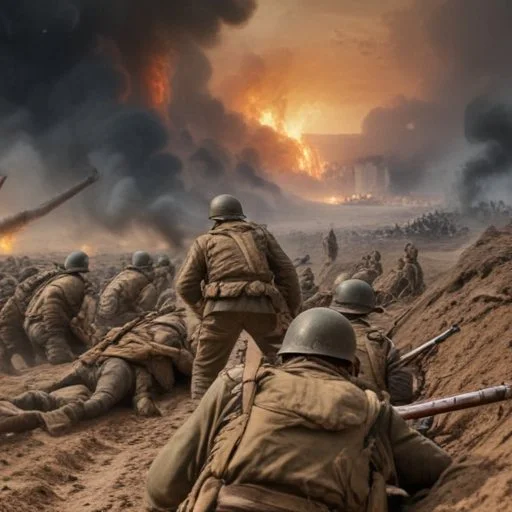
By the end of the first day, the Germans had suffered staggering losses, with estimates suggesting over 27,000 casualties. The Allies, meanwhile, had captured over 12,000 prisoners, a stark contrast to the heavy losses they had suffered earlier in the war.
The battle continued for another three days, but the outcome was never in doubt. The Germans were in full retreat, and the Allies were in hot pursuit. By August 11, the Battle of Amiens was all but over, marking a crushing defeat for the German army.
The Battle of Amiens showcased the Allies' new approach to warfare, combining artillery, tanks, and infantry in a coordinated and devastating attack. This marked a shift away from the traditional trench warfare that had characterized the conflict up until this point.
The use of tanks, in particular, proved to be a game-changer, allowing the Allies to break through German defenses and gain a significant advantage on the battlefield.
The Battle of Amiens was a turning point in the war, marking the beginning of the end for the German army. The defeat was a devastating blow to German morale, and it paved the way for the eventual surrender of Germany on November 11, 1918.
The battle also cemented the reputation of the Canadian Corps as a formidable fighting force, earning them a reputation as the "shock troops" of the British Expeditionary Force.
"The whole area behind the enemy's lines was a perfect chaos... The Germans were beating a hasty retreat, and our advanced troops were busily engaged in rounding up prisoners and gathering in the spoils of war." - Lieutenant-General Sir Richard Butler, British Army
"The battle of Amiens was a mighty tornado which swept away the German army and brought the war to an end." - Marshal Ferdinand Foch, Supreme Allied Commander
The Battle of Amiens was a pivotal moment in World War I, marking a decisive shift in the balance of power on the Western Front. Its impact on the war's trajectory was profound, paving the way for Germany's eventual surrender and the end of the conflict.
The Battle of Amiens was not just a decisive victory for the Allies, but also marked a significant shift in the way warfare was conducted. The use of tanks, artillery, and infantry in a coordinated attack was a departure from the traditional trench warfare that had characterized the conflict up until this point. This new approach, known as "combined arms," would go on to influence military tactics for generations to come.
The battle also saw the introduction of new technologies, such as aerial reconnaissance and wireless communication, which played a crucial role in the Allied victory. These innovations allowed for more rapid communication and coordination between units, giving the Allies a significant advantage over the Germans.

General Douglas Haig: The Architect of Victory
General Douglas Haig was the commander-in-chief of the British Expeditionary Force during the Battle of Amiens. A veteran of the Boer War and the early years of World War I, Haig was a seasoned military leader who had earned a reputation for his tactical prowess. Despite facing criticism for his role in previous battles, Haig played a crucial role in planning and executing the Allied victory at Amiens.
Haig's leadership was instrumental in bringing together the disparate forces of the British, French, and Canadian armies, and his commitment to the use of combined arms tactics was a key factor in the battle's success.
The Battle of Amiens was not just a military victory, but also a significant psychological blow to the German army. The speed and scale of the Allied advance caught the Germans off guard, and the collapse of their defenses was a devastating blow to their morale.
In contrast, the Allies had been buoyed by their success, and the boost to their morale was palpable. The victory at Amiens marked a turning point in the war, as the Allies began to gain the upper hand and the Germans began to lose momentum.
This shift in momentum was reflected in the casualty figures, with the Germans suffering heavy losses while the Allies made significant gains. The battle was a stark reminder of the changing fortunes of war, and would go on to influence the outcome of the conflict.

The Role of Tanks in the Battle of Amiens
The Battle of Amiens was one of the first major battles in which tanks played a significant role. The British Mark V tank, in particular, proved to be a game-changer on the battlefield, its superior firepower and armor allowing it to break through German defenses with ease.
The use of tanks also allowed the Allies to exploit weak points in the German line, and to quickly capitalize on breakthroughs. The impact of tanks on the battle was profound, and would go on to influence the development of armored warfare in the decades that followed.
The Geopolitical Context of the Battle of Amiens
The Battle of Amiens took place against a backdrop of shifting geopolitical alliances and rivalries. The entry of the United States into the war had added a new dimension to the conflict, and the Allies were increasingly united in their determination to defeat Germany.
The German army, meanwhile, was facing significant internal and external pressures. The collapse of Russia had freed up troops to be redeployed to the Western Front, but the German economy was struggling to keep pace with the demands of total war.
In this context, the Battle of Amiens was a crucial moment in the war, as the Allies sought to take advantage of German weaknesses and push for a decisive victory.