


The Battle of Jutland, fought on May 31-June 1, 1916, is renowned as the largest naval battle of World War I, witnessing the British Grand Fleet engaging the German High Seas Fleet in a intense and inconclusive confrontation. This epic clash of steel and fire saw over 250 ships and 100,000 sailors locked in a 12-hour struggle, resulting in heavy losses and a reevaluation of naval warfare.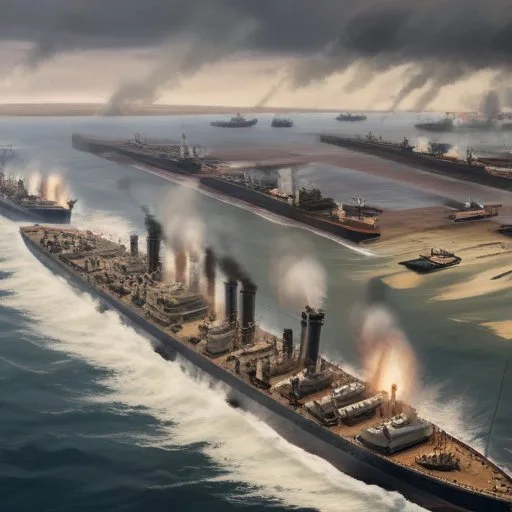
In the early years of World War I, Germany's naval strategy focused on launching surprise attacks on British merchant ships, seeking to disrupt Britain's supply lines and cripple its economy. The British, determined to maintain their dominance of the seas, responded by implementing a naval blockade of Germany, restricting the flow of goods and resources.
By May 1916, the stage was set for a decisive encounter between the two fleets. The British Grand Fleet, commanded by Admiral John Jellicoe, comprised 151 ships, including 28 battleships, 9 battlecruisers, and numerous smaller vessels. Meanwhile, the German High Seas Fleet, led by Admiral Reinhard Scheer, boasted 99 ships, including 22 battleships, 5 battlecruisers, and a range of supporting vessels.
The Battle of Jutland was indeed a clash of titans, but its outcome was far from clear-cut. Although the German High Seas Fleet suffered heavier losses, with 11 ships sunk and over 3,000 casualties, the British Grand Fleet also incurred significant damage, losing 14 ships and over 6,000 men. The inconclusive result left both sides claiming victory, but the true impact of the battle lay in its long-term consequences for naval warfare.
The failure of the German High Seas Fleet to decisively defeat the British led to a reevaluation of Germany's naval strategy, with a greater emphasis on unrestricted submarine warfare. Meanwhile, the British, though shaken, maintained their dominance of the seas and continued to develop new technologies and tactics to counter the German threat.
The Battle of Jutland had a profound impact on the cultural and social fabric of both Britain and Germany. The scale of the losses and the devastation wreaked upon the naval communities led to widespread mourning and soul-searching. In Britain, the battle sparked a surge in recruitment for the Royal Navy, while in Germany, it fueled anti-British sentiment and a determination to continue the fight.
One of the most poignant accounts of the Battle of Jutland comes from British Lieutenant Commander Hubert Henry Stoner, who survived the sinking of the HMS Black Prince. Stoner recalled the chaos and confusion as his ship succumbed to German shells, saying, "The noises were so vast, so shattering... It was like the end of the world."
The Battle of Jutland served as a harbinger of the devastating naval battles that would follow in World War II. The innovations and lessons learned during the battle, such as the development of radar and improved ship design, would shape the course of naval warfare for decades to come.
In conclusion, the Battle of Jutland remains an epic and fascinating chapter in the annals of naval history, a testament to the bravery and sacrifice of those who sailed into the midst of chaos and destruction. As we reflect on this pivotal event, we are reminded of the enduring significance of the sea and the unwavering commitment of those who sail upon it.
Admiral John Jellicoe, the commander of the British Grand Fleet during the Battle of Jutland, was a highly respected and experienced naval officer. Despite his impressive credentials, Jellicoe was known for his cautious approach to naval warfare, which would later be scrutinized in the aftermath of the battle.
Jellicoe's reluctance to engage the German High Seas Fleet in a more aggressive manner has been attributed to his fear of losing the British advantage in ships and men. This cautiousness ultimately led to the German fleet escaping with relatively light damage, sparking controversy and debate among naval historians.
Early Life and CareerBorn in 1859, Jellicoe joined the Royal Navy at the age of 13 and quickly rose through the ranks. He served in various capacities, including as a gunnery officer and as a member of the Navy's War Staff.

The Battle of Jutland had a profound impact on the cultural and social fabric of both Britain and Germany. The scale of the losses and the devastation wrought upon the naval communities led to widespread mourning and soul-searching.
In Britain, the battle sparked a surge in recruitment for the Royal Navy, as well as a renewed sense of patriotism and national pride. In Germany, the battle fueled anti-British sentiment and a determination to continue the fight.
The battle also inspired a wave of artistic and literary works, including poetry, novels, and music. The tragedy and heroism of the battle captured the imagination of the public, and it continues to be commemorated and remembered to this day.
The Battle of Jutland was a watershed moment in the development of naval technology. The battle highlighted the importance of radar, radios, and other communication systems in modern naval warfare.
The German High Seas Fleet's use of advanced tactics, such as the "crossing the T" maneuver, demonstrated the importance of speed and agility in naval engagements. The British response, which relied on traditional gunnery and firepower, was ultimately inadequate against the German tactics.
The battle also led to the development of new ship designs, such as the aircraft carrier and the submarine, which would go on to play critical roles in future naval conflicts.
The Battle of Jutland has been the subject of intense historical debate and interpretation. Some historians have viewed the battle as a British victory, highlighting the German fleet's failure to achieve its strategic objectives.
Others have argued that the battle was a German victory, pointing to the British fleet's failure to destroy the German High Seas Fleet and the German Navy's ability to maintain its presence in the North Sea.
More recently, historians have begun to reevaluate the battle in the context of the larger war, highlighting the importance of the battle in shaping the course of the conflict.
The Battle of Jutland took place within the broader context of World War I, a conflict that pitted the Allied Powers against the Central Powers.
The battle was a key component of the naval war, which was itself a critical aspect of the larger conflict. The German High Seas Fleet's challenge to British dominance of the seas threatened to disrupt the Allied supply lines and cripple the British economy.
The battle also highlighted the importance of the North Sea as a strategic location, with control of the sea lanes and access to the Baltic Sea being crucial for both sides.