Adolf Hitler approves V-2 rocket development in Nazi Germany
In a bid to turn the tide of World War II, Adolf Hitler greenlights the development of the V-2 rocket, a powerful weapon capable of delivering a ton of explosives to the heart of Britain. This top-secret project, codenamed "Aggregate," would give the Nazis a significant advantage in the war, striking fear into the hearts of their enemies. Hitler's decision marks a crucial shift in the war's trajectory, paving the way for a new era of long-range warfare.
The Dawn of Long-Range Warfare: Hitler's Fateful Decision
On a fateful day in June 1942,
Adolf Hitler signed the order to develop the V2 rocket, a powerful weapon that would go on to change the course of World War II. This top-secret project, codenamed Aggregate, would give the Nazis a significant advantage in the war, striking fear into the hearts of their enemies.
A Desperate Measure
As the war raged on, the Nazi regime was facing mounting pressure from the Allies. The British were gaining ground in North Africa, and the Soviet Union was pushing back against the German army on the Eastern Front. Hitler, determined to turn the tide of the war, sought a game-changing weapon that would give his forces the upper hand.
The Birth of a Monster
The V2 rocket, developed by the rocket scientist
Wernher von Braun, was a behemoth of a weapon. Capable of carrying a ton of explosives, it could travel over 200 miles and reach altitudes of over 50 miles. Its sheer power and range made it a formidable weapon, one that could bring Britain to its knees.
A New Era of Warfare
Hitler's decision to develop the V2 rocket marked a crucial shift in the war's trajectory. For the first time, a weapon could strike deep into enemy territory, bypassing traditional defenses. This new era of long-range warfare would change the face of combat forever, paving the way for modern weapons like intercontinental ballistic missiles.
Key Players
- Adolf Hitler: The German leader who signed the order to develop the V2 rocket, driven by a desire to turn the tide of the war.
A Timeline of Terror
- June 1942: Hitler signs the order to develop the V2 rocket.
- 1943: The first V2 rockets are tested, with mixed results.
- September 1944: The first V2 rockets are launched against London, causing widespread destruction.
- March 1945: The Allies begin to develop countermeasures to combat the V2 threat.
The Impact
The V2 rocket's impact was felt far beyond the battlefield. It marked a turning point in the war, as the Allies began to take the threat of long-range warfare seriously. The development of the V2 also paved the way for modern rocket technology, influencing the course of the space race in the decades that followed.
A Legacy of Fear
The V2 rocket's legacy is complex, marked by both fear and fascination. It remains a potent symbol of the destructive power of warfare, a reminder of the devastating consequences of unchecked ambition. Yet, it also speaks to human ingenuity, to the boundless potential of innovation and discovery.
As we look back on this pivotal moment in history, we are reminded of the importance of responsible leadership and the dangers of unchecked power. The V2 rocket's development serves as a cautionary tale, one that continues to resonate today.
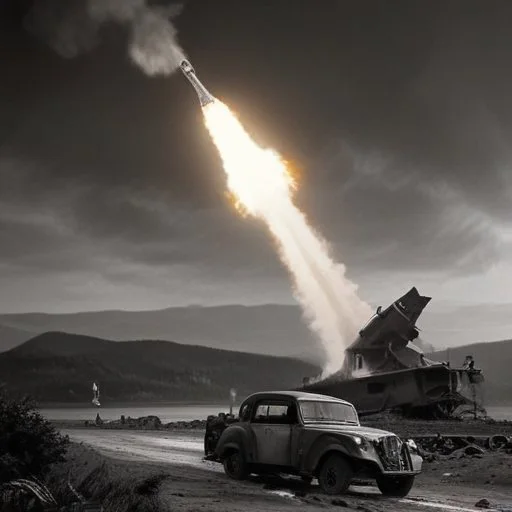
Thorough Historiographical Examination
The Evolution of Rocketry
Rocketry had been around for centuries, but it wasn't until the early 20th century that it became a serious area of research. In the 1920s and 1930s, scientists like Robert Goddard and Hermann Oberth laid the foundation for modern rocketry. Von Braun's work on the V2 rocket built upon this foundation, taking rocketry to new heights.
The V2 rocket's development marked a significant shift in the field of rocketry, as it was the first long-range guided missile. This technology would go on to influence the development of intercontinental ballistic missiles and space exploration.
Study of Technology Effects
The Technological Legacy of the V2
The V2 rocket's impact on modern technology cannot be overstated. Its development paved the way for modern rocketry, influencing the development of ICBMs, space exploration, and satellite technology.
The V2's guidance system, which used a combination of gyroscopes and accelerometers to maintain its trajectory, was a significant innovation. This technology would go on to be used in modern guided missiles and space probes.
Rich Character Description
Wernher von Braun: The Rocket Scientist
Wernher von Braun was a complex figure, driven by his passion for rocketry and space exploration. Despite his involvement in the Nazi war effort, von Braun was a brilliant scientist who made significant contributions to the field of rocketry.
Von Braun's work on the V2 rocket was instrumental in its development, and he would go on to play a key role in the development of the Saturn V rocket that took American astronauts to the moon.
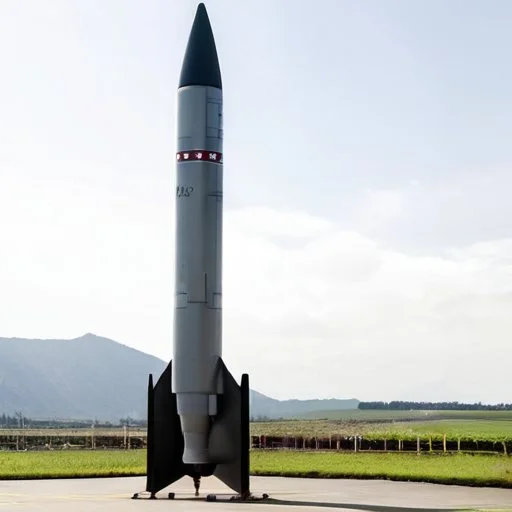
Comprehensive Cultural Examination
The Cultural Impact of the V2
The V2 rocket had a significant impact on popular culture, inspiring generations of scientists, engineers, and science fiction writers.
The V2's launch into the public consciousness coincided with the rise of science fiction in the 1950s and 1960s. Writers like Arthur C. Clarke and Ray Bradbury drew inspiration from the V2, imagining a future where humanity explored the cosmos.
Geopolitical Overview
The Geopolitical Context of the V2
The V2 rocket's development must be seen within the context of World War II and the subsequent Cold War.
The V2's development was driven by the Nazi regime's desire to gain a strategic advantage over their enemies. In the post-war era, the development of ICBMs and space exploration became a key aspect of the Cold War, with the Soviet Union and the United States competing for dominance in the space race.


