


On a fateful day in July 1944, the course of history hung in the balance as Adolf Hitler, the infamous leader of Nazi Germany, narrowly escaped an audacious assassination attempt led by German Army Colonel Claus von Stauffenberg. This daring plot, known as Operation Valkyrie, would go down in history as one of the most remarkable and intriguing events of World War II.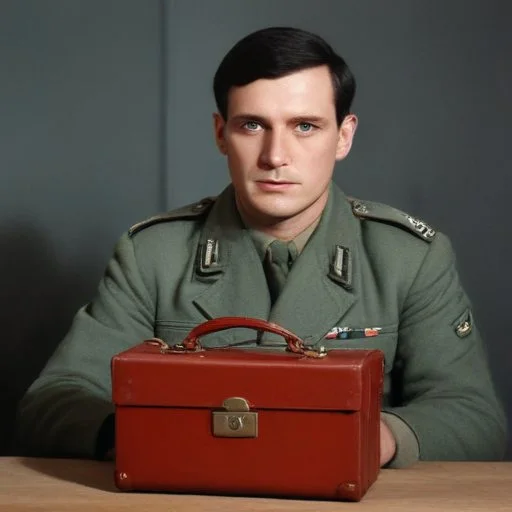
In the midst of World War II, Germany was facing a downward spiral of defeat and despair. The Soviet Union had begun to reclaim its territory, and the Allies were making significant gains in Western Europe. Meanwhile, within the German army, a growing sense of discontent and disillusionment with Hitler's leadership had been simmering. A group of high-ranking officers, including Stauffenberg, conspired to overthrow the Nazi regime and establish a new government that would negotiate peace with the Allies.
Colonel Stauffenberg, a decorated war hero and experienced officer, was the driving force behind Operation Valkyrie. Born into an aristocratic family, Stauffenberg was deeply concerned about the moral and strategic implications of Hitler's leadership. Despite losing an eye, a hand, and two fingers in combat, Stauffenberg remained undeterred and continued to serve in the German army. His unique position as Chief of Staff to the Reserve Army allowed him to orchestrate the plot from within.
On that sweltering summer day, Stauffenberg arrived at the Wolf's Lair, Hitler's Eastern Front headquarters in East Prussia, armed with a briefcase containing a time bomb. During a high-level meeting, Stauffenberg strategically placed the briefcase under the conference table, mere feet away from Hitler. After excusing himself to make a phone call, the bomb detonated with devastating force, killing four senior officers and injuring several others. Miraculously, Hitler survived with only minor injuries to his eardrums and a few scratches.
The failed assassination attempt sent shockwaves throughout Germany, and the conspiracy began to unravel. Stauffenberg and his co-conspirators were swiftly rounded up and arrested. In the subsequent trials, Stauffenberg maintained his dignity and refused to betray his comrades, even under intense interrogation. He was eventually executed by firing squad on August 21, 1944, along with three other key conspirators.
The assassination attempt has been immortalized in literature, film, and popular culture, inspiring works such as the 2008 film "Valkyrie" and numerous literary accounts. The event has also served as a powerful symbol of resistance against tyranny and oppression, inspiring generations of activists and freedom fighters around the world.
"I cannot recognize the methods which the Führer uses. I have a sense of duty to my country, and I cannot fulfill that duty if I recognize the methods of the Führer." - Colonel Claus von Stauffenberg
This poignant quote, spoken by Stauffenberg during his trial, encapsulates the complex moral dilemmas faced by those trapped within the Nazi regime, and serves as a testament to the enduring power of conscience and conviction.
Colonel Henning von Tresckow: The Unsung Hero of Operation Valkyrie
While Claus von Stauffenberg is often credited as the mastermind behind Operation Valkyrie, another key figure played a crucial role in the plot. Colonel Henning von Tresckow, a highly respected and experienced officer, was the first to propose the idea of assassinating Hitler.
Tresckow was a charismatic leader who had earned the respect of his peers and superiors. His initial plan, codenamed "Walküre," involved using the Reserve Army to seize key government buildings and communication centers in Berlin.
Stauffenberg and Tresckow worked closely together to refine the plan, with Stauffenberg eventually taking the lead in the plot. Despite his crucial contribution, Tresckow's role was largely overshadowed by Stauffenberg's dramatic actions. Nevertheless, his bravery and dedication to the cause remain an important footnote in the history of Operation Valkyrie.
The Cultural Legacy of Operation Valkyrie
The failed assassination attempt has inspired countless artistic works, from novels and films to plays and documentaries. One of the most notable adaptations is the 2008 film "Valkyrie," starring Tom Cruise as Claus von Stauffenberg.
The event has also been referenced in popular culture, with appearances in TV shows such as "The Man in the High Castle" and "Doctor Who."
Operation Valkyrie has additionally become a powerful symbol of resistance against tyranny, inspiring activists and freedom fighters around the world.
The Geopolitical Context of Operation Valkyrie
In the aftermath of the D-Day landings, the Allies had established a foothold in Western Europe, while the Soviet Union was making gains on the Eastern Front. Germany was caught in a pincer movement, with its military resources stretched to the breaking point.
Against this backdrop, Operation Valkyrie was seen as a last-ditch effort to salvage the situation and negotiate a peace treaty with the Allies. The plotters hoped that by removing Hitler, they could establish a more moderate government that would be willing to surrender.
The failure of the plot only served to harden Hitler's resolve, leading to further brutal suppression of opposition and increased brutality against civilians.

Historians' Divergent Views on Operation Valkyrie
Historians have long debated the significance and motivations behind Operation Valkyrie. Some view the plot as a genuine attempt to overthrow the Nazi regime, while others see it as a self-serving effort to spare the lives of high-ranking military officers.
The motivations of key figures like Stauffenberg and Tresckow have also been subject to interpretation. Were they driven by a desire to save Germany from defeat, or did they genuinely oppose the Nazi regime's ideology?
Despite these debates, most historians agree that Operation Valkyrie marked a turning point in World War II, cementing Hitler's grip on power and paving the way for the eventual defeat of Germany.
The Economic Consequences of Operation Valkyrie
The failed assassination attempt had significant economic implications for Germany. With Hitler's grip on power tightened, the regime's brutal suppression of opposition led to further instability and uncertainty.
This, in turn, led to a decline in investor confidence, a decrease in production, and a shortage of essential goods. The German economy, already strained by the war effort, was further weakened.
The eventual defeat of Germany would lead to a prolonged period of economic rebuilding, with the Allied powers imposing harsh reparations and occupation policies.