


On the night of March 9, 1945, Allied forces unleashed a relentless barrage of incendiary devices over Tokyo, reducing the city to ashes and claiming the lives of over 100,000 civilians. This catastrophic event, codenamed Operation Meetinghouse, remains one of the deadliest and most destructive bombing campaigns in history.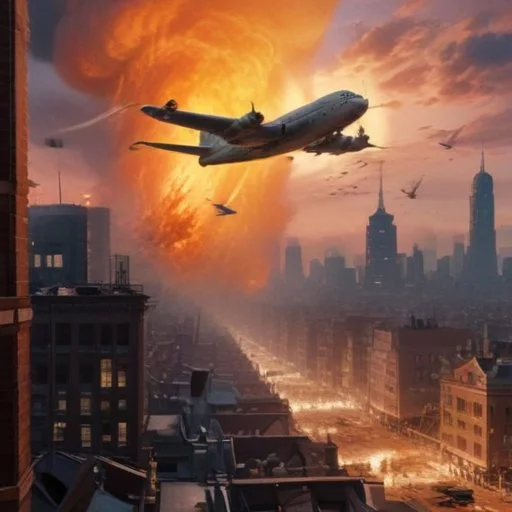
As World War II raged on, the Allies sought to weaken Japan's ability to wage war. The Japanese capital, Tokyo, was a prime target, with its dense population and bustling industrial centers. By the spring of 1945, the Allies hadalready launched several air raids on Tokyo, but Operation Meetinghouse would be the most devastating of all.
The bombers, comprising 334 B29s, took off from airbases in the Mariana Islands, carrying a payload of incendiary devices designed to ignite fires and create massive destruction. The aircraft formed a massive formation, releasing their deadly cargo over a period of three hours.
The bombs, nicknamed "firebombs," were specifically designed to start fires that would spread quickly, fueled by strong winds and closely-packed wooden buildings. The results were catastrophic: entire neighborhoods were engulfed in flames, and the city's fire department was quickly overwhelmed.
The aftermath of Operation Meetinghouse was nothing short of apocalyptic. Over 100,000 civilians lost their lives, with many more injured or displaced. The city's infrastructure was severely damaged, leaving millions without access to basic necessities like food, water, and shelter.
The bombing campaign also had a profound impact on Tokyo's cultural heritage, with many historic landmarks and cultural treasures destroyed or damaged beyond repair. The city's economy was crippled, and the Japanese war effort was significantly weakened.
Operation Meetinghouse was a turning point in the war, as it significantly weakened Japan's ability to wage war and paved the way for the country's eventual surrender. The bombing campaign also had a profound impact on the global community, raising questions about the morality and ethics of carpet bombing civilian populations.
The operation also spurred significant changes in urban planning and architecture, as cities around the world began to adopt fire-resistant building materials and design principles to mitigate the effects of future bombings.
In the face of unimaginable destruction, the people of Tokyo showed remarkable resilience and courage. Stories of ordinary citizens who risked their lives to rescue others, provide aid, and rebuild their city are a testament to the human spirit.
The bombing also inspired a new generation of peacemakers and activists, who worked tirelessly to promote international cooperation and prevent the use of such devastating weapons in the future.
Today, the Tokyo Fire Raids Memorial Museum stands as a poignant reminder of the devastating consequences of war. The museum honors the victims of Operation Meetinghouse, while also promoting peace and reconciliation.
As we reflect on this dark chapter in history, we are reminded of the importance of promoting diplomacy, understanding, and peaceful coexistence. The inferno of Tokyo serves as a powerful warning against the horrors of war and the devastating consequences of our actions.
General Curtis LeMay, a seasoned military strategist, played a pivotal role in planning and executing Operation Meetinghouse. Born on November 15, 1906, in Columbus, Ohio, LeMay rose through the ranks of the United States Army Air Forces during World War II.
LeMay's leadership and tactical genius were instrumental in shaping the Allied bombing campaign against Japan. His innovative approach to aerial warfare, which included the use of incendiary devices, aimed to weaken Japan's industrial capacity and will to fight.
While LeMay's actions have been criticized for their devastating consequences, his legacy as a military leader and tactician remains uncontested. His role in shaping modern aerial warfare and his contributions to the Allied victory in World War II are undeniable.

Operation Meetinghouse had a profound impact on Japanese culture, extending beyond the immediate destruction and loss of life. The bombing campaign led to a significant shift in the country's cultural identity, as traditional values and customs were forced to adapt to the post-war era.
The campaign also spurred a new wave of Japanese literature, as writers and poets sought to process the trauma and devastation of the war. Works by authors like Kenzaburō Ōe and Masuji Ibuse captured the collective psyche of the Japanese people, conveying the sense of loss and disillusionment that permeated the era.
Furthermore, the bombing of Tokyo's cultural landmarks, such as the Imperial Palace and the Meiji Shrine, prompted a reevaluation of Japan's cultural heritage. Efforts to preserve and rebuild these iconic sites underscored the importance of cultural preservation in the face of war and destruction.
Operation Meetinghouse was not an isolated event in the history of World War II. Rather, it was part of a broader strategy of carpet bombing employed by the Allies to demoralize enemy populations and weaken industrial capacity.
In comparison to the Allied bombing campaign against Germany, Operation Meetinghouse stands out for its sheer scale and destructive power. While the bombing of Dresden, for example, resulted in significant destruction, it pales in comparison to the devastation wrought upon Tokyo.
Moreover, the use of incendiary devices in Operation Meetinghouse differentiated it from other bombing campaigns, such as those employed during the Blitz. The deliberate targeting of civilian populations and the use of firebombs raised critical questions about the morality and legality of such tactics in modern warfare.

The economic impact of Operation Meetinghouse was felt far beyond the immediate destruction of Tokyo. The bombing campaign crippled Japan's industrial capacity, disrupting supply chains and decimating key industries such as manufacturing and textiles.
The bombing also led to significant economic instability, as the nation struggled to rebuild and recover. The post-war era saw Japan's economy shrink dramatically, with inflation and scarcity of resources hindering growth and development.
However, the devastation also presented opportunities for rebuilding and modernization. The reconstruction efforts that followed Operation Meetinghouse laid the foundation for Japan's post-war economic miracle, as the nation invested heavily in infrastructure, technology, and human capital.
Operation Meetinghouse showcased the devastating capabilities of modern aerial warfare, demonstrating the potential of incendiary devices to inflict widespread destruction.
The development and deployment of the M69 incendiary device, in particular, marked a significant technological advancement in the field of aerial warfare. The device's design and capabilities paved the way for the development of future incendiary weapons, including napalm.
The campaign also spurred innovative solutions for urban planning and firefighting, as cities around the world sought to mitigate the effects of future bombings. The development of fire-resistant materials, evacuation procedures, and emergency responders' protocols owe a debt to the lessons learned from Operation Meetinghouse.