


On August 19, 1944, the Allied forces embarked on a perilous mission to reclaim the City of Light from the clutches of Nazi occupation, marking a pivotal moment in World War II. This day would go down in history as the beginning of the end of Germany's four-year grip on Paris, as the Allies fought to restore freedom and liberty to the French capital.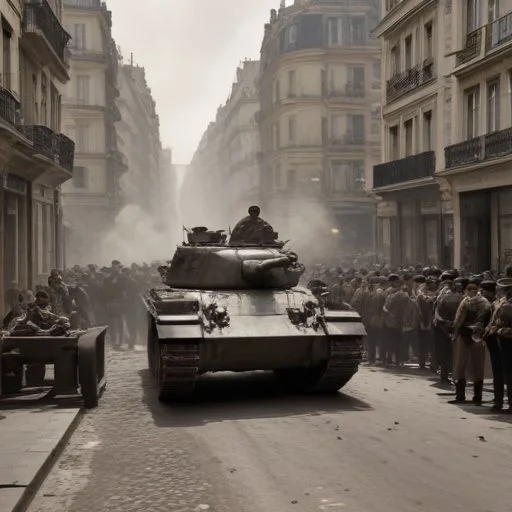
In 1940, Nazi forces invaded France, and Paris fell under their control. For four long years, the city's residents lived in fear, subject to strict curfews, rationing, and arbitrary arrests. The French Resistance, comprised of brave individuals determined to fight back, began to organize and sabotage German efforts. Meanwhile, the Allies were devising a plan to liberate Western Europe, with Paris as a key target.
General Philippe Leclerc, a French general and hero of the Resistance, led the 2nd Armored Division, a combined force of French and American troops. This division was tasked with spearheading the attack on Paris, with the goal of swiftly defeating the German occupiers. American General Omar Bradley, commander of the 12th Army Group, oversaw the overall operation.
The liberation of Paris was a monumental victory for the Allies, marking a significant turning point in the war. The city's liberation paved the way for the eventual defeat of Germany, while also restoring French sovereignty and pride. The event also cemented the strong alliance between France and the United States, fostering a lasting bond between the two nations.
The liberation of Paris had a profound impact on the city's cultural landscape. The war had stifled artistic expression, but with freedom came a resurgence of creative energy. The city's iconic landmarks, such as the Eiffel Tower and Notre-Dame Cathedral, once again became symbols of French identity and resilience. The liberation also paved the way for the avant-garde movement, as artists like Jean-Paul Sartre and Simone de Beauvoir began to shape the city's intellectual and artistic landscape.
One of the most memorable accounts of the liberation comes from French novelist and Resistance fighter, André Malraux. In his memoir, Antimémoires, Malraux recounts the joy and chaos of the liberation, describing the sound of gunfire and cheering crowds as the Allies entered the city.
In recognition of their bravery and sacrifice, the 2nd Armored Division was awarded the Croix de Guerre, France's highest military honor. General Leclerc was also posthumously awarded the title of Marshal of France, the country's highest military rank.
The liberation of Paris serves as a testament to the power of human courage and resilience. The bravery of the Allies, the French Resistance, and the city's residents continues to inspire generations, reminding us that even in the darkest of times, hope and freedom can prevail.
The liberation of Paris marked a cultural renaissance in the city. As the Allies rolled into the city, the once-muted sounds of jazz and swing music filled the air once again. Cafes and cabarets reopened, and artists began to express themselves freely.
The city's iconic fashion industry, which had been stifled by the Nazi occupation, roared back to life. Designers like Christian Dior and Coco Chanel created stunning collections that showcased the city's regained flair and panache.
The City of Light shone bright once more, as art, music, and fashion flourished in the aftermath of liberation.
Historians have long debated the significance of the liberation of Paris. Some, like French historian Henri Michel, have argued that the event marked a turning point in the war, demonstrating the Allies' ability to retake Western Europe.
Others, like American historian Stephen Ambrose, have emphasized the symbolic importance of the liberation, highlighting the restoration of French sovereignty and the rekindling of the Franco-American alliance.
Regardless of interpretation, the liberation of Paris remains a pivotal moment in World War II history, offering insights into the complexities of war, resistance, and liberation.
General Philippe Leclerc, the commander of the 2nd Armored Division, was a crucial figure in the liberation of Paris. A charismatic leader and skilled strategist, Leclerc had fought alongside the Allies since the early days of the war.
Born in 1902, Leclerc was a descendent of a noble family and had a deep sense of duty to France. He joined the French Resistance in 1940 and quickly rose through the ranks, earning the respect of his comrades and the admiration of the French people.
Leclerc's bravery and leadership during the liberation of Paris cemented his legacy as a hero of the French Resistance and a champion of French liberty.
The liberation of Paris was a triumph of military innovation, with tanks playing a key role in the Allied victory. The Sherman tanks, deployed by Leclerc's 2nd Armored Division, proved instrumental in breaching German defenses and breaking through to the city center.
Their mobility and firepower allowed the Allies to outmaneuver and outgun the German forces, paving the way for a swift and decisive victory.
The tactical deployment of tanks in the liberation of Paris marked a significant milestone in the development of armored warfare, showcasing the potential of mechanized forces to shape the outcome of battles.
The liberation of Paris was a transformative moment for French women, who had shouldered much of the burden of resistance during the war. Women like Simone de Beauvoir and Colette had played key roles in the Resistance, leveraging their social and cultural influence to support the fight against the Nazis.
The liberation marked a new era of social change, as women began to assert their rights and challenge traditional gender roles. The city's women, in particular, played a crucial role in rebuilding and reshaping the city's social fabric.
Their stories, often overlooked in traditional histories, offer a unique window into the complexities of war, resistance, and social transformation.