


The dusty hills and ravines of Tunisia's Kasserine Pass witnessed a pivotal battle that would shape the Allied strategy in North Africa, as novice American troops clashed with battle-hardened German forces in a struggle that would leave an indelible mark on the region.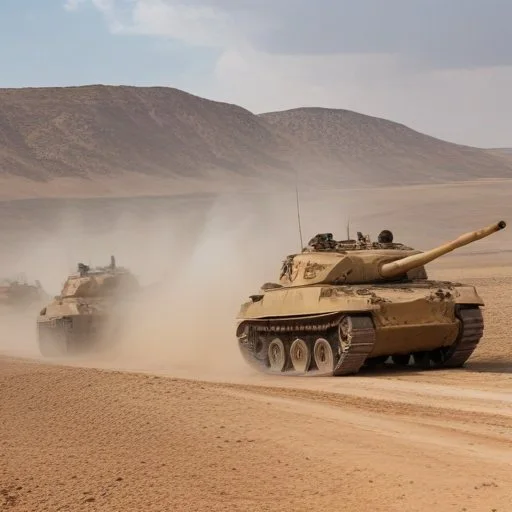
On February 19, 1943, the US Army's II Corps, led by General Lloyd Fredendall, faced off against the German Afrika Korps, commanded by Field Marshal Erwin Rommel, in the narrow pass of Kasserine. The outcome was far from certain, as the untested Americans were forced to retreat, leaving behind destroyed vehicles and shaken morale. Yet, amidst the chaos, a crucial lesson was learned – the importance of adapting to the German war machine.
The Allies, having secured a foothold in North Africa, sought to push the Axis powers out of the region. The US Army's invasion of Morocco and Algeria had been successful, but the German and Italian forces were far from defeated. As the Allies pushed deeper into Tunisia, Rommel's Afrika Korps lay in wait, ready to strike.
As the German tanks rumbled into the narrow pass, the American troops were caught off guard. The Germans exploited the US Army's inexperience, pushing them back with ease. The Americans, ill-equipped for the desert terrain, struggled to hold their ground against the well-oiled German war machine.
In the midst of the battle, the US Army's 1st Armored Division, led by General Orlando Ward, was tasked with holding the pass. Despite being outnumbered and outgunned, the division fought valiantly, but ultimately, they were forced to retreat.
The Battle of Kasserine Pass was a stark wake-up call for the US Army. The defeat highlighted the need for better training, equipment, and tactics. The lessons learned in Tunisia would shape the Allied strategy in North Africa, paving the way for the ultimate victory.
The Battle of Kasserine Pass marked a turning point in the North African campaign. The defeat forced the US Army to reexamine its tactics and training, ultimately leading to a more effective strategy. The battle also highlighted the importance of adapting to the German war machine, a lesson that would be crucial in future battles.
The Allies' ultimate victory in North Africa paved the way for the invasion of Sicily and Italy, and ultimately, the D-Day landings in Normandy.
The Battle of Kasserine Pass had a profound impact on the US Army's identity and sense of purpose. The defeat served as a catalyst for change, driving the Army to become a more effective and efficient fighting force.
The battle also had a profound impact on the Tunisian people, who witnessed the destruction and chaos firsthand. The Allies' ultimate victory brought hope and freedom to the region, paving the way for Tunisia's independence.
The Battle of Kasserine Pass remains an important chapter in World War II history, a testament to the bravery and sacrifice of those who fought and died in the dusty hills of Tunisia.
The Kasserine Pass was a crucial location in the North African campaign, serving as a gateway to the Tunisian plains and the Mediterranean coast. Control of the pass would give the Axis powers a significant advantage, allowing them to launch a counterattack against the Allies and potentially drive them out of the region.
The Allies, on the other hand, needed to secure the pass to maintain their supply lines and continue their push into Tunisia. The pass was also a key point for launching a counterattack against the Axis forces, making it a vital strategic location.
The battle highlighted the importance of controlling key terrain features, such as mountain passes, in modern warfare. The Allies' failure to secure the pass initially allowed the Axis forces to gain the upper hand, but their subsequent efforts to retake it ultimately led to their victory.

Field Marshal Erwin Rommel, also known as the Desert Fox, was a highly respected and feared German commander during World War II. He earned his reputation through a series of impressive victories in North Africa, where he commanded the Afrika Korps.
Rommel was a skilled tactician, known for his ability to adapt to changing circumstances and outmaneuver his opponents. He was also a charismatic leader, who inspired loyalty and devotion in his troops.
Despite his impressive military record, Rommel was not without his flaws. He often clashed with his superiors, and his independence and disregard for authority sometimes put him at odds with the German High Command.
The Battle of Kasserine Pass had a profound impact on Tunisian society, which was already struggling under the weight of colonialism and war.
The battle brought widespread destruction and displacement to the local population, who were caught in the midst of the fighting. Many Tunisians were forced to flee their homes, leaving behind their livelihoods and possessions.
Despite the challenges, the battle also brought about a sense of resilience and determination among the Tunisian people. The country's eventual independence in 1956 was in part due to the sacrifices and struggles of the people during World War II.

The Battle of Kasserine Pass was not just a localized conflict in North Africa; it had far-reaching implications for the global balance of power.
The battle marked a turning point in the war, as the Allies began to gain momentum and push the Axis powers back. It also highlighted the importance of coalition warfare, as American, British, and French forces worked together to defeat the Germans and Italians.
The battle's significance extended beyond the military sphere, as it influenced the post-war global order. The eventual Allied victory in North Africa paved the way for the D-Day landings in Normandy and the subsequent defeat of Germany.
A letter from Private John Smith, 1st Armored Division, provides a rare glimpse into the experiences of the soldiers who fought at Kasserine Pass.
"We were pinned down in a shallow depression, taking heavy fire from the German tanks. I saw my buddy, PFC Johnson, take a direct hit. It was a terrible sight. We were all scared, but we knew we had to hold our ground."
Diaries and letters from soldiers like Private Smith offer a poignant and personal perspective on the battle, highlighting the fear, chaos, and sacrifice that characterized the fighting at Kasserine Pass.