


The battle that would change the course of World War II, the Battle of Stalingrad, was one of the most brutal and devastating conflicts in human history. For 200 days, the Soviet Union and Nazi Germany clashed in a fight to the death, resulting in over 2 million casualties and a legacy that still echoes today.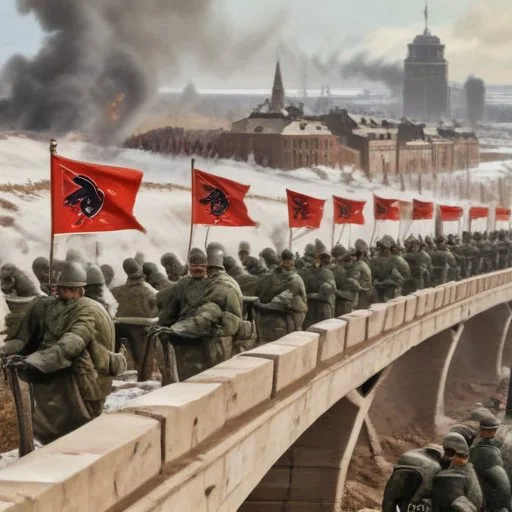
Stalingrad, now Volgograd, was more than just a city – it was a symbol of Soviet power and a crucial industrial and transportation hub. The city's presence on the Volga River made it a vital artery for the Soviet war effort, and the Nazis knew that capturing it would be a crippling blow to the enemy.
At the heart of this conflict were two men: General Friedrich Paulus, the commander of the German Sixth Army, and General Georgy Zhukov, the leader of the Soviet Red Army. Paulus, a seasoned veteran of the Eastern Front, was determined to crush the Soviet resistance and claim the city for the Nazis. Zhukov, a brilliant strategist and defender of Moscow, was equally resolute in his vow to defend every inch of Soviet soil.
The battle began on August 19, 1942, with a massive German assault on the city. The initial push saw the Nazis gain significant ground, but the Soviets refused to yield. For months, the two armies clashed in a frenzy of artillery bombardments, aerial dogfights, and bloody street-to-street combat. The turning point came in November, when the Soviets launched a devastating counterattack that encircled the German Sixth Army and trapped them in the city.
As the winter of 1942/1943 set in, the German army was trapped, and the Soviets tightened their noose. The Soviets launched a series of brutal offensives, dubbed "Operation Uranus," which decimated the German forces and doomed the Sixth Army to starvation and surrender. The once-proud German army was reduced to eating horse meat and scavenging for scraps, as the Soviets patiently waited for the inevitable.
The Battle of Stalingrad marked a decisive shift in the balance of power in World War II. The Soviet victory boosted morale, and the Red Army went on to push the Nazis back, ultimately capturing Berlin in 1945. The battle also marked a turning point in modern warfare, as it demonstrated the importance of combined arms tactics, urban warfare, and the strategic value of industrial and transportation hubs.
"Stalingrad is a city of heroes." - Joseph Stalin
The Battle of Stalingrad will forever be remembered as a testament to human resilience, courage, and the horrors of war. It is a legacy that continues to inspire and haunt us to this day.
The Battle of Stalingrad serves as a poignant reminder of the devastating consequences of war and the importance of diplomacy and cooperation in preventing such conflicts. As we reflect on the past, we are reminded of the imperative to work towards a more peaceful and harmonious future for all.
The Road to Stalingrad
The German invasion of the Soviet Union, codenamed Operation Barbarossa, began on June 22, 1941. The initial push was swift and devastating, with the Wehrmacht advancing deep into Soviet territory. However, the Soviet Union's vast distances, harsh climate, and scorched-earth tactics slowed the German advance, giving the Red Army time to regroup and pivot. By the summer of 1942, the Germans had reached the Volga River, setting the stage for the brutal battle that would become the turning point of the war on the Eastern Front.
The Soviet Union's ability to trade space for time allowed them to mobilize their vast industrial resources and manpower. The city of Stalingrad, with its strategic location on the Volga River, became the linchpin of the Soviet war effort. The stage was set for a titanic clash of arms, one that would decide the fate of the war and the future of Europe.
General Georgy Zhukov: The Mastermind Behind Stalingrad
General Georgy Zhukov was one of the most brilliant and influential military minds of World War II. Born in 1896, Zhukov rose through the ranks of the Soviet military, earning a reputation as a skilled and fearless commander. He played a crucial role in the defense of Moscow in 1941, earning the gratitude of Joseph Stalin and the Soviet high command.
Zhukov's leadership during the Battle of Stalingrad was instrumental in the Soviet victory. He coordinated the defense of the city, cleverly using terrain and logistics to blunt the German advance. His decision to launch a counterattack in November 1942, codenamed Operation Uranus, encircled the German Sixth Army and sealed their fate.
The Battle of Stalingrad: A Comparison with Other Major Battles
The Battle of Stalingrad was one of the bloodiest and most destructive battles in human history, rivaling the carnage of Verdun and the Somme in World War I. The battle's sheer scale, with over 2 million casualties, is difficult to comprehend. In comparison, the Battle of Gettysburg, fought during the American Civil War, resulted in approximately 50,000 casualties.
The battle's urban warfare aspect, with house-to-house fighting and brutal street combat, is reminiscent of the Battle of Hue City during the Vietnam War. The Soviet Union's use of "night witches" and guerrilla tactics also draws parallels with the Vietnamese resistance against the US military.
The Stalingrad Diary: A Rare Glimpse into the Mind of a German Soldier
A recently discovered diary belonging to a German soldier, later identified as Lieutenant Hans Becker, provides a rare and intimate glimpse into the experiences of the German Sixth Army during the Battle of Stalingrad. The diary, dated between August 1942 and January 1943, details Becker's struggles with hunger, cold, and the constant bombardment by Soviet artillery.
The diary also reveals Becker's growing disillusionment with the Nazi regime and his commanders, who he saw as incompetent and detached from reality. The diary's final entry, dated January 10, 1943, is a poignant reflection on the futility of war and the human cost of the conflict.
The Geopolitical Significance of Stalingrad
The Battle of Stalingrad marked a significant shift in the balance of power on the Eastern Front, as the Soviet Union transitioned from a defensive to an offensive posture. The battle also highlighted the importance of industrial and transportation hubs, as the capture of Stalingrad would have cut off the Soviet Union's access to the Caucasus region and its vital oil resources.
The battle's outcome had far-reaching geopolitical implications, as it marked the beginning of the end of German territorial gains in the Soviet Union. The Soviet Union's subsequent advance into Eastern Europe would set the stage for the Cold War, as the region became a battleground for ideologies and spheres of influence.