


General Henry "Hap" Arnold, Commander of the USAAF, played a crucial role in planning and executing Big Week. Arnold's vision for a strategic air campaign aimed to destroy the Luftwaffe's industrial backbone, depriving the Nazi war machine of its aerial superiority.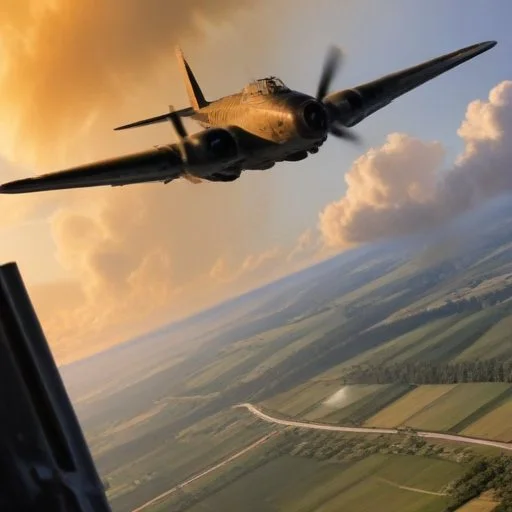
General Carl Spaatz, Commander of the US Strategic Air Forces in Europe, oversaw the operation, ensuring the successful coordination of bomber fleets and fighter escorts.
The six-day bombing campaign achieved its objective, dealing a significant blow to the Luftwaffe's production capacity. The Allies destroyed approximately 75% of Germany's aircraft manufacturing centers, forcing the Luftwaffe to redeploy resources and adapt its strategy.
The success of Big Week paved the way for the D-Day invasion, allowing Allied forces to establish a foothold in Normandy with relative air superiority.
Big Week marked a significant psychological turning point in the war. As news of the campaign's success spread, Allied morale soared, and doubts about the war's outcome began to dissipate.
The bombing campaign also had a profound impact on the German population, as the constant threat of air raids and the destruction of industrial centers eroded civilian morale.
"The greatest thing that has happened in this war is the development of the air force. It's the thing that's going to win the war." - General Henry "Hap" Arnold
Big Week shares parallels with the Allied bombing campaign against Japanese industrial centers, Operation Matterhorn, which aimed to cripple the Japanese war machine.
First Lieutenant Charles "Mac" MacDonald, a B-17 pilot, recalled, "We knew we were taking a big risk, but we also knew it was crucial to the war effort. Seeing those factories burning was a beautiful sight."
The success of Big Week set the stage for the Allied victory in World War II, demonstrating the power of strategic air campaigns in modern warfare.
The lessons learned during Big Week would influence the development of air power strategies in subsequent conflicts, solidifying the importance of air superiority in modern warfare.
| February 20, 1944 | First wave of B-17 and B-24 bombers targets German aircraft factories |
| February 25, 1944 | Final wave of bombers strikes German airfields, concluding Big Week |
Big Week serves as a testament to the bravery and determination of the Allied airmen, who risked their lives to gain a strategic advantage and ultimately change the course of history.
The British Blitz, a sustained bombing campaign against German cities, shares similarities with Big Week in its strategic objective of crippling the enemy's war machine. However, the Blitz was more focused on disrupting urban infrastructure and civilian morale, whereas Big Week specifically targeted aircraft manufacturing centers.
Both campaigns demonstrate the importance of air power in modern warfare, but they differ in their approach and scope. The Blitz was a longer, more extensive campaign that lasted from 1940 to 1941, whereas Big Week was a concentrated effort that lasted only six days.
The outcomes of both campaigns also varied. The Blitz achieved some success in disrupting German civilian life, but it failed to significantly impact the Nazi war effort. Big Week, on the other hand, dealt a critical blow to the Luftwaffe's production capabilities, paving the way for the D-Day invasion.

General Carl Spaatz, Commander of the US Strategic Air Forces in Europe, played a crucial role in planning and executing Big Week. Spaatz was a seasoned airman who had previously served as the Chief of Staff of the US Army Air Forces.
Under Spaatz's leadership, the USAAF developed a comprehensive strategy to target the Luftwaffe's industrial backbone. He worked closely with General Henry "Hap" Arnold to coordinate the bomber fleets and fighter escorts, ensuring the successful execution of the campaign.
Spaatz's experience and expertise were instrumental in the success of Big Week, and he went on to become one of the most influential figures in the development of the US Air Force.
Big Week had a significant impact on the cultural and social landscape of the United States. The campaign was widely publicized, and news of its success boosted morale and confidence in the war effort.
The campaign also influenced the way Americans perceived the role of air power in modern warfare. Big Week demonstrated the devastating impact of strategic bombing on an enemy's war machine, and it solidified the importance of air superiority in modern warfare.
The cultural impact of Big Week extended beyond the war itself, as it influenced the development of the US Air Force and shaped the country's approach to air power in subsequent conflicts.
Big Week saw the introduction of several technological innovations that greatly enhanced the effectiveness of the bombing campaign. One such innovation was the use of long-range fighter escorts, which provided crucial protection to the bomber fleets.
The campaign also saw the development of new bombing techniques, such as the use of radar-guided bombing and low-level bombing runs. These techniques allowed the USAAF to target German aircraft manufacturing centers with greater precision and accuracy.
The technological innovations of Big Week paved the way for future advances in air power, and they played a critical role in the Allied victory in World War II.
Historians have long debated the significance of Big Week in the broader context of World War II. Some argue that the campaign was a critical turning point in the war, as it crippled the Luftwaffe's ability to produce warplanes.
Others have questioned the campaign's strategic value, pointing out that the Luftwaffe was already facing significant challenges in terms of resource allocation and production capacity.
Despite these debates, most historians agree that Big Week marked a significant shift in the balance of air power in favor of the Allies, paving the way for the D-Day invasion and ultimately contributing to the Allied victory in World War II.