


Falaise, a quaint town in the Calvados region of France, was the epicenter of a pivotal battle in World War II, where Canadian and Polish units joined forces to capture this strategic location, marking a significant milestone in the Allied campaign. This triumph, a culmination of Operation Totalize, would slowly but surely constrict the German army's grip on Normandy, paving the way for the liberation of Western Europe.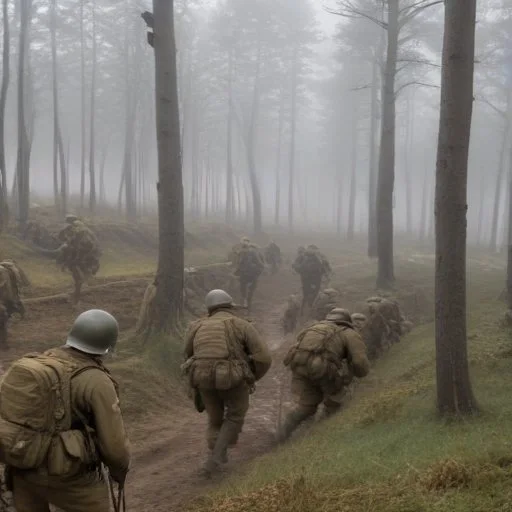
The summer of 1944 was a critical period in the war, with the Allies making incremental gains in Normandy. Following the successful landing on D-Day, the Allies' primary objective was to secure key towns and cities, which would enable them to advance further into France. Falaise, situated in the heart of Normandy, was a vital link between the Allied forces and the German-occupied territory. Its capture would provide a substantial advantage to the Allies, enabling them to encircle and ultimately defeat the German army in the region.
The operation was spearheaded by two experienced commanders: General Guy Simonds, a Canadian military leader, and General Stanisław Maczek, a seasoned Polish commander. Their partnership exemplified the spirit of cooperation and camaraderie that characterized the Allied forces throughout the war. Under their leadership, the Canadian and Polish troops demonstrated unwavering bravery and tenacity, navigating treacherous terrain and withstanding intense enemy fire.
In the early hours of August 8, 1944, the Canadian and Polish forces set out to execute Operation Totalize, a complex pincer movement designed to encircle the German army. The plan involved a series of carefully coordinated attacks, with the Calgary Highlanders and the Polish 1st Armored Division advancing through dense fog and heavy artillery fire. As the troops pushed forward, they gradually began to close in on the German forces, creating a vise-like grip around the town of Falaise.
The liberation of Falaise was a crushing blow to the German army, resulting in the capture of thousands of enemy soldiers and the seizure of vital supplies and equipment. This decisive victory marked the beginning of the end of the Battle of Normandy, as the Allies gained a strategic foothold in the region. The success of Operation Totalize paved the way for the Allied forces to progress further into France, ultimately contributing to the country's liberation.
The capture of Falaise had a profound impact on the local population, who had endured years of German occupation. The liberation brought hope and relief to the people of Normandy, who were finally free from the burden of oppression. The bravery and sacrifice of the Canadian and Polish troops inspired a sense of gratitude and admiration, fostering a lasting bond between the people of France and their Allied liberators.
One Polish soldier, Janusz Turkowski, recalled the sense of camaraderie that defined the operation: "We fought alongside our Canadian brothers, united in our quest for freedom. The fog was thick, the artillery was intense, but we pushed forward, driven by our determination to liberate Falaise."
The capture of Falaise proved to be a turning point in the war, setting the stage for the Allied forces' subsequent advances into Western Europe. The operation demonstrated the effectiveness of combined military efforts, serving as a blueprint for future collaborations between Allied forces. As the war drew to a close, the liberation of Falaise remained an enduring testament to the bravery and sacrifice of the Canadian and Polish troops who fought side by side.
"Falaise was a beacon of hope, a symbol of the power of unity and determination. We fought for freedom, and in the end, we emerged victorious."
- General Guy Simonds
Today, the town of Falaise serves as a poignant reminder of the sacrifices made during World War II. The Falaise War Cemetery, where many soldiers who fought in the battle are buried, stands as a testament to the bravery and sacrifice of the Canadian and Polish troops. The liberation of Falaise is commemorated annually, with ceremonies and tributes honoring the heroes who fought for freedom in Normandy.
Falaise, a small town in France, will forever be remembered as a symbol of liberation, unity, and bravery – a shining example of the unbreakable bond between Allied forces during World War II.
General Guy Simonds: A Leader Born for Battle
General Guy Simonds, the Canadian military leader who spearheaded the liberation of Falaise, was a man of unwavering courage and unrelenting strategic thinking. Born on April 23, 1903, in Victoria, British Columbia, Simonds was destined for a life of military service. He enlisted in the Canadian Expeditionary Force during World War I, serving in the infantry and later transferring to the artillery. Throughout his career, Simonds demonstrated exceptional leadership skills, earning him rapid promotion and recognition within the Canadian military.
Simonds' leadership during the Battle of Normandy was instrumental in securing the Allied victory. His tactical genius and ability to inspire his troops played a crucial role in the capture of Falaise, ultimately contributing to the liberation of Western Europe. Despite the challenges and setbacks that inevitably arose during the campaign, Simonds remained resolute, driven by his unwavering commitment to the Allied cause.
The Prelude to Operation Totalize
In the weeks preceding the launch of Operation Totalize, the Allies engaged in a series of intense battles to secure key objectives in Normandy. The British and Canadian forces, supported by massive artillery and air power, pushed forward against formidable German defenses. The Germans, however, refused to yield, and the fighting was fierce and brutal.
One pivotal engagement took place on July 25, 1944, when the British 3rd Infantry Division clashed with German forces near the village of Bourguébus. The battle raged on for hours, with both sides suffering heavy casualties. Although the British eventually secured the village, their progress was slow and costly, underscoring the daunting task that lay ahead for the Allied forces.
Unity in Diversity: The Canadian and Polish Forces
The liberation of Falaise was a testament to the power of unity and cooperation among the Allied forces. The Canadian and Polish troops, hailing from different countries and cultures, joined forces to achieve a common goal. This remarkable collaboration was not limited to military strategy; it also extended to the cultural and social realms.
The Polish 1st Armored Division, led by General Stanisław Maczek, brought a unique perspective to the battle. With their experience of fighting against the German occupation in Poland, they were driven by a deep-seated desire for freedom and liberation. The Canadian forces, meanwhile, were motivated by a sense of duty to their allies and the desire to protect their country from the threat of Nazi Germany.
The Importance of Intelligence Gathering
Intelligence gathering played a crucial role in the success of Operation Totalize. The Allies invested significant resources in gathering and analyzing information about German troop movements, fortifications, and communication networks. This intelligence was critical in identifying weaknesses in the German defenses and developing effective strategies to exploit them.
One significant intelligence coup came when British codebreakers at Bletchley Park deciphered German radio traffic, revealing the location and disposition of key German units. This information enabled the Allies to target their artillery and air power with devastating precision, crippling the German ability to respond effectively to the Allied advance.
Historical Significance of the Liberation of Falaise
The liberation of Falaise was a watershed moment in World War II, marking a significant turning point in the Allied campaign. The capture of the town and the subsequent destruction of the German army in the Falaise Pocket paved the way for the rapid advance of the Allied forces into Western Europe.
The significance of the liberation extends beyond the military realm. It represented a beacon of hope for the people of France, who had endured years of German occupation and oppression. The bravery and sacrifice of the Canadian and Polish troops served as a powerful symbol of the unwavering commitment of the Allied forces to the cause of freedom and democracy.