


On October 21, 1944, the city of Aachen, a major industrial hub in western Germany, fell to American forces after three weeks of intense fighting, marking a significant milestone in the Allied advance into Germany. This historic event saw the first German city fall to the Allies, paving the way for the eventual defeat of the Third Reich.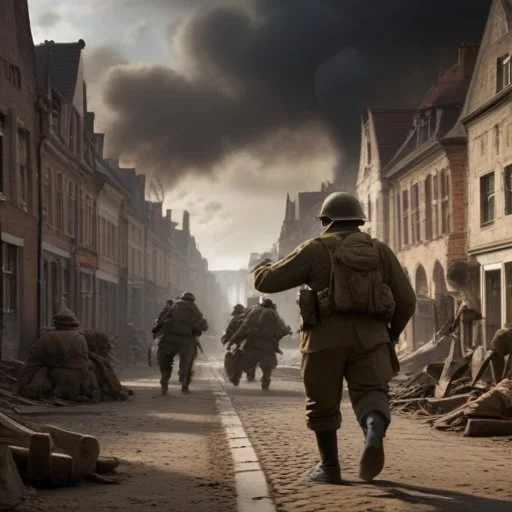
The battle for Aachen was a culmination of months of Allied efforts to penetrate the German Siegfried Line, a series of fortifications and bunkers that stretched along the western border of Germany. The city, located near the Belgian-German border, was a critical strategic location, serving as a major transportation hub and industrial center.
The Allied forces, led by General Courtney Hodges, launched a series of artillery barrages and ground assaults on October 2, 1944, in an effort to breach the German defenses. The American army, consisting of the 1st and 30th Infantry Divisions, faced fierce resistance from the German forces, who were determined to hold onto the city.
As the battle raged on, the city's infrastructure began to crumble under the relentless bombardment. Buildings were reduced to rubble, and the streets became a maze of debris and destruction. Despite the challenges, the American forces slowly but surely pushed the German defenders back, finally breaching the city's defenses on October 21.
General Courtney Hodges, commander of the First Army, played a crucial role in the battle for Aachen. His tactical decisions and leadership were instrumental in the eventual capture of the city. Other key figures involved in the battle included Colonel John F. R. Seitz, commander of the 1st Infantry Division, and General Gerhard von Schwerin, commander of the German forces in Aachen.
The fall of Aachen marked a significant turning point in the Allied advance into Germany. The capture of the city provided a critical foothold for the Allies, allowing them to push deeper into German territory. The battle also demonstrated the Allies' ability to overcome the German Siegfried Line, paving the way for future victories.
The fall of Aachen also had a profound impact on the German people, marking a clear shift in the balance of power on the Western Front. As news of the city's capture spread, morale began to sag, and the German population began to question the ability of their military to defend their homeland.
The battle for Aachen had a profound impact on the cultural and social fabric of the city. The destruction inflicted on the city's infrastructure and architecture had a lasting impact on the city's identity and sense of community. The fall of Aachen also led to a shift in the city's cultural landscape, as the Allied occupation brought new cultural influences and perspectives to the city.
"The fall of Aachen is a significant milestone in our advance into Germany. It marks a turning point in the war, and demonstrates our ability to overcome even the most formidable defenses." - General Courtney Hodges
"Aachen is a symbol of German resistance, and its fall is a bitter blow to our people. But we will not be defeated. We will continue to fight, and we will emerge victorious in the end." - German Propaganda Minister Joseph Goebbels
The battle for Aachen was a testament to the Allied forces' determination to break through the German defenses. The city's strategic location made it a crucial stronghold for the German army, and its capture would provide a significant advantage to the Allies. The American forces, led by General Courtney Hodges, employed a combination of artillery barrages, air support, and ground assaults to wear down the German defenses.
The intensity of the battle was evident in the sheer scale of destruction inflicted on the city. The once-thriving industrial hub was reduced to rubble, with entire city blocks leveled by the relentless bombardment. The German forces, despite their valiant efforts, were ultimately unable to withstand the Allied onslaught.
The fall of Aachen marked a significant shift in the balance of power on the Western Front. The city's capture opened up a critical corridor for the Allied forces to push deeper into Germany, paving the way for future victories. The battle also demonstrated the Allies' ability to overcome even the most formidable defenses, a testament to their superior tactics and firepower.

General Gerhard von Schwerin, commander of the German forces in Aachen, was a seasoned veteran of the war. A decorated officer, he had fought on multiple fronts, including the Eastern Front against the Soviet Union. Despite being vastly outnumbered and outgunned, von Schwerin's forces put up a fierce resistance, inflicting significant casualties on the Allied forces.
Von Schwerin's tactical decisions, although ultimately unsuccessful, showcased his experience and cunning. He cleverly deployed his limited resources to maximum effect, using the city's terrain to his advantage. His forces' bravery and determination earned them the respect of their Allied counterparts, who acknowledged the intense challenge they had faced.
The fall of Aachen had a profound impact on the city's cultural and social fabric. The destruction of the city's infrastructure and architecture had a lasting impact on the community's sense of identity and belonging. The once-thriving cultural scene, which had flourished in the city's many museums, galleries, and theaters, was severely disrupted.
The Allied occupation brought new cultural influences to the city, as American and British forces introduced their own music, art, and literature to the local population. This cultural exchange had a lasting impact on the city, shaping its post-war identity and cultural landscape.

The capture of Aachen had significant economic implications for both the Allies and Germany. The city's industrial base, which had produced war materials and machinery, was now in Allied hands. This strategic gain gave the Allies access to vital resources and infrastructure, allowing them to channel their own war efforts more efficiently.
The destruction of the city's infrastructure, however, came at a significant cost. The rebuilding process would require massive investment, diverting resources away from other critical areas. The long-term economic impact of the battle would be felt for years to come.
The fall of Aachen was a significant geopolitical development, marking a major milestone in the Allied advance into Germany. The city's capture provided a critical foothold for the Allies, allowing them to push deeper into German territory and ultimately paving the way for the eventual defeat of the Third Reich.
The battle's outcome had far-reaching implications for the post-war settlement, influencing the eventual division of Germany into East and West. The fall of Aachen marked a significant shift in the balance of power, setting the stage for the Allied occupation and the reconstruction of Europe.