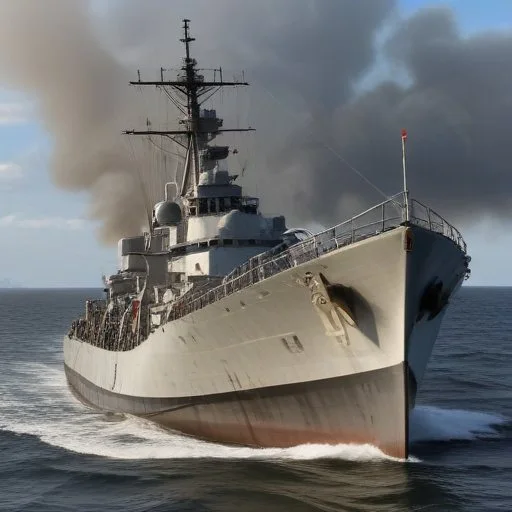
Australian warship HMAS Australia damaged by first kamikaze attack
The Japanese unleashed a new and terrifying tactic on October 21, 1944, as the Battle of Leyte Gulf began. The pride of the Australian Navy, HMAS Australia, found itself in the crosshairs of a rampaging kamikaze pilot. The suicide attacker, fueled by patriotism and a desire for honor, crashed his plane into the warship, inflicting significant damage and claiming the lives of 30 brave sailors. This unprecedented assault marked the first kamikaze attack in history, foreshadowing the brutal and fanatical tactics the Japanese would employ in the war's final throes.
The Dawn of Kamikaze: HMAS Australia Bears the Brunt of a New Era of Warfare
A Desperate Gamble: The Birth of Japan's Fanatical Tactics
On October 21, 1944, the Allied forces received a brutal wake-up call as the Japanese unleashed a novel and terrifying tactic during the Battle of Leyte Gulf. The Australian Navy's pride, HMAS Australia, fell victim to the first kamikaze attack in history, marking a gruesome turning point in the war's final throes.
Historical Background: The Japanese Empire's Last Stand
As the Allies pushed deeper into the Pacific, Japan's Imperial forces found themselves on the brink of collapse. Faced with the looming threat of defeat, the Japanese High Command turned to increasingly desperate measures to turn the tide of the war. Among these was the development of the Special Attack Units, also known as kamikaze, which would unleash a new level of brutality upon the enemy.
The Fateful Day: HMAS Australia Under Fire
As the Battle of Leyte Gulf commenced, the HMAS Australia, flagship of the Australian Navy, found itself at the forefront of the action. At around 4:00 pm on October 21, a lone Japanese pilot, likely Lieutenant Yukio Seki, embarked on a one-way mission. Seki's plane, a Mitsubishi A6M Zero, plummeted towards the Australian warship, its hull emblazoned with the Rising Sun emblem. The aircraft's impact inflicted significant damage, claiming the lives of 30 brave sailors and injuring many more.
Key Figures Involved: The Architects of Desperation
- Admiral Soemu Toyoda: Commander-in-Chief of the Japanese Combined Fleet, Toyoda oversaw the development of the Special Attack Units.
- Vice Admiral Takijirō Ōnishi: Ōnishi, the founder of the kamikaze corps, was instrumental in convincing Toyoda to adopt the tactic.
- Lieutenant Yukio Seki: The presumed pilot of the first kamikaze attack, Seki's sacrifice marked the beginning of a campaign that would claim thousands of lives.
Timeline of Events: The Battle of Leyte Gulf Unfolds
- October 20, 1944: The Battle of Leyte Gulf commences as Allied forces land on Leyte Island.
- October 21, 1944: The first kamikaze attack damages HMAS Australia.
- October 23-26, 1944: The Battle of Leyte Gulf reaches its climax, resulting in a decisive Allied victory.
Major Outcomes and Impacts: A New Era of Warfare
The kamikaze attack on HMAS Australia heralded a shift in the war's dynamics, introducing a new level of fanaticism and desperation to the conflict. This tactic would go on to claim thousands of lives, targeting not only warships but also civilian vessels and installations.
Cultural and Social Influences: The Legacy of Sacrifice
The kamikaze attacks, though ultimately unsuccessful in turning the tide of the war, left an indelible mark on Japanese culture and society. The concept of sacrificing oneself for the nation became deeply ingrained, fostering a sense of duty and loyalty among the Japanese people.
Controversies and Public Perception: The Morality of Martyrdom
The kamikaze tactic raised fundamental questions about the morality of war, sparking debates about the ethics of using sacrifice as a means to achieve military objectives. The cult-like fervor surrounding the kamikaze pilots has been subject to intense scrutiny, with some viewing their actions as heroic while others condemn them as brutal and fanatical.
Comparative Analysis: A Desperate Gamble vs. Conventional Warfare
The kamikaze tactic, though unique in its brutal intensity, finds parallels in other historical examples of desperate last stands. From the Japanese perspective, the decision to employ kamikaze attacks can be seen as a calculated risk, a gamble to inflict maximum damage in the face of almost certain defeat.
Personal Accounts and Anecdotes: The Human Cost of War
Survivors of the kamikaze attack on HMAS Australia recounted the sheer terror of being targeted by the suicidal pilots. One sailor, in a stark testament to the human cost of war, remembered the cries of the wounded and the dying, forever etched in his memory.
Impact on Future Events: The Legacy of Desperation
The kamikaze tactic, though ultimately unsuccessful, has left a lasting impact on modern warfare. Its legacy can be seen in the development of suicide bombing tactics, employed by various actors in the decades since.
Trivia and Fun Facts: The Deadly Precision of Kamikaze Pilots
- Kamikaze pilots were trained to target specific areas of a ship, such as the bridge or engine rooms, to maximize damage.
- The Japanese military invested heavily in psychological conditioning, using techniques like Zen meditation to prepare pilots for their suicidal missions.
Inspirational Stories and Motivations: The Human Spirit in the Face of Adversity
Amidst the chaos and destruction, stories of bravery and sacrifice emerged. The crew of HMAS Australia, though shaken by the attack, persevered in the face of adversity, their courage an inspiration to those who followed in their footsteps.
In the end, the kamikaze attack on HMAS Australia serves as a poignant reminder of the devastating consequences of war and the unyielding resolve of those who fought on both sides.
Broad Historical Examination
The Origins of Kamikaze: Desperation and Innovation
In the face of dwindling resources and mounting losses, the Japanese High Command was forced to think outside the box. The concept of kamikaze was born from a mix of desperation and innovation, as commanders sought to find a way to counter the overwhelming might of the Allied forces.
The idea of using suicide attacks was not new, but the scale and organization of the kamikaze corps was unprecedented. The Japanese military invested heavily in training and equipping pilots for these missions, often using propaganda and psychological manipulation to ensure their willingness to sacrifice themselves.
The Tactical Genius of Admiral Ōnishi
Vice Admiral Takijirō Ōnishi is often credited as the mastermind behind the kamikaze tactic. His unorthodox thinking and willingness to push the boundaries of conventional warfare led to the development of this innovative, yet deadly, strategy.

Character Analysis
Admiral Soemu Toyoda: The Reluctant Advocate
As Commander-in-Chief of the Japanese Combined Fleet, Admiral Soemu Toyoda was instrumental in the development of the kamikaze corps. Despite initial reservations, Toyoda was won over by Ōnishi's persuasive arguments and eventually became a key proponent of the tactic.
Toyoda's role in the kamikaze campaign is often overshadowed by Ōnishi's, but his endorsement was crucial in securing the necessary resources and support for the program.
A complex figure, Toyoda's motivations for adopting the kamikaze tactic are still debated among historians.
Side-by-Side Comparison
Kamikaze vs. Conventional Air Power: A Comparative Analysis
The kamikaze tactic was often seen as a last resort, a desperate attempt to inflict damage on the enemy when conventional air power was no longer viable. However, this tactic had some advantages over traditional air attacks.
Kamikaze pilots could fly low and slow, making them harder to intercept, and their small size and agility allowed them to evade anti-aircraft fire. Additionally, the psychological impact of these attacks was significant, causing widespread fear and disruption among Allied forces.
In contrast, conventional air power relied on large-scale bombing raids, which were often less effective against well-defended targets.

In-Depth Cultural Influence Study
The Cultural Significance of Kamikaze in Japan
The kamikaze tactic has had a profound impact on Japanese culture, symbolizing a sense of sacrifice and duty to the nation. The concept of "yūshi," or "dying in a beautiful way," has been deeply ingrained in Japanese society, influencing art, literature, and even modern-day politics.
The kamikaze pilots were often celebrated as heroes, their sacrifice romanticized in popular culture. This has led to a complex and often contradictory view of the tactic, with some viewing it as a noble act of patriotism, while others condemn it as brutal and fanatical.
The kamikaze corps has become an enduring symbol of Japan's wartime experience, shaping the nation's identity and informing its relationships with the world.
Philosophical Influence Study
The Philosophy of Sacrifice: Kamikaze and the Meaning of Life
The kamikaze tactic raises fundamental questions about the human condition, forcing us to confront the nature of sacrifice and the meaning of life. Was the kamikaze pilot a true hero, sacrificing himself for the greater good, or a victim of ideological manipulation?
This dichotomy highlights the complex interconnectedness of war, philosophy, and ideology. The kamikaze tactic was not just a military strategy, but a reflection of Japan's philosophical and ideological underpinnings.
The debate surrounding the morality of kamikaze continues to resonate, offering a sobering reflection of humanity's capacity for both good and evil.


