


The First Quebec Conference, codenamed "Quadrant," was a pivotal gathering of the Allied leaders during World War II, where Winston Churchill, Franklin D. Roosevelt, and William Lyon Mackenzie King converged to shape the course of the war and the world. This top-secret summit, held in Quebec City from August 17 to 24, 1943, was a masterclass in strategic planning, diplomatic maneuvering, and wartime leaders' camaraderie.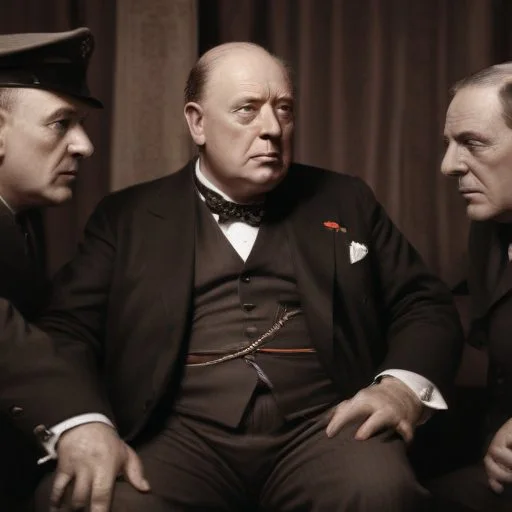
The three leaders, each with their distinct personalities and styles, brought their collective wisdom to the table. Churchill, the master orator and strategist, championed his "peripheral strategy," aiming to weaken the Axis powers through a series of indirect attacks. Roosevelt, the visionary leader, focused on the post-war world order and the formation of the United Nations. King, the astute diplomat, navigated the complex web of alliances and interests, ensuring Canada's voice was heard.
The conference agenda was packed with critical issues, including:
The outcomes of the conference were far-reaching, with the leaders agreeing on:
Beneath the surface of high-level diplomacy, the conference was peppered with personal moments and anecdotes. Churchill, the charismatic host, regaled his guests with tales of British valor and wit. Roosevelt, the affable leader, charmed his counterparts with his easy humor and charm. King, the quiet diplomat, observed and listened, ever mindful of Canada's interests.
A famous story from the conference has Churchill and Roosevelt engaging in a lively debate, with the British leader insisting that the Italians would surrender, and the American leader countering that it would take another year. As they bantered, King reportedly whispered to his aide, "I'm not sure which one of them is the more optimistic."
The First Quebec Conference was a watershed moment in World War II, setting the stage for the Allied victory and shaping the course of world history. The meeting cemented the bonds between the three leaders, forged crucial alliances, and paved the way for the post-war world order.
As Churchill later reflected, "The Quebec Conference was a moment of supreme importance in the war. It was the acme of our relations with the United States and the Commonwealth."
The First Quebec Conference remains an enduring testament to the power of diplomacy, strategic planning, and wartime leadership, a meeting that changed the course of history and continues to inspire generations to come.
The First Quebec Conference was not the first time the Allied leaders had met to discuss their strategy. In fact, it was the fourth major conference between Churchill and Roosevelt, following meetings in Washington, London, and Casablanca. However, it was the first time the Canadian Prime Minister, William Lyon Mackenzie King, had hosted such a high-level gathering.
Prior to the conference, the Allies had been making progress on multiple fronts. The North African Campaign had ended with the defeat of the Axis powers, and the Soviet Union had been gaining ground on the Eastern Front. However, the war was far from over, and the leaders knew they needed to coordinate their efforts to secure a swift and decisive victory.
The conference was held at the Citadelle of Quebec and the Château Frontenac, with the leaders and their delegations arriving on August 17, 1943. Over the next seven days, they would engage in intense discussions, debates, and negotiations, shaping the course of the war and the world.
Winston Churchill was known for his wit and charm, but he was also a master strategist and orator. As the British Prime Minister, he had been instrumental in rallying the British people during the darkest days of the war.
Franklin D. Roosevelt, the American President, was a visionary leader who had a deep understanding of the global implications of the war. He was instrumental in convincing Churchill to adopt a more aggressive approach, including the invasion of France.
William Lyon Mackenzie King, the Canadian Prime Minister, was a skilled diplomat who had managed to maintain Canada's independence while still being a loyal ally to the British and Americans. He played a crucial role in mediating between the other two leaders, ensuring that Canada's interests were represented.
The First Quebec Conference marked a significant shift in the balance of power among the Allies. Prior to the conference, the British had been the dominant partner, but the growing military and economic power of the United States meant that Roosevelt was increasingly calling the shots.
The conference also highlighted the differences in approach between the British and Americans. Churchill favored a more cautious approach, focusing on the Mediterranean and North Africa, while Roosevelt was determined to launch a direct attack on Germany.
Despite these differences, the leaders were able to find common ground, recognizing that their collective strength was greater than their individual interests.

The First Quebec Conference took place against the backdrop of a rapidly changing global landscape. The Soviet Union had suffered heavy losses on the Eastern Front, and Stalin was increasingly frustrated with the slow progress of the Western Allies.
In Europe, the Germans were still in control of much of the continent, and the Italian campaign was bogged down. The Allies knew they needed to make progress quickly to prevent the war from dragging on for years.
Against this geopolitical context, the conference was a crucial moment in the war, as the leaders worked to coordinate their efforts and secure a decisive victory.
The First Quebec Conference was a masterclass in diplomatic maneuvering. Churchill, Roosevelt, and King engaged in a delicate dance of persuasion and negotiation, each trying to achieve their goals while maintaining the unity of the Allies.
The conference saw a significant shift in the relationship between the United States and the United Kingdom. Roosevelt emerged as the dominant partner, with the Americans providing the bulk of the military and economic resources.
Despite the challenges, the leaders were able to find common ground, recognizing that their collective strength was greater than their individual interests. The conference marked a turning point in the war, as the Allies began to marshal their resources for the final push against the Axis powers.