


In a stark reversal of fortunes, France's representatives signed the Second Compigne armistice with Germany on June 22, 1940, in the very same railway carriage where Germany had surrendered just 22 years prior. This poignant moment marked the end of the Phoney War and the beginning of the German occupation of France, forever changing the course of World War II and European history.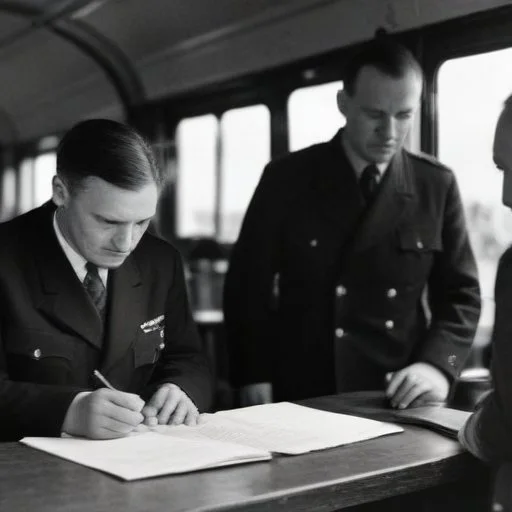
The railway carriage, located in the Forest of Compiègne, had once witnessed the humiliation of Germany, as it was forced to sign the Armistice of 1918, effectively ending World War I. Now, the tables had turned, and it was France that was being forced to surrender. For Adolf Hitler, this moment was a sweet revenge, rectifying the perceived injustices of the Treaty of Versailles, which had imposed harsh penalties on Germany following World War I.
The armistice agreement divided France into two zones: the Occupied Zone, which included the north and west of France, was placed under German control, while the Unoccupied Zone, comprising the southeast, remained under French authority, albeit with significant restrictions. The French government, now led by Pétain, was forced to collaborate with the German occupiers, sparking a wave of resistance and dissent across the country.
The armistice had a profound impact on French culture and society. The occupation led to a surge in anti-Semitic and xenophobic sentiments, as the Vichy government, led by Pétain, implemented policies that discriminated against Jews and foreigners. The French Resistance, comprising ordinary citizens, intellectuals, and military personnel, began to organize, determined to resist the occupation and reclaim their country's honor.
The armistice remains a contentious issue in French history, with many viewing it as a surrender, rather than a necessary evil. The term "collaboration" became synonymous with treachery, and those who supported the Vichy regime were later ostracized. The legacy of the armistice continues to shape French politics and identity, with many still grappling with the moral complexities of that fateful day.
Raymond Aubrac, a young French engineer, recalled the day of the armistice: "I felt as though I had been punched in the stomach. It was as if our country, our honor, our very identity had been stolen from us." Meanwhile, Lucie Aubrac, a schoolteacher and resistance fighter, remembered the sense of determination that gripped the nation: "We knew we had to resist, to fight back against the occupation. It was a matter of national pride, of human dignity."
The Second Compigne armistice marked a significant turning point in World War II, paving the way for Germany's continued aggression and the eventual fall of Western Europe. The armistice also led to the formation of the Free French Forces, led by Charles de Gaulle, which would continue to fight against the German occupation and play a crucial role in the Allied victory.
In the years following the war, the French Resistance was recognized for its bravery and sacrifice. The Order of Liberation, established by de Gaulle, honored those who had fought against the occupation, while the Medal of the Resistance was awarded to those who had risked their lives to resist the German occupation.
The Second Compigne armistice serves as a poignant reminder of the devastating consequences of war and the importance of standing up against oppression. As we reflect on this pivotal moment in history, we are reminded of the power of human resilience, courage, and determination in the face of adversity.
The railway carriage at Compiègne, once a symbol of defeat, had become a beacon of resistance and liberation. As we remember the Second Compigne armistice, we honor the sacrifices of those who fought against oppression and the courage of those who resisted. In the face of adversity, the human spirit can overcome even the darkest of times, paving the way for a brighter future.
Philippe Pétain: A Complicated Legacy
Marshal Philippe Pétain, the leader who signed the Second Compigne armistice, was a complex figure with a reputation that has been both glorified and vilified. A hero of World War I, Pétain was appointed Vice-President of the Council of Ministers in 1940, and later became the Chief of State of Vichy France. Despite his role in the armistice, Pétain was a skilled military strategist who believed that France's best chance of survival lay in collaboration with Germany. His leadership style, however, was authoritarian and paternalistic, which has been criticized by many historians.
Interestingly, Pétain's early life was marked by a strong sense of discipline and duty. Born in 1856, he graduated from the École Spéciale Militaire de Saint-Cyr and went on to serve in the French Army. His military career was marked by bravery and distinction, earning him the respect and admiration of his peers. Despite his later role in the armistice, Pétain remains a controversial figure in French history, with some viewing him as a patriot who made difficult decisions to protect France, while others see him as a collaborator who betrayed his country.
The Geopolitical Context of the Armistice
The Second Compigne armistice was not an isolated event, but rather the culmination of years of geopolitical tension in Europe. The interwar period had seen the rise of fascist and nationalist ideologies, which had created an atmosphere of mistrust and aggression among European nations. The Molotov-Ribbentrop Pact of 1939, a non-aggression agreement between Germany and the Soviet Union, had created a sense of uncertainty and vulnerability among Western European nations.
The armistice, therefore, must be seen within the context of this complex web of alliances and rivalries. France's decision to sign the armistice was influenced by its perception of Italian and German aggression, as well as the failure of the Anglo-French alliance to provide adequate military support. The armistice, in turn, had far-reaching consequences for the balance of power in Europe, paving the way for Germany's continued aggression and the eventual fall of Western Europe.
The Cultural Impact of the Armistice on French Identity
The Second Compigne armistice had a profound impact on French culture and identity, leading to a period of introspection and soul-searching. The armistice was seen as a national humiliation, and many French citizens struggled to come to terms with the sudden collapse of their nation's military and political institutions. The Vichy regime's collaboration with Germany led to a wave of anti-Semitic and xenophobic sentiment, which further eroded French identity and values.
The armistice also led to a flourishing of resistance culture, as ordinary citizens, intellectuals, and artists began to organize and resist the occupation. The French Resistance, with its emphasis on patriotism, liberty, and equality, became a powerful symbol of French identity and resilience. In the years following the war, the armistice would become a defining moment in French history, shaping the nation's self-perception and influencing its cultural and political trajectory.
The Historiographical Debate Surrounding the Armistice
The Second Compigne armistice has been the subject of intense historiographical debate, with historians interpreting the event in vastly different ways. Some have seen the armistice as a necessary evil, a pragmatic decision made by Philippe Pétain to prevent further bloodshed and protect French lives. Others have viewed it as a craven surrender, a betrayal of French values and principles.
Recent historiographical trends have focused on the complexity of the armistice, highlighting the nuances of French politics and society during the period. Historians such as Julian Jackson and Jean-Pierre Azéma have explored the ways in which the armistice was influenced by factors such as French military strategy, diplomatic relations, and domestic politics. These interpretations have deepened our understanding of the armistice, revealing it to be a multifaceted and contested event.
The Railway Carriage as a Symbol of Defeat and Liberation
The railway carriage in which the Second Compigne armistice was signed has become an iconic symbol of both defeat and liberation. The carriage, a humble railroad car with minimal amenities, was transformed into a site of great historical significance, witnessing the humiliation of France and Germany in 1918, and then again in 1940.
Today, the railway carriage is preserved as a museum piece, a testament to the power of history to shape our understanding of ourselves and our nations. Visitors can walk through the carriage, imagining the emotions and tensions that filled the air as French and German officials negotiated the terms of the armistice. The carriage serves as a poignant reminder of the devastating consequences of war and the importance of standing up against oppression.