


On January 31, 1943, German Field Marshal Friedrich Paulus surrendered to the Soviet Union, marking a devastating defeat for the German army and a crucial turning point in World War II. This pivotal event brought an end to one of the war's most brutal and iconic battles, fought amidst the rubble-strewn streets and frozen landscapes of Stalingrad.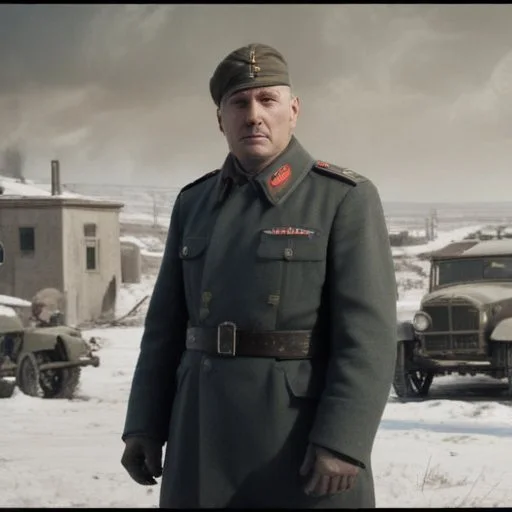
Stalingrad, a city on the banks of the Volga River, was once a thriving industrial center. However, by the winter of 1942-1943, it had become a desolate, war-torn landscape. The city was reduced to rubble, with buildings reduced to skeletons, and streets littered with the bodies of the fallen. The harsh Russian winter added to the misery, with temperatures plummeting to -30°C (-22°F), making it one of the most inhospitable environments on earth.
By January 1943, the German Sixth Army, led by Field Marshal Friedrich Paulus, was trapped in the Stalingrad pocket, surrounded by the Soviet Red Army. The German army was running out of supplies, ammunition, and men. The situation was dire, with soldiers forced to fight in sub-zero temperatures, without adequate food or shelter. The once-proud army was on the brink of collapse, with morale at an all-time low.
On January 31, 1943, Paulus realized that further resistance was futile. He radioed Adolf Hitler, requesting permission to surrender, but the Führer refused. Undeterred, Paulus made the difficult decision to surrender, marking the first time a German Field Marshal had ever surrendered in the field. Two days later, the remainder of the Sixth Army followed suit, bringing an end to one of the war's longest and bloodiest battles.
The surrender of the Sixth Army at Stalingrad was a crushing defeat for Germany, with over 91,000 soldiers killed, wounded, or captured. The loss was a significant blow to German morale, and marked a turning point in the war on the Eastern Front. The Soviet Union, buoyed by their victory, continued to push the Germans back, eventually capturing Berlin in April 1945.
The surrender of the Sixth Army at Stalingrad was a decisive victory for the Soviet Union, marking a turning point in the war on the Eastern Front. The defeat was a significant blow to German morale, and marked the beginning of the end of Germany's territorial gains in the Soviet Union.
The Battle of Stalingrad has had a lasting impact on popular culture, with films, books, and songs inspired by the events. The battle has become a symbol of Soviet resistance and determination, with the city of Volgograd (formerly Stalingrad) hosting annual commemorations to mark the anniversary of the surrender.
"The war on the Eastern Front is a war of annihilation... The German army will never be able to escape the fate of defeat." - Joseph Stalin
"I have no intention of surrendering. I will fight to the last man." - Friedrich Paulus (before surrendering)
The surrender of the Sixth Army at Stalingrad was a pivotal moment in World War II, marking a turning point in the war on the Eastern Front. It was a testament to the bravery and determination of the Soviet people, and a crushing defeat for Germany. The battle will always be remembered as one of the most epic and brutal conflicts in human history.
The battle of Stalingrad was not just a military conflict, but a clash of ideologies. The German army, driven by the Nazi regime's expansionist policies, sought to capture the city and secure a strategic foothold on the Volga River. On the other hand, the Soviet Union, led by Joseph Stalin, saw the battle as a matter of national survival and a test of the communist system.
The Soviet Union's scorched earth policy, which involved destroying everything in the path of the advancing German army, further exacerbated the already dire circumstances. The policy, aimed at denying the enemy any resources or shelter, resulted in widespread destruction and added to the misery of the civilian population.
The battle also saw the rise of Soviet sniper warfare, with legendary snipers like Vasily Zaitsev and Lyudmila Pavlichenko gaining fame for their remarkable marksmanship. The Soviet snipers, often operating behind enemy lines, played a crucial role in harassing and demoralizing the German forces.
Friedrich Paulus, the German Field Marshal who surrendered at Stalingrad, was a complex figure. On one hand, he was a skilled military strategist who rose through the ranks of the German army. On the other hand, he was also a loyalist to Adolf Hitler, which ultimately led to his downfall.
Paulus's decision to surrender was a personal and professional crisis. He had sworn an oath to Hitler, and surrendering would be seen as a betrayal. However, the reality on the ground was dire, and Paulus knew that further resistance would only lead to more bloodshed and suffering for his men.
The Battle of Stalingrad is often compared to the Battle of Leningrad, another prolonged and brutal siege conducted by the German army during World War II. While both battles were devastating and costly, the Battle of Stalingrad was fought in a more urban environment, with the Soviet Red Army using the city's terrain to their advantage.
In contrast to Leningrad, where the Soviet army was able to maintain a steady supply line, the German Sixth Army at Stalingrad was cut off from its supply lines, leading to a slow and agonizing starvation of the troops.
The Battle of Stalingrad has had a lasting impact on popular culture, with countless films, books, and songs inspired by the event. The battle has become a symbol of Soviet resistance and determination, with the city of Volgograd (formerly Stalingrad) hosting annual commemorations to mark the anniversary of the surrender.
The battle has also inspired numerous works of literature, including Vasily Grossman's novel "Life and Fate", which captures the human cost of the battle and the ideological struggles that defined it.
The Battle of Stalingrad marked a significant shift in the balance of power on the Eastern Front. The Soviet Union, buoyed by their victory, began to push the Germans back, eventually capturing Berlin in April 1945.
The battle also exposed the deep divisions within the German High Command, with Hitler's refusal to allow Paulus to surrender highlighting the dictatorial nature of his regime.