


On April 27, 1941, the vibrant city of Athens, the cradle of Western civilization, was dragged into the dark abyss of World War II as German troops stormed in, marking the beginning of a brutal occupation that would last for three long years. This fateful day would forever change the course of Greek history, leaving indelible scars on the city and its people.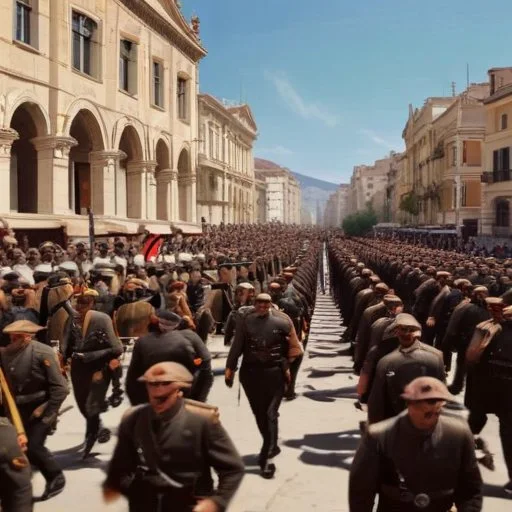
In the months leading up to the invasion, Greece had been embroiled in a desperate struggle against the Axis powers. The Italian invasion in October 1940 had already weakened the Greek government, and the subsequent British intervention had further complicated matters. Amidst this chaos, the German blitzkrieg rolled in, catching the Greeks off guard.
The German army, with its menacing Iron Cross emblem, quickly asserted its dominance over the city. Patrols roamed the streets, imposing curfews, rationing food, and restricting movement. The once-proud Athenians were forced to live in fear, their daily lives dictated by the whims of their occupiers.
Two men played pivotal roles in shaping the occupation of Athens: Field Marshal Wilhelm List, the German commander who led the invasion, and SS-Gruppenführer Walter Schimana, the brutal administrator tasked with maintaining order in the city. Their names would become synonymous with terror and oppression in Athens.
The occupation was marked by atrocities and brutality. The Nazis established a network of concentration camps, where Greek civilians were imprisoned, tortured, and executed. Food shortages and famine became rampant, claiming thousands of lives. The city's rich cultural heritage was also targeted, with irreplaceable artifacts looted or destroyed.
The occupation had a profound impact on Athenian society. The city's vibrant cultural scene was silenced, with theaters, museums, and universities shut down. The economy was ravaged, and the once-thriving port of Piraeus was transformed into a military stronghold. The very fabric of Athenian life was torn apart.
Despite the brutality, the Athenians refused to give in. A thriving resistance movement emerged, with brave men and women risking their lives to sabotage the Nazi war machine. The city's spirit of defiance would ultimately contribute to the Allies' victory, but not before Athens had endured three long years of occupation.
On October 12, 1944, the German occupation finally came to an end. As the last German troops departed, the city began the long journey of rebuilding and recovery. Though the scars of war would linger, Athens would rise from the ashes, its people determined to reclaim their city and restore its former glory.
The German occupation of Athens had a profound impact on the city's cultural landscape. The Nazis saw Greece as a treasury of cultural riches to be plundered, and many irreplaceable artifacts were stolen or destroyed. The iconic National Archaeological Museum, home to some of Greece's most precious relics, was ransacked, and many of its treasures were never recovered.
The cultural heritage of Athens was not limited to artifacts and relics. The city's vibrant intellectual and artistic communities were also targeted. Many prominent writers, artists, and intellectuals were forced into hiding or exile, and the city's cultural output was severely curtailed.
Despite the devastating losses, the Athenians continued to find ways to express themselves culturally. Secret underground art societies and literary circles sprang up, and the city's rich tradition of music and dance continued to thrive, albeit in secret.

Field Marshal Wilhelm List was the mastermind behind the German invasion of Athens. A seasoned military commander, List had a reputation for being ruthless and efficient, and he brought these qualities to bear on the city.
Despite his brutal reputation, List was a complex figure, driven by a deep sense of duty and loyalty to the German state. He was a stickler for discipline and protocol, and he demanded absolute obedience from his troops.
As the occupation wore on, List's popularity among the Athenians dwindled. He became known for his harsh crackdowns on dissent and his brutal suppression of the resistance movement.
The German occupation of Athens had a devastating impact on the city's economy. The Nazis imposed harsh economic sanctions, including currency devaluation and strict trade restrictions, which led to widespread poverty and famine.
The port of Piraeus, once a thriving commercial hub, was transformed into a military stronghold, and the city's industries were forced to produce war materials for the German war machine.
In addition to the economic costs, the occupation also had a profound impact on the city's infrastructure. Many of Athens' historic buildings and landmarks were damaged or destroyed, and the city's transportation network was severely disrupted.
The Nazi occupation of Athens generated a vast amount of documentation, from official military records to personal diaries and letters. These documents provide a unique glimpse into the daily lives of Athenians during this period.
One of the most important archives is the set of documents related to the Nazi's brutal suppression of the resistance movement. These documents detail the arrests, torture, and execution of hundreds of Athenians who dared to resist the occupation.
In addition to these official records, many personal diaries and letters have also been preserved. These personal documents provide a poignant insight into the daily struggles and fears of Athenians during this period.
The German invasion of Athens was part of a larger geopolitical strategy to control the Balkans. The Nazis saw the region as a vital source of resources and a key military stronghold.
The invasion of Greece was facilitated by the German alliance with Bulgaria and Yugoslavia, which provided a convenient route for the Nazi army to march into Athens.
The occupation of Athens also had broader implications for the region, as it allowed the Nazis to exert control over the Mediterranean and threaten the British stronghold in North Africa.