


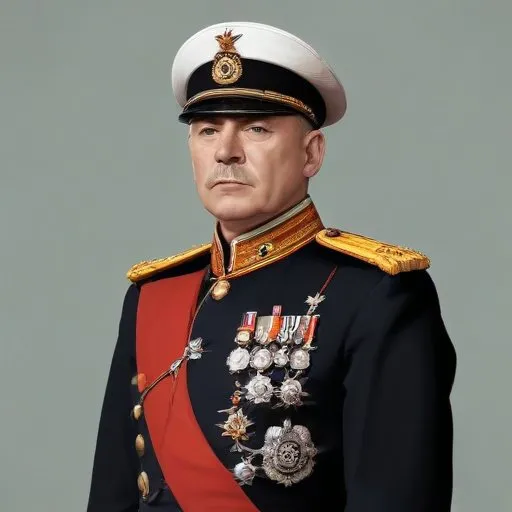
A high-ranking officer in the German Wehrmacht during World War II, he played a key role in the invasion of Poland and the Balkans, and was later convicted of war crimes.
Wilhelm List, a German Generalfeldmarschall, is infamously known for his role in World War II, commanding the 14th Army in the invasion of Poland, and later convicted of war crimes by a US Army tribunal.
Born on May 14, 1880, in Oberkirchberg, Württemberg, List was the son of a physician. He entered the Bavarian Army in 1898 and joined the Bavarian General Staff in 1913. During World War I, he served as a staff officer and commander of an infantry regiment, where he had a notable subordinate, Corporal Adolf Hitler.
After the war, List remained in the Reichswehr and eventually became commander of an Alpine battalion in 1922. He was later called to the Defense Ministry in 1926, where he was made director of military education and eventually commander of the Dresden Infantry School. By 1932, he had risen to the rank of Generalleutnant.
In 1939, List commanded the 14th Army in the invasion of Poland, playing a crucial role in the German war effort. He later commanded the 12th Army in the invasions of France, Yugoslavia, and Greece. In 1941, he was responsible for the occupation of Greece and Yugoslavia. His most notable command was Army Group A during the Case Blue operation in 1942, where his forces advanced towards the Caucasus and Baku.
Following the war, List was charged with war crimes and crimes against humanity by a US Army tribunal. He stood trial in the Hostages Trial of 1947 and was convicted, receiving a life sentence. However, due to poor health, he was released early and died on August 17, 1971.
Wilhelm List's legacy is marred by his involvement in war crimes and his conviction by a US Army tribunal. His actions during World War II had devastating consequences for the people of Poland, France, Yugoslavia, and Greece. Despite his military prowess, his name is synonymous with controversy and condemnation.
Through his life and career, Wilhelm List became a symbol of the complexities of human nature, where ambition and patriotism can blur into darkness and destruction. His story serves as a reminder of the importance of accountability and the need for humanity to learn from its mistakes.
Born in 1876
A German naval leader who played a key role in the Kriegsmarine during World War II, overseeing the German U-boat fleet and naval operations. He was a close advisor to Adolf Hitler and implemented the German naval strategy during the war.
Born in 1888
A pioneering tank commander who revolutionized modern warfare with his innovative blitzkrieg tactics, earning him the nickname "Father of the Panzerwaffe".
Born in 1880
A German field marshal who led the Wehrmacht during World War II, playing a key role in the invasion of Poland and the Battle of Moscow. He was a prominent figure in the German high command during the war.
Born in 1891
A skilled and highly decorated military leader, known for his tactical genius and defensive strategies during World War II, earning him the respect of both his allies and enemies.
Born in 1893
A high-ranking Nazi official, he was a decorated World War I fighter pilot and later became a prominent politician, serving as Minister President of Prussia. He's infamous for his role in the Nazi regime and war crimes trials.
Born in 1893
A German diplomat who served as the Nazi regime's Foreign Minister, orchestrating key alliances and treaties that led to World War II. He was a close associate of Adolf Hitler and played a crucial role in shaping Nazi foreign policy.
Born in 1887
A highly decorated military strategist who played a crucial role in several key battles during World War II, including the invasion of France and the Siege of Leningrad.
Born in 1891
A German naval commander who led the U-boat fleet during World War II and briefly served as President of Germany after Hitler's death, known for his role in the war and its aftermath.
