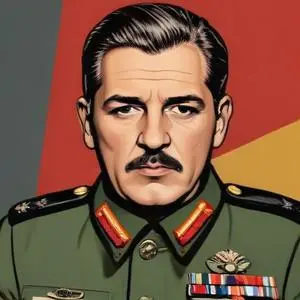
Walter Model: The Tenacious Panzer Commander
Defender of the Reich
Walter Model, a German Generalfeldmarschall, is best known for his unyielding defensive warfare tactics during World War II. As one of
Adolf Hitler's most trusted field commanders, Model repeatedly salvaged desperate situations on the Eastern Front, earning him the reputation as a master of defensive warfare.
A Humble Beginning
Born on January 24, 1891, in Genthin, Saxony, Model came from a middle-class, non-military family. His father, Otto Paul Moritz Model, was a music teacher, and his mother, Marie Pauline Wlhelmine, was a homemaker. With little known about his early years, Model's decision to burn all his personal papers at the end of World War II has left much to the imagination.
Rise to Prominence
Model's military career took off when he joined the 52nd Infantry Regiment von Alvensleben in 1909, thanks to the influence of his uncle, a reserve officer. He saw action in World War I, earning several decorations, including the Iron Cross. During the interwar period, Model continued to rise through the ranks, becoming a lieutenant colonel by 1934.
The Eastern Front
Model's tenacity and loyalty to the Nazi regime caught Hitler's attention in 1942, when he became commander of the Ninth Army. His successes in the battles of 1941-1942 solidified his position as a top field commander. Model's subsequent appointments as commander of Army Group North, Army Group North Ukraine, and Army Group Centre further cemented his reputation as a master defender.
Western Front and Downfall
In August 1944, Model was sent to the Western Front as commander of OB West and Army Group B. However, his relationship with Hitler began to fray after the German defeat at the Battle of the Bulge. As the war turned against Germany, Model's responsibilities grew, but his loyalty to Hitler remained unwavering. Tragically, on April 21, 1945, Model took his own life, rather than face capture and defeat.
Legacy and Controversy
Model's legacy is complex, marked by both admiration for his military prowess and condemnation for his loyalty to the Nazi regime. While his defensive tactics are still studied by military historians, his involvement in the war effort and loyalty to Hitler have sparked controversy and criticism.
- Quotes and Memorable Sayings: "The fate of the Army is mine, and mine alone." - Walter Model
- Career Highlights: Commander of the Ninth Army, Army Group North, Army Group North Ukraine, Army Group Centre, OB West, and Army Group B
- Awards and Honors: Knight's Cross of the Iron Cross with Oak Leaves, Swords, and Diamonds, German Cross in Gold
Model's story serves as a reminder of the complexities of war, where loyalty, duty, and morality often collide. Despite the controversy surrounding his legacy, Walter Model remains one of the most intriguing and enigmatic figures of World War II.
FAQ
What is Walter Models military background?
Walter Model was a German field marshal during World War II, serving in several key battles and campaigns on the Eastern Front.
What is Walter Models most notable military achievement?
Walter Models most notable military achievement is his successful defense of the German army during the Soviet winter offensive of 1941-1942, where he led a series of counterattacks that prevented a Soviet breakthrough.
What is Walter Models role in the development of German defensive tactics?
Walter Model played a crucial role in the development of German defensive tactics, particularly on the Eastern Front, where he developed innovative defensive strategies to counter Soviet attacks.
What is Walter Models relationship with Adolf Hitler?
Walter Model was a trusted military advisor to Adolf Hitler, and he often served as a key strategist and commander on the Eastern Front.
How did Walter Models experiences influence his military career?
Walter Models experiences in World War I and as a staff officer influenced his military career, particularly in his development of defensive tactics and his leadership style.