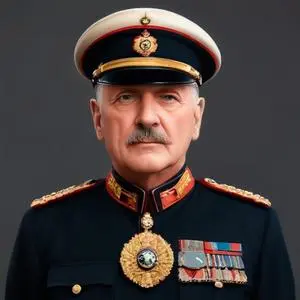
Heinz Guderian: The Father of Blitzkrieg
A Leading Figure in Modern Warfare
Heinz Guderian is synonymous with the concept of Blitzkrieg, a lightning-fast and devastatingly effective military strategy that revolutionized modern warfare. As a German general during World War II, Guderian played a pivotal role in the development of the panzer division concept, earning him the reputation as one of the most influential military minds of the 20th century.
The Early Years and Rise to Prominence
Born on June 17, 1888, in Kulm, West Prussia (present-day Poland), Guderian was drawn to the military from an early age. He joined the German Army in 1907 and served during World War I, where he was decorated for bravery. After the war, Guderian became fascinated with the concept of armored warfare, recognizing its potential to break through enemy lines and achieve rapid victories.
Pioneering the Blitzkrieg Concept
In the 1930s, Guderian became an early advocate for the development of panzer divisions, which consisted of highly mobile armored units supported by air power and infantry. His pioneering work in this field led to his appointment as Inspector of Motorized Troops in 1936. Guderian's theories were put to the test during the Invasion of Poland in 1939, where his armored corps played a decisive role in the German victory.
Key Roles in World War II
Guderian's military prowess earned him key roles in several critical campaigns during World War II. He led the armored units that attacked through the Ardennes forest during the Invasion of France, overwhelming Allied defenses at the Battle of Sedan. In 1941, he commanded the 2nd Panzer Army during Operation Barbarossa, the invasion of the Soviet Union. Although the campaign ultimately failed, Guderian's leadership and strategic thinking were instrumental in the initial successes.
Inspector General of Armored Troops and Chief of the General Staff
In 1943,
Adolf Hitler appointed Guderian as Inspector General of Armored Troops, tasked with rebuilding and training new panzer forces. Later, Guderian became Acting Chief of the General Staff of the Army High Command, a position that gave him significant influence over German military strategy.
Legacy and Controversy
Guderian's post-war memoir,
Panzer Leader, became a bestseller and remains a widely read and respected account of his experiences during World War II. However, his involvement in the Commissar Order and reprisals after the Warsaw Uprising of 1944 have tarnished his legacy, leading some historians to question his moral character.
Personal Life and Later Years
Guderian surrendered to the United States forces on May 10, 1945, and was interned until 1948. Released without charge, he retired to write his memoirs and lived a quiet life until his death on May 14, 1954.
Influence on Modern Warfare
Guderian's contributions to modern warfare are immeasurable. His development of the Blitzkrieg concept has influenced military strategists and historians around the world. As a result, he remains one of the most studied and respected military leaders of the 20th century.
- Key Achievements:
- Development of the Blitzkrieg concept
- Pioneer of panzer divisions
- Inspector General of Armored Troops
- Acting Chief of the General Staff of the Army High Command
- Notable Quote:
"The backbone of an army is its officer corps. If it is strong, the army will be strong."
FAQ
What was Heinz Guderians role in the German military?
Heinz Guderian was a prominent German general during World War II, known for his expertise in armored warfare. He played a key role in the development of the Panzerwaffe, the German tank corps.
How did Heinz Guderians military strategies impact the course of World War II?
Heinz Guderians military strategies, particularly his advocacy for blitzkrieg tactics, significantly impacted the course of World War II. His rapid armored advances helped Germany achieve several early victories, including the Battle of France.
What was Heinz Guderians relationship like with Adolf Hitler?
Heinz Guderian had a complex relationship with Adolf Hitler. While he was a loyal officer and supported the German war effort, he also frequently clashed with Hitler over military strategy and tactics.
How did Heinz Guderians military career impact his personal life?
Heinz Guderians military career had a profound impact on his personal life. He suffered from health problems, including a heart condition, and was eventually relieved of his duties due to disagreements with Hitler.
What is Heinz Guderians lasting legacy in military history?
Heinz Guderians legacy in military history is that of a visionary and innovative strategist. His contributions to the development of armored warfare and blitzkrieg tactics continue to influence military doctrine to this day.