


The Siege of Leningrad, a brutal and devastating 872-day blockade, is one of the most notorious events in World War II history, claiming millions of lives and leaving the city of Leningrad in ruins. This epic battle is known for its unrelenting ferocity, with the Soviet Union's cultural heart being pitted against the relentless onslaught of Adolf Hitler's Third Reich.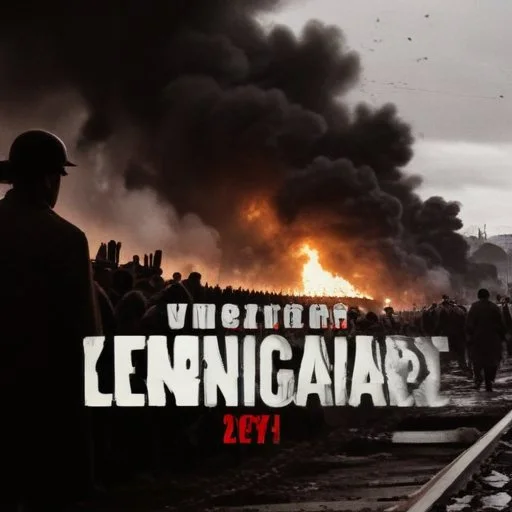
In June 1941, Nazi Germany launched Operation Barbarossa, a massive invasion of the Soviet Union. As the German army advanced, their sights were set on capturing Leningrad, a strategic city located on the Neva River. The Soviet Union, led by Joseph Stalin, was determined to defend its cultural heart, and the stage was set for one of the most epic battles of World War II.
On September 8, 1941, German troops, led by Field Marshal Wilhelm Ritter von Leeb, began their assault on Leningrad, cutting off all supply lines and food sources to the city. The siege was designed to starve the city into submission, but the people of Leningrad refused to give up.
September 8, 1941: German troops begin their assault on Leningrad, cutting off all supply lines and food sources to the city.
September 1941-January 1942: The Soviet Union attempts to break the siege, but their efforts are met with fierce resistance from the German army.
The Siege of Leningrad resulted in an estimated 1.5 million casualties, making it one of the deadliest battles in World War II. The city of Leningrad was left in ruins, with over 70% of its buildings destroyed. Despite the devastating consequences, the siege galvanized the Soviet Union's resistance against Nazi Germany, playing a crucial role in the ultimate defeat of the Third Reich.
The Siege of Leningrad had a profound impact on Russian culture, with many artists, writers, and musicians drawing inspiration from the bravery and resilience of the city's inhabitants. The siege also spawned a plethora of literature, art, and music, including Shostakovich's iconic Seventh Symphony.
"We ate everything: cats, dogs, mice, birds... We ate anything we could find." - Olga Mikhailova, a Leningrad resident during the siege.
"The siege was a test of endurance, a test of humanity. We were forced to confront our own mortality, and it was a brutal reality." - Anatoly Darov, a Soviet soldier who fought during the siege.
The Siege of Leningrad played a significant role in the ultimate defeat of Nazi Germany, paving the way for the Soviet Union's advance on Berlin. The siege also marked a turning point in World War II, as the Soviet Union began to gain the upper hand against the Third Reich.
The Siege of Leningrad is a testament to the human spirit, a powerful reminder of the bravery and resilience of those who fought to defend their city. The siege serves as a symbol of hope and determination, inspiring generations to come.
In conclusion, the Siege of Leningrad was a pivotal event in World War II, a brutal and devastating 872-day battle that tested the limits of human endurance. Despite the devastating consequences, the siege remains an inspiration to generations, a testament to the bravery and resilience of those who fought to defend their city.
The Siege of Leningrad was a pivotal event in World War II, but it was also a culmination of centuries-old tensions between Russia and Germany. The city of Leningrad, formerly known as St. Petersburg, had been a symbol of Russian culture and power since the 18th century. Germany, on the other hand, had long coveted the city's strategic location and resources.
In the years leading up to the siege, Hitler had been vocal about his desire to capture Leningrad, and Stalin was equally determined to defend it. The stage was set for a brutal and devastating conflict that would test the limits of human endurance.
The siege itself was a masterpiece of German military strategy, with von Leeb's army cutting off the city's supply lines and food sources with precision. But the Soviet Union's Red Army was not one to give up easily, and they fought back with everything they had.

Joseph Stalin, the leader of the Soviet Union, played a crucial role in the Siege of Leningrad. His unwavering determination to defend the city was matched only by his ruthlessness in dealing with those who opposed him.
Stalin's leadership during the siege was marked by a series of brutal purges, as he sought to eliminate any potential dissent or opposition. His secret police, the NKVD, were given free rein to round up and execute anyone suspected of collaborating with the Germans.
Despite his brutal tactics, Stalin remained popular among the Soviet people, who saw him as a strong and decisive leader. His leadership during the siege would cement his place in history as one of the most influential figures of the 20th century.
The Siege of Leningrad had a profound impact on Russian culture, as artists, writers, and musicians sought to capture the spirit of resistance and defiance that defined the city during the siege.
Dmitri Shostakovich's iconic Seventh Symphony, which premiered during the siege, became a symbol of resistance and hope for the Soviet people. The symphony's haunting melodies and crashing crescendos seemed to capture the very essence of the siege, and it remains one of the most beloved and enduring works of music to emerge from the war.
The siege also inspired a generation of Russian writers, including Daniil Granin and Alexander Fadeyev, who wrote powerful works of fiction and non-fiction about the siege and its aftermath.
The Siege of Leningrad was a major turning point in World War II, marking a shift in the balance of power between the Axis and Allied powers.
The Soviet Union's determination to defend Leningrad at all costs forced Hitler to divert valuable resources away from the Western Front, where the Allies were making steady gains.
The siege also marked a turning point in the relationship between the Soviet Union and the Western Allies, as the two sides began to cooperate more closely in their efforts to defeat Nazi Germany.
In the end, the Siege of Leningrad proved to be a crucial factor in the Allied victory, as it tied down significant German forces and paved the way for the Soviet Union's advance on Berlin.
The Siege of Leningrad was set against the backdrop of a larger geopolitical struggle between Nazi Germany and the Soviet Union.
Germany's invasion of the Soviet Union in June 1941 was motivated by a desire to capture the country's vast resources and territory, and to eliminate the Soviet Union as a rival power.
The Soviet Union, on the other hand, was determined to defend its territorial integrity and to stop the Nazi advance at all costs.
The siege was a microcosm of this larger struggle, as the two sides clashed in a brutal and devastating conflict that would leave millions dead and entire cities in ruins.