


On the fateful morning of May 17, 1940, Brussels, the cultural gem of Belgium, succumbed to the iron grip of Nazi Germany, marking a pivotal moment in World War II. The city, renowned for its Grande Place, a masterpiece of Gothic architecture, was overrun by the Wehrmacht, Hitler's formidable military machine, which had already swept aside Luxembourg and the Netherlands.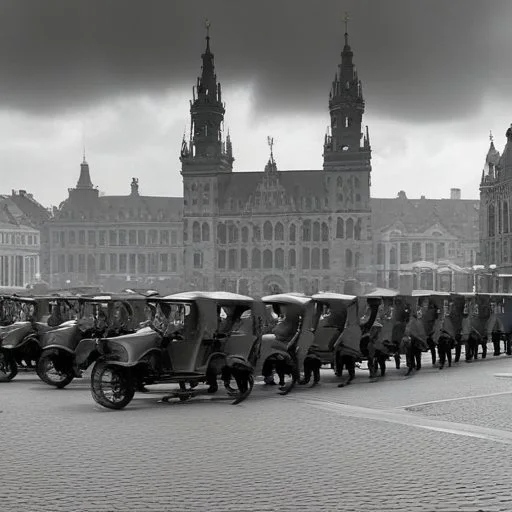
In the years leading up to the invasion, Belgium had maintained a policy of neutrality, hoping to avoid the devastation that had ravaged Europe during World War I. However, as Hitler's aggressive expansionist policies became increasingly apparent, Belgium's neutral stance was seen as a fragile barrier against the Nazi war machine.
The morning of May 10, 1940, marked the beginning of the end for Belgium's neutrality. German forces poured across the border, quickly overwhelming the Belgian army. By May 17, the Wehrmacht had reached Brussels, and the city fell without resistance. The swift occupation was followed by a brutal crackdown on civilians, as the Nazis sought to impose their dominance on the subdued population.
The Occupation of Brussels was not just a military victory; it was a cultural conquest. The Nazis sought to erase Belgian identity, suppressing the use of the French language and imposing Germanic customs on the population. The city's iconic landmarks, such as the Grande Place, were transformed into symbols of Nazi dominance, as the Swastika flag flew high above the rooftops.
For the people of Brussels, the occupation was a bleak and terrifying experience. Food was scarce, and rationing became a way of life. The once-vibrant streets were now empty, as curfews and restrictions stifled any semblance of normalcy. The city's Jews, in particular, were subject to brutal persecution, as the Nazis implemented their hateful policies of discrimination and deportation.
The occupation of Brussels lasted for four long years, leaving an indelible mark on the city and its people. The war effort ultimately claimed the lives of over 24,000 Belgians, with countless more suffering under the brutal Nazi regime. Today, the city remembers its dark past, honoring the bravery of its people and the sacrifices they made during those tumultuous times.
On September 3, 1944, Allied forces, led by the British, liberated Brussels, ending the four-year occupation. The city erupted in jubilation, as its people reclaimed their freedom and their identity. The Grande Place, once a symbol of oppression, was reborn as a beacon of hope and defiance, as Brussels began its long journey towards healing and rebirth.
The Nazi occupation of Brussels had a profound impact on the city's cultural landscape. Theaters, once hubs of artistic expression, were converted into propaganda machines, churning out Nazi ideology to the masses. The iconic Belgian comic strip, The Adventures of Tintin, was banned, and its creator, Hergé, was forced to work under censorship.
The Nazis also sought to erase Belgium's rich linguistic heritage, suppressing the use of French and Flemish in favor of German. This cultural imperialism was reinforced through the education system, where Nazi-approved textbooks were introduced, and Belgian history was rewritten to conform to the occupier's ideology.
But even in the darkest of times, there were beacons of resistance. Underground art movements flourished, with artists creating subversive works that defied Nazi censorship. These clandestine creations became powerful symbols of Belgian identity and resistance, inspiring a generation of freedom fighters.
Belgium's policy of neutrality, prior to the German invasion, was rooted in its historical experience of being a battleground for European powers. This policy was also influenced by the country's unique cultural identity, split between French and Flemish speaking populations.
The King's decision to surrender, rather than fight to the end, remains a controversial topic in Belgian history. While some view it as a pragmatic decision to avoid further bloodshed, others see it as a betrayal of national honor. This debate has had a lasting impact on Belgian politics, shaping the country's foreign policy and national identity.
The occupation also exposed deep-seated divisions within Belgian society. The Nazi regime exploited these fissures, playing on differences between French and Flemish speakers to further their own agenda. This experience has led to a renewed focus on national unity and reconciliation in post-war Belgium.
General Heinz Guderian, the brilliant and daring German commander, was the mastermind behind the Wehrmacht's lightning-fast advance into Belgium. His innovative tactics, which emphasized speed and surprise, caught the Belgian army off guard, leading to a swift and decisive victory.
But Guderian's ruthless efficiency was tempered by a sense of chivalry, rare among Nazi commanders. He was known to have intervened on several occasions to prevent the massacre of civilians, earning him a reputation as a "gentleman" among his peers.
Despite his military prowess, Guderian's legacy remains complex and contested. His involvement in the Nazi war machine, and his role in the occupation of Belgium, cannot be divorced from the atrocities committed during this period.
The Wehrmacht's invasion of Belgium was preceded by a series of clandestine operations, designed to weaken the country's defenses. German agents, posing as tourists, photographed strategic locations, while others spread rumors and misinformation to create confusion and panic.
Once the invasion began, the Germans employed novel tactics, such as Blitzkrieg, or "lightning war," which combined rapid advances with intense aerial bombing. This caught the Belgian army off guard, leading to a series of rapid defeats.
The speed and intensity of the German advance were unprecedented. Within days, the Wehrmacht had overcome the Belgian army, and the country was plunged into darkness.
The Grande Place, Brussels' iconic central square, was transformed into a symbol of Nazi dominance during the occupation. The square's magnificent Gothic architecture was draped in Swastika flags, while Nazi propaganda posters plastered the walls.
One of the most enduring artifacts of the occupation is the Journal de la Guerre, a daily newspaper published by the Belgian resistance. This clandestine publication, which circulated throughout the city, provided news, opinion, and inspiration to the people of Brussels, helping to sustain their spirits during the darkest of times.
The diary of Alice Dumont, a Brussels resident, offers a poignant glimpse into life under occupation. Her vivid descriptions of the city's daily struggles, and her own hopes and fears, provide a human face to the historical narrative.