


September 1, 1939, is etched in history as the day the world teetered on the brink of chaos. On this fateful morning, Germany, led by Adolf Hitler, and its Slovak allies launched a brutal invasion of Poland, sparking the European phase of World War II.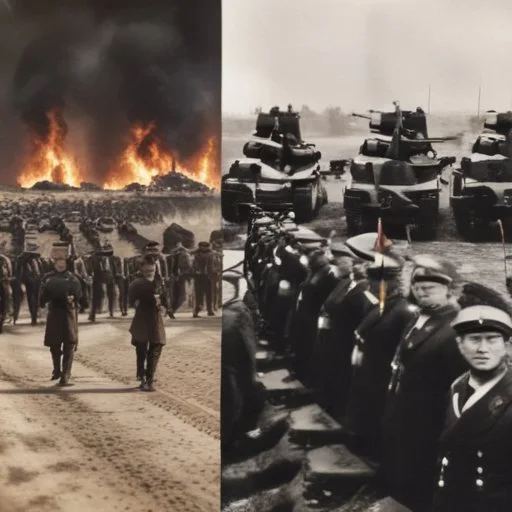
The invasion, code-named Operation White, was a meticulously planned attack that caught Poland off guard. The sheer scale of the operation was staggering – 1.5 million German soldiers, 2,000 tanks, and 2,000 aircraft descended upon Poland's borders, leaving its 700,000-strong military vastly outnumbered and outgunned.
Slovakia, though not a major military power, played a significant role in the invasion. The Slovak Republic, as it was known, had recently gained independence from Czechoslovakia and saw an opportunity to strengthen its ties with Nazi Germany. This unlikely alliance would have far-reaching consequences for the people of Slovakia and the world at large.
As Polish forces fought valiantly, the Soviet Union, bound by a secret pact with Germany, attacked Poland from the east. This surprise move effectively cut off any hope of Polish resistance, leaving the country vulnerable to the mercy of its invaders. The Soviet Union's betrayal would become a defining moment in the war, marking the beginning of a complex and often fraught relationship between the Soviet Union and the rest of Europe.
The invasion of Poland sent shockwaves across Europe, prompting the United Kingdom and France to declare war on Germany. This marked the beginning of a global conflict that would engulf nations, destroy cities, and claim millions of lives. The world was now at war, and the rules of engagement would never be the same.
The invasion of Poland marked the beginning of World War II, a conflict that would last six years, claim millions of lives, and reshape the world order. The war would also lead to the Holocaust, one of the darkest moments in human history, and have a profound impact on international relations, global security, and humanitarian law.
Despite the overwhelming odds, the people of Poland showed remarkable bravery and resilience in the face of aggression. Their courage inspired a generation of freedom fighters and resistance movements across Europe, and their story continues to inspire us today.
The world may have changed on that fateful day in September 1939, but it also reminded us of the importance of standing up against tyranny, defending our values, and fighting for our freedom.
The invasion of Poland marked a significant shift in the European geopolitical landscape. The Molotov-Ribbentrop Pact, signed just a week prior, had created a sense of unease among the European powers. Germany's aggression towards Poland was seen as a challenge to the status quo, and the Soviet Union's subsequent invasion from the east raised concerns about the spread of communism.
In the years leading up to the invasion, Germany had been steadily increasing its military presence along the Polish border, while also making overtures to the Soviet Union. This strategic move had caught the attention of the Western powers, who were already wary of Germany's intentions.
Jozef Tiso: The Slovak Politician with a Dream
Jozef Tiso, the Slovak politician and Catholic priest, played a crucial role in the invasion of Poland. As the leader of the Slovak Republic, Tiso saw an opportunity to strengthen his country's ties with Nazi Germany and secure a better future for the Slovak people.
Tiso's rise to power was marked by his charismatic leadership and his ability to tap into the Slovak people's desire for independence. Despite his controversial alliance with the Nazis, Tiso remained a popular figure in Slovakia, and his legacy continues to be felt to this day.
The invasion of Poland was not an isolated event; it was part of a larger pattern of aggression by Germany and the Soviet Union. Just a year prior, Germany had annexed Austria, and the Soviet Union had invaded Finland.
In contrast to these events, the invasion of Poland was unique in its scale and brutality. The speed and efficiency of the German military, combined with the Soviet Union's surprise attack from the east, caught the Polish military off guard and overwhelmed them.
The invasion of Poland had a profound impact on the country's cultural heritage. Many of Poland's cultural institutions, including museums, libraries, and theaters, were destroyed or looted during the war.
The war also led to a significant displacement of people, with many Poles forced to flee their homes and seek refuge in other parts of Europe. This led to a loss of cultural identity and a fragmentation of Polish society.
Polarizing Views on the Invasion of Poland
Historians have long debated the motivations behind the invasion of Poland. Some have argued that Germany's aggression was driven by a desire for Lebensraum, or living space, while others have pointed to the country's economic and political instability.
The Soviet Union's role in the invasion has also been subject to interpretation, with some historians viewing it as a cynical ploy to expand its territory, while others have seen it as a necessary step to counterbalance Germany's power.