


The Soviet Red Army's liberation of Kharkiv, a strategic city in eastern Ukraine, marked a significant milestone in the Eastern Front of World War II. This victory, achieved for the second time in 1943, was a crucial outcome of the Battle of Kursk, the largest tank battle in history.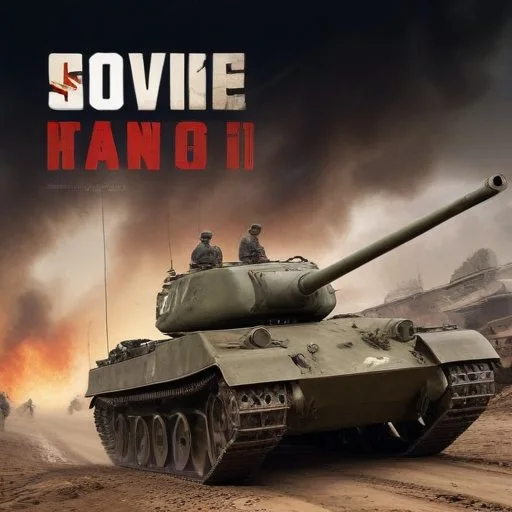
In 1941, German forces launched Operation Barbarossa, a massive invasion of the Soviet Union that led to the occupation of Ukraine. Kharkiv, a major industrial and cultural center, was a key prize in this campaign. The city fell to the Germans in October 1941, but was retaken by the Soviets in February 1943, only to be lost again in March of the same year.
The Soviet Red Army's victory in the Battle of Kursk, fought from July to August 1943, was a decisive turning point in the war on the Eastern Front. The Red Army's success in repelling the German offensive paved the way for a counterattack that would drive the Germans out of Ukraine. Led by Generals Konstantin Rokossovsky and Ivan Konev, the Soviet forces launched a series of offensives that would eventually lead to the liberation of Kharkiv.
The battle to retake Kharkiv was intense and brutal, with both sides suffering heavy losses. The Soviet forces, however, had the advantage of superior numbers and firepower. On August 23, 1943, the Red Army burst through the German defenses, and by August 28, the city was fully liberated. The Soviet victory was marked by the hoisting of the Red Flag over the city's central square.
The liberation of Kharkiv marked a significant shift in the balance of power on the Eastern Front. The Soviet victory paved the way for the Red Army's advance into Eastern Europe, ultimately leading to the capture of Berlin and the defeat of Germany. The city's liberation also had a profound impact on the Ukrainian people, who had suffered greatly under German occupation.
The liberation of Kharkiv was celebrated as a major triumph for the Soviet people, and its importance was commemorated in art, literature, and music. The city's liberation is still remembered today as a testament to the bravery and resilience of the Ukrainian people during World War II.
The liberation of Kharkiv is a testament to the bravery and determination of the Soviet people during World War II. The city's story serves as a reminder of the importance of perseverance and sacrifice in the face of overwhelming odds.
General Konstantin Rokossovsky was a Soviet Marshal who played a crucial role in the Battle of Kursk and the subsequent liberation of Kharkiv. Born in 1896, Rokossovsky was a veteran of the Russian Civil War and the Polish-Soviet War. He rose through the ranks of the Red Army, earning a reputation as a brilliant tactician and fearless leader.
Rokossovsky's leadership during the Battle of Kursk was instrumental in the Soviet victory. He successfully coordinated the counterattack that repelled the German offensive, and his troops inflicted heavy casualties on the enemy. His success in Kursk earned him the title of Hero of the Soviet Union, the highest honor in the Soviet Union.
Rokossovsky's role in the liberation of Kharkiv was equally significant. He worked closely with General Ivan Konev to plan and execute the operation, and his troops played a key role in breaching the German defenses. Rokossovsky's leadership and tactical genius were decisive in the Soviet victory, and he remains one of the most celebrated military leaders of World War II.

The liberation of Kharkiv had a profound impact on Soviet culture. The city's liberation was celebrated in literature, art, and music, with many works paying tribute to the bravery and sacrifice of the Soviet soldiers who fought for the city.
In literature, the liberation of Kharkiv inspired a new wave of patriotic poetry and prose. Writers like Mikhail Sholokhov and Konstantin Fedin wrote about the city's liberation, and their works became classics of Soviet literature.
In art, the liberation of Kharkiv was commemorated in paintings and sculptures that depicted the bravery and sacrifice of the Soviet soldiers. One of the most famous works of art to emerge from this period is the painting "The Liberation of Kharkiv" by Soviet artist Vladimir Serov.
In music, the liberation of Kharkiv inspired a new wave of patriotic songs and hymns. The most famous of these is the "Song of the Soviet Soldier," which became an anthem of the Soviet war effort.
The battle for Kharkiv was a brutal and intense urban battle that lasted for five days. Both sides suffered heavy losses, with estimates suggesting that over 100,000 soldiers were killed or wounded during the battle.
The German defense of Kharkiv was led by General Erhard Raus, who had fortified the city with a network of trenches, bunkers, and minefields. The Soviet forces, led by General Ivan Konev, launched a series of massive artillery bombardments to breach the German defenses.
The battle was marked by intense street fighting, with both sides employing brutal tactics to gain control of the city. The Soviet forces used Katyusha rockets to blast through German strongpoints, while the Germans used massive artillery bombardments to try and hold back the Soviet advance.
The liberation of Kharkiv was a testament to the bravery and determination of the Soviet soldiers, who fought against overwhelming odds to retake the city.

Kharkiv was a strategic linchpin in the Eastern Front, controlling the railroad network that connected Moscow to the Caucasus region. The city's capture by the Germans in 1941 had severed this vital supply line, and its liberation was crucial to the Soviet war effort.
The city's location made it a key hub for the Soviet military, with multiple rail lines and highways converging on Kharkiv. The city's proximity to the Donbas region, a major industrial center, made it a vital prize in the struggle for control of Ukraine.
The liberation of Kharkiv also had significant implications for the wider war on the Eastern Front. The city's capture marked a major shift in the balance of power, as the Soviet Union began to push the Germans back towards Poland and Eastern Europe.
The archive of Kharkiv's liberation contains a wealth of primary sources that provide a unique insight into the battle for the city. One of the most significant documents is the operational diary of General Ivan Konev, which provides a detailed account of the Soviet plans and preparations for the battle.
The archive also contains a collection of letters and diaries from Soviet soldiers who fought in the battle, providing a poignant and personal perspective on the conflict. These documents offer a fascinating glimpse into the daily lives of soldiers on the front lines, and the fears, hopes, and sacrifices they made during the battle.
The archive also contains a collection of German documents, including operational orders and situation reports, which provide a unique insight into the German perspective on the battle.