


On this fateful day in World War II, the Yugoslav partisans achieved a monumental victory, liberating the historic city of Mostar from the oppressive grip of Axis forces. This valiant feat, marked by bravery, determination, and a deep love for their homeland, would go down in history as a testament to the unyielding spirit of the Yugoslav people.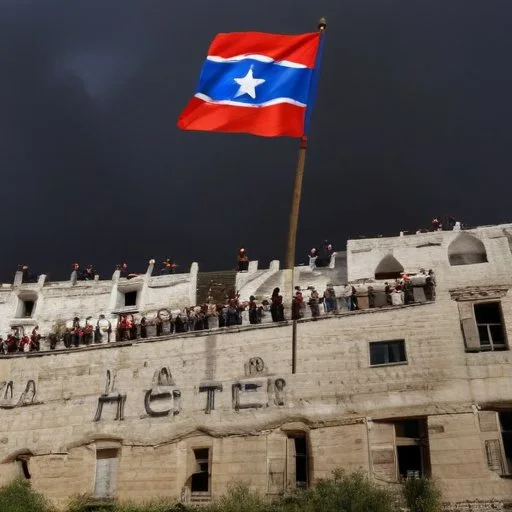
Mostar, a cultural gem nestled in the heart of Bosnia and Herzegovina, had been under Axis occupation since 1941. The city's strategic location made it a crucial prize in the war-torn region, with both Allied and Axis forces vying for control. As the war dragged on, Mostar became a hub for resistance, with Yugoslav partisans waging a guerrilla war against the occupiers.
The decisive battle for Mostar began on February 14, 1945, as Yugoslav partisans, led by the fearless Marshal Josip Broz Tito, launched a daring offensive against the Axis forces. After a fierce and intense struggle, the partisans finally broke through the enemy lines, liberating the city on February 22, 1945. The echoes of gunfire and artillery fell silent, replaced by the jubilant cheers of the victorious partisans as they raised their flags high in the liberated streets of Mostar.
Marshal Josip Broz Tito, the supreme commander of the Yugoslav partisans, played a pivotal role in the liberation of Mostar. His unwavering leadership and strategic brilliance inspired the partisans to fight on against overwhelming odds. Other notable figures involved in the liberation included Sava Kovačević, a legendary partisan commander, and Slavko Rodić, a skilled military strategist.
The liberation of Mostar marked a significant turning point in the war, as it denied the Axis powers a crucial stronghold in the region. The victory also boosted the morale of the Yugoslav people, inspiring them to continue their fight against occupation. Furthermore, the liberation paved the way for the eventual defeat of Axis forces in Yugoslavia and the establishment of a socialist government.
The liberation of Mostar had a profound impact on the city's cultural and social fabric. The destruction wrought by the war was slowly reversed, as the city began to rebuild and recover. The historic Old Bridge, a symbol of Mostar's rich cultural heritage, was restored to its former glory, while the city's vibrant cultural scene began to flourish once more.
One partisan fighter, recalling the liberation, said: "We knew we had to take back our city, no matter the cost. The thought of our homeland, our families, and our freedom drove us forward, even in the face of overwhelming odds." Another fighter remembered the triumphant cheers that echoed through the city, saying: "It was as if the very walls of Mostar were singing with joy, knowing that we had finally taken back what was rightfully ours."
The liberation of Mostar served as a beacon of hope for other occupied cities in Yugoslavia, inspiring them to continue their fight against the Axis powers. The bravery and determination of the Yugoslav partisans set a powerful precedent for future generations, cementing their place in history as heroes of the liberation.
The liberation of Mostar is a testament to the unwavering human spirit, a reminder that even in the darkest of times, courage, determination, and a deep love for one's homeland can overcome even the most insurmountable odds. As one partisan fighter so eloquently put it: "We didn't just fight for our city, we fought for our very existence. And in the end, that's what made us unstoppable."
Following the liberation of Mostar, the city experienced a cultural renaissance, as artists, writers, and musicians flocked to the city to capture its newfound spirit.
The city's rich cultural heritage was revitalized, with the restoration of historic landmarks, such as the Old Bridge, and the reopening of cultural institutions, like the Mostar Museum and the National Theater.
A new generation of artists emerged, inspired by the bravery and determination of the Yugoslav partisans.
Sava Kovačević, a legendary partisan commander, played a crucial role in the liberation of Mostar. Born in 1905, Kovačević joined the Yugoslav partisans in 1941 and quickly rose through the ranks, earning a reputation as a skilled and fearless military strategist.
Under his leadership, the partisans launched a series of daring raids against Axis forces, ultimately leading to the liberation of Mostar.
Kovačević's bravery and tactical genius made him a hero to the Yugoslav people, and his legacy continues to inspire generations of patriots.The liberation of Mostar took place against the backdrop of a rapidly changing geopolitical landscape. As the Allies advanced on multiple fronts, the Axis powers found themselves on the defensive.
The Soviet Union's push into Eastern Europe, combined with the Western Allies' progress in Italy, created a pincer movement that threatened to crush the Axis forces in Yugoslavia.
The liberation of Mostar was a key victory in this broader struggle, demonstrating the growing strength and coordination of the Yugoslav partisans.
The liberation of Mostar had profound ideological implications, as it marked a triumph of socialist and anti-fascist forces over the forces of oppression.
The Yugoslav partisans, inspired by the ideals of Marxism-Leninism, saw themselves as fighting not only for national liberation but also for a more just and equal society.
Their victory in Mostar symbolized the power of collective action and the determination to build a socialist Yugoslavia.Historians have long debated the significance of the liberation of Mostar, with some viewing it as a crucial turning point in the war and others seeing it as a symbol of Yugoslav unity.
Recent scholarship has emphasized the importance of understanding the liberation within the context of the broader Yugoslav resistance movement.
Regardless of interpretation, the liberation of Mostar remains a pivotal event in Yugoslav history, one that continues to inspire and fascinate scholars and laypeople alike.