


September 28, 1939, marked a somber day in the history of Poland, as Nazi Germany and the Soviet Union agreed on a division of the country, effectively erasing it from the map. This historic event, a result of the Molotov-Ribbentrop Pact's secret protocol, would have far-reaching consequences, setting the stage for the devastating war that would engulf Europe.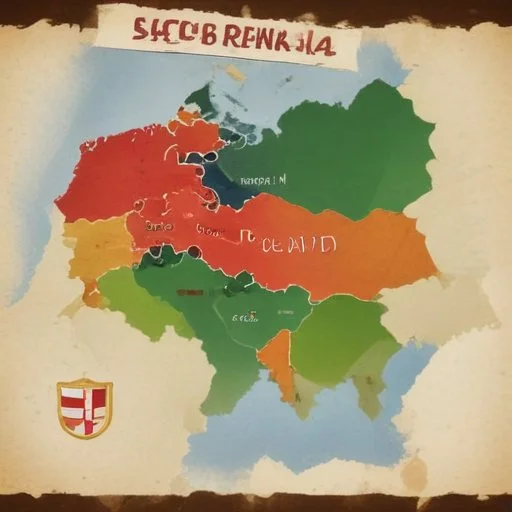
In the late 1930s, Europe was on the brink of war. Nazi Germany, under the leadership of Adolf Hitler, was rapidly expanding its territory, while the Soviet Union, led by Joseph Stalin, was strengthening its grip on Eastern Europe. Poland, caught in the middle, became the focal point of these two powerful nations' aggressive ambitions.
August 23, 1939: The Molotov-Ribbentrop Pact is signed, including a secret protocol dividing Eastern Europe into Soviet and German spheres of influence.
September 1, 1939: Nazi Germany invades Poland, prompting the United Kingdom and France to declare war on Germany.
September 17, 1939: The Soviet Union invades Poland from the east, occupying the eastern regions of the country.
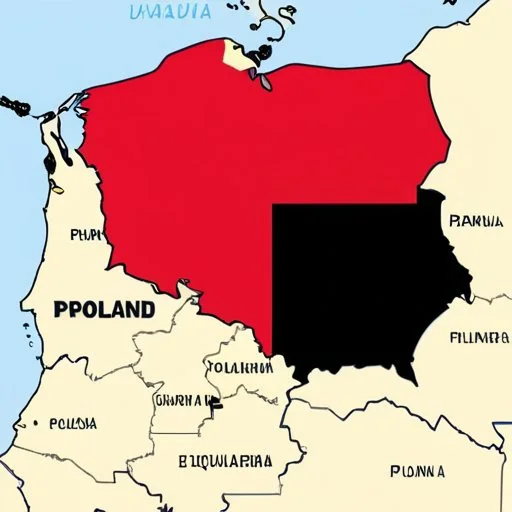
September 28, 1939: Germany and the Soviet Union agree on a division of Poland, with the Bug River serving as the border.
The division of Poland resulted in the country being erased from the map, with Germany and the Soviet Union claiming large chunks of territory. This event marked the beginning of World War II, as European nations began to take sides in the conflict.
The invasion and occupation of Poland led to the deaths of millions of Polish citizens, including Jews, intellectuals, and members of the resistance movement.
The agreement also paved the way for the Soviet Union's occupation of the Baltic states, and Germany's subsequent invasion of Denmark, Norway, Belgium, the Netherlands, and France.
The division of Poland had a profound impact on the cultural and social fabric of Europe. It led to the displacement of millions of people, the destruction of cities and communities, and the erasure of a nation's identity.
The event also highlighted the brutal and calculating nature of totalitarian regimes, revealing the true extent of their ideological differences and willingness to compromise moral principles for political gain.
"This is not a temporary alliance, but a long-term friendship." - Adolf Hitler, on the Molotov-Ribbentrop Pact
"The boundary between Poland and the Soviet Union shall be determined by a mixed commission." - Article 2 of the Molotov-Ribbentrop Pact
The division of Poland set the stage for the subsequent events of World War II, including the Battle of Britain, the invasion of the Soviet Union, and the eventual defeat of Nazi Germany.
The agreement also contributed to the formation of the Eastern European bloc, cementing the Soviet Union's influence over the region for decades to come.
Despite the horrors of war, the Polish people never lost hope. The country's resistance movement, comprising brave men and women, continued to fight against the occupying forces, inspiring others to join the fight against tyranny.
The division of Poland serves as a poignant reminder of the importance of international cooperation, diplomacy, and the protection of human rights and sovereignty.
The Molotov-Ribbentrop Pact was signed in Moscow, with the two foreign ministers sharing a toast to "peace and friendship" between Germany and the Soviet Union.
The pact included a secret protocol dividing Eastern Europe into Soviet and German spheres of influence, with Lithuania falling under the Soviet sphere and Poland being divided between the two nations.
The division of Poland was met with widespread international condemnation, with the United States, the United Kingdom, and France issuing strong protests against the agreement.
The road to the division of Poland was paved by a series of aggressive moves by Nazi Germany. In March 1939, Germany had annexed Czechoslovakia, and in April, Italy had invaded Albania. These actions had sparked a sense of urgency among European nations, leading to the formation of the Anglo-Polish military alliance in May 1939. However, this alliance was not enough to deter Germany and the Soviet Union from their plans to divide Poland.
In the months leading up to the invasion, Germany and the Soviet Union had been engaged in secret negotiations, culminating in the Molotov-Ribbentrop Pact. This pact included a secret protocol dividing Eastern Europe into Soviet and German spheres of influence, with Poland being the main prize. The pact was signed on August 23, 1939, and just over a week later, Germany invaded Poland from the west, while the Soviet Union invaded from the east.
Joachim von Ribbentrop, the German Foreign Minister, played a crucial role in negotiating the Molotov-Ribbentrop Pact. A loyal supporter of Adolf Hitler, Ribbentrop was known for his arrogance and ambition. He was the one who had initially proposed the idea of a non-aggression pact between Germany and the Soviet Union, and he was instrumental in convincing Hitler to sign the agreement.
Ribbentrop's counterpart, Vyacheslav Molotov, was a stalwart communist and a close ally of Joseph Stalin. He was known for his cunning and his ability to negotiate complex agreements. Molotov was the one who had suggested the inclusion of a secret protocol in the pact, which would divide Eastern Europe into Soviet and German spheres of influence.
The division of Poland in 1939 was not an isolated incident. Rather, it was part of a larger pattern of aggression and expansionism that characterized the behavior of both Nazi Germany and the Soviet Union during the 1930s. Both powers had been steadily expanding their territories, with Germany annexing Austria and Czechoslovakia, and the Soviet Union absorbing the Baltic states and parts of Finland.
However, the division of Poland was unique in that it marked the first time that two major powers had collaborated to dismember a sovereign state. This agreement had far-reaching implications, as it marked the beginning of a tumultuous period in European history, which would eventually lead to the outbreak of World War II.
The division of Poland had a profound impact on the cultural landscape of Europe. The country's rich cultural heritage, including its art, literature, and music, was suddenly fragmented, as Polish artists and intellectuals were forced to flee or go into hiding. The country's cultural institutions, including its museums, libraries, and universities, were either destroyed or taken over by the occupying powers.
The division of Poland also had a profound impact on the Jewish community, which had thrived in Poland for centuries. Many Jewish Poles were forced to flee or were sent to concentration camps, leading to a devastating blow to the community. The cultural and intellectual losses suffered by Poland during this period were immense, and would take decades to recover from.
The division of Poland was not just a local conflict, but had far-reaching implications for the global balance of power. The agreement between Germany and the Soviet Union marked a significant shift in the geopolitics of Europe, as it created a new axis of power that threatened the stability of the continent.
The division of Poland also had implications for the global economy, as it disrupted trade and commerce between Europe and the rest of the world. The invasion of Poland led to a surge in oil prices, and a decline in international trade, which had a ripple effect on the global economy.