


The Soviet Riga Offensive, a pivotal battle fought during World War II, marked a significant milestone in the war's Eastern Front, as the Soviet Army reclaimed the city of Riga from German occupation, paving the way for the eventual push towards Berlin. This monumental victory, led by General Ivan Bagramyan, not only liberated the Latvian capital but also dealt a critical blow to the German war effort.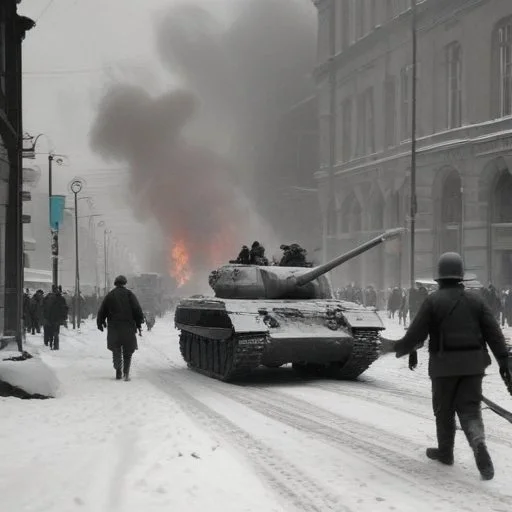
By the summer of 1944, the Soviet Union had made substantial gains in the Baltic region, having pushed the German army back through Estonia and Lithuania. However, the city of Riga, a strategic stronghold, remained under German control. The Soviet leadership, aware of the city's importance, planned a massive offensive to capture Riga, further weakening the German army's grip on the region.
General Ivan Bagramyan, a seasoned commander and one of Stalin's most trusted generals, led the Soviet forces during the Riga Offensive. Bagramyan's military prowess and strategic thinking played a crucial role in the Soviet victory. On the German side, General Ferdinand Schörner, commander of the Army Group North, oversaw the German defenses, but ultimately failed to hold back the Soviet advance.
The Soviet Riga Offensive commenced on September 14, 1944, with a massive artillery barrage, targeting German defenses along the Venta River. Over the next few days, Soviet forces pushed forward, slowly but steadily gaining ground against stubborn German resistance. By September 22, the Red Army had encircled the city, and on October 13, Riga finally fell to the Soviets.
The Soviet Riga Offensive had a profound impact on the cultural and social fabric of Latvia. The liberation of Riga marked the beginning of a new era for the Latvian people, who had suffered under German occupation for nearly four years. The Soviet victory was celebrated with great fanfare, as Latvians rejoiced at their newfound freedom.
"The capture of Riga is a testament to the bravery and determination of the Soviet soldier. We will continue to push forward, until the enemy is vanquished and our great nation is victorious." - General Ivan Bagramyan
Alexander Tarasov, a Soviet soldier who fought during the Riga Offensive, recalled the intense artillery bombardment that preceded the attack: "The ground shook beneath our feet as our guns blazed away. It was a sight to behold, and a sound that still echoes in my mind today."
The Soviet Riga Offensive set the stage for the eventual capture of Berlin, as the Red Army continued its relentless push towards the German capital. The Soviet victory also marked a turning point in the war, as the German army began to falter under the pressure of the Soviet advance.
The Soviet Riga Offensive serves as a testament to the power of perseverance and determination. Despite facing fierce German resistance, the Soviet forces remained resolute in their goal to liberate Riga, inspired by their country's unwavering commitment to victory.
General Ivan Bagramyan was a skilled and experienced commander who played a crucial role in the Soviet Riga Offensive. Born in 1897 in Armenia, Bagramyan joined the Red Army in 1920 and quickly rose through the ranks, earning a reputation as a talented strategist and leader.
During World War II, Bagramyan commanded the 1st Baltic Front, leading his troops to several victories against the German army. His military prowess and strategic thinking were instrumental in the Soviet victory at Riga.
Bagramyan's leadership style was marked by his ability to inspire and motivate his troops. He was known for his bravery, often visiting the front lines to boost morale and assess the situation firsthand.
The liberation of Riga had a profound impact on Latvian culture, marking the beginning of a new era of freedom and self-expression. After nearly four years of German occupation, the city's cultural institutions and landmarks were finally able to flourish once again.
The Soviet victory was celebrated with grandeur, with parades, concerts, and festivals erupting across the city. Latvian artists, writers, and musicians were finally able to create without fear of censorship or persecution.
Riga's liberation also marked a resurgence of interest in Latvian folklore and heritage. The city's historic landmarks, such as the Riga Cathedral and the House of the Blackheads, were restored to their former glory, serving as a symbol of national pride and identity.
The Soviet Riga Offensive took place within the broader context of the Eastern Front, as the Allies pushed towards Berlin from multiple directions. The Soviet Union's strategy was to encircle and isolate the German army, cutting off supply lines and communication.
The capture of Riga was a critical component of this strategy, as it provided the Soviet army with a key foothold in the Baltic region. By securing Riga, the Soviets were able to push further into East Prussia, eventually capturing the key city of Königsberg.
The Riga Offensive also had significant implications for the post-war settlement, as it helped to establish the Soviet Union as a major world power and secured its influence over Eastern Europe.
The Soviet plan for the Riga Offensive was outlined in a series of confidential documents, detailing the military strategy and objectives of the operation.
One such document, dated August 1944, outlines the Soviet army's plan to encircle Riga and cut off German supply lines. The document details the deployment of troops, artillery, and air support, as well as the timing and coordination of the attack.
These primary documents provide a unique insight into the planning and execution of the Riga Offensive, offering a glimpse into the minds of the Soviet military leaders who orchestrated the operation.
The Soviet Riga Offensive had significant economic implications for the Baltic region, as the city's capture marked a turning point in the war effort. The liberation of Riga allowed the Soviet Union to regain control over key industrial and agricultural resources, including the city's port and transportation infrastructure.
The capture of Riga also disrupted German supply lines, causing economic chaos and instability in the region. The Soviet victory marked a shift in power, as the Soviet Union asserted its dominance over the Baltic region.
In the aftermath of the war, the Soviet Union invested heavily in the rebuilding and reconstruction of Riga, establishing the city as a major industrial and economic center in the region.