


The Tallinn Offensive, a pivotal battle in World War II, is remembered for its brutal intensity and far-reaching consequences, marking the beginning of a long Soviet occupation in Estonia.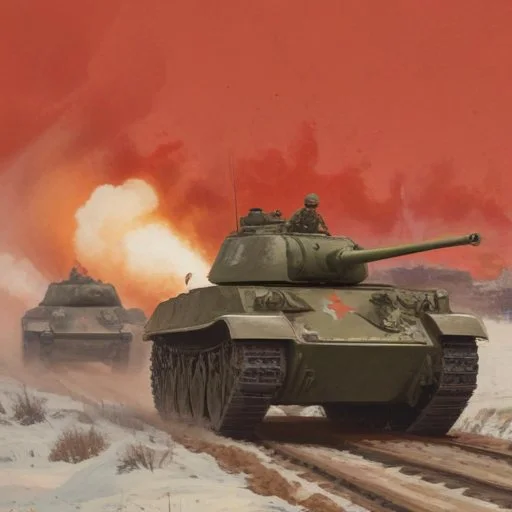
By the summer of 1944, the Soviet Union had gained significant momentum on the Eastern Front, having pushed the German army back from its borders. The Baltic region, including Estonia, remained a key stronghold for the German army, and the Soviet Union sought to crush their grip on the area.
On September 17, 1944, the Soviet troops launched a massive assault on German and Estonian nationalist forces in the Tallinn region. The offensive was spearheaded by the Soviet 2nd Shock Army, supported by the 8th Army and the Baltic Fleet. The Soviet forces were determined to capture the Estonian capital, Tallinn, and pave the way for Soviet domination in the region.
The Tallinn Offensive resulted in significant losses for both the German and Estonian forces. The Soviet Union suffered an estimated 10,000 casualties, while the German army lost around 20,000 troops. The Estonian units fighting alongside the Germans suffered heavy losses, with many of their soldiers either killed or captured.
The capture of Tallinn marked the beginning of a long and tumultuous Soviet occupation in Estonia, which would last until 1991. The Estonian people were subjected to forced Sovietization, including the suppression of their language, culture, and national identity.
The Tallinn Offensive and the subsequent Soviet occupation had a profound impact on Estonian culture and society. The Soviet regime imposed strict control over the media, education, and arts, suppressing any dissent or nationalist sentiment. Estonian literature, music, and art were forced to conform to Soviet ideology, leading to a significant loss of national identity.
However, despite the oppressive environment, Estonian culture managed to survive, with many artists and writers secretly expressing their national pride and resistance to Soviet rule. The Estonian people's resilience and determination played a crucial role in preserving their national identity, which ultimately contributed to Estonia's independence in 1991.
The Tallinn Offensive remains a controversial topic, with many Estonians viewing the Soviet campaign as a brutal occupation rather than a liberation. The Soviet Union's actions during the war, including the forced conscription of Estonian nationals and the suppression of their culture, have been widely condemned.
In recent years, Estonia has made significant efforts to come to terms with its past, including the establishment of the Estonian International Commission for the Investigation of Crimes Against Humanity. The Commission has worked to document and commemorate the atrocities committed during the Soviet occupation, providing a platform for victims to share their stories and receive recognition.
The Tallinn Offensive serves as a testament to the bravery and resilience of the Estonian people, who fought against overwhelming odds to preserve their national identity. The story of Colonel Alfons Rebane, who continued to fight against the Soviet forces even after the fall of Tallinn, is an inspiration to many Estonians.
The legacy of the Tallinn Offensive also serves as a reminder of the importance of preserving national identity and cultural heritage in the face of oppression. Estonia's struggle for independence and self-determination continues to inspire people around the world.
The Tallinn Offensive has been subject to various historiographical interpretations, with different scholars offering distinct perspectives on the event. Some historians, such as David Glantz, have emphasized the military significance of the campaign, highlighting the Soviet Union's strategic victory and the German army's defeat.
Others, like Aadu Must, have focused on the human cost of the war, exploring the experiences of Estonian civilians and soldiers during the occupation. These diverse perspectives have contributed to a richer understanding of the Tallinn Offensive, highlighting its complexity and multifaceted nature.
Recent historiographical trends have sought to incorporate more nuanced and balanced approaches, acknowledging the agency and experiences of Estonian people during the war. This shift in perspective has led to a more comprehensive understanding of the event, moving beyond simplistic narratives of Soviet liberation or German occupation.

The Soviet occupation that followed the Tallinn Offensive had a profound impact on Estonian culture. The Soviet regime imposed strict controls on cultural expression, suppressing any dissent or nationalist sentiment. Despite these repressive measures, Estonian artists, writers, and intellectuals continued to produce work that reflected their national identity and resisted Soviet domination.
The occupation also led to the forced Sovietization of Estonian language and culture, with Russian becoming the dominant language and Soviet ideology pervading educational institutions. This cultural suppression had a lasting impact on Estonian society, eroding national identity and promoting a sense of cultural ambiguity.
In recent years, Estonia has made efforts to reclaim and promote its cultural heritage, recognizing the importance of preserving national identity in the face of historical trauma.
Colonel Alfons Rebane, a prominent Estonian nationalist, played a crucial role in resisting the Soviet occupation during the Tallinn Offensive. Born in 1908, Rebane was a seasoned military officer who had fought against the Soviet Union in the 1940 Winter War.
During the Tallinn Offensive, Rebane led Estonian units against the Soviet forces, demonstrating remarkable bravery and tactical skill. Despite being vastly outnumbered, Rebane's forces inflicted significant casualties on the Soviet army, earning him the respect and admiration of his comrades.
Rebane's courage and determination have become an inspiration to Estonians, symbolizing their struggle for independence and self-determination in the face of overwhelming adversity.
By the summer of 1944, the Baltic region had become a critical theater of operations in the Eastern Front. The Soviet Union sought to drive the German army out of the region, securing a strategic victory and paving the way for Soviet domination.
The German army, however, was determined to maintain its grip on the area, recognizing the region's importance for its war effort. The Baltic region was a crucial supply route for the German army, providing access to vital resources and naval bases.
The Tallinn Offensive must be understood within this broader geopolitical context, as a pivotal battle in the struggle for control of the Baltic region.
The Tallinn Offensive reflected the Soviet Union's strategic interests in the Baltic region. The Soviet government sought to expand its sphere of influence, consolidating its control over Eastern Europe and securing its borders.
The capture of Tallinn marked a significant milestone in the Soviet Union's ambitions, providing a strategic foothold in the region. The Soviet occupation that followed was designed to suppress any nationalist sentiment, promoting Sovietization and ensuring the region's compliance with Soviet directives.
The Tallinn Offensive highlights the Soviet Union's willingness to use military force to achieve its political objectives, illustrating the ruthless pragmatism that characterized Stalin's leadership.