


The Tripartite Pact, a historic agreement between Germany, Japan, and Italy, was signed in Berlin on September 27, 1940, marking a pivotal moment in World War II. This alliance, also known as the Axis powers, united the three most aggressive militaristic nations of the time, declaring their collective ambition to dominate the world.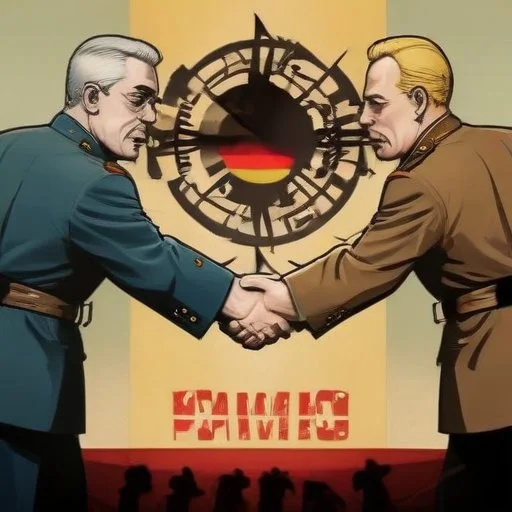
In the late 1930s, Germany, Japan, and Italy were rapidly expanding their territories through aggressive military campaigns. Germany, under Adolf Hitler, had annexed Austria and invaded Poland, sparking the war in Europe. Japan, under Hideki Tojo, had invaded China and was seeking to expand its empire in Asia. Meanwhile, Italy, under Benito Mussolini, had invaded Ethiopia and was looking to create a colonial empire in North Africa.
The Tripartite Pact was signed by three prominent leaders:
The signing of the Tripartite Pact was a culmination of a series of events:
The Tripartite Pact had significant consequences for the world:
The Tripartite Pact had far-reaching cultural and social implications:
The pact created a sense of unity and solidarity among the Axis powers, fostering a sense of nationalism and militarism in each country. It also led to the persecution of minorities, particularly Jews, in Germany and other Axis powers.
The Tripartite Pact was widely condemned by the international community:
The pact was seen as a blatant disregard for international law and a threat to global peace and security. The public perception of the Axis powers was increasingly negative, with many viewing them as aggressors and militarists.
Adolf Hitler famously declared:
"The Axis powers will dictate the course of world history!"
In his memoirs, Joachim von Ribbentrop, the German Foreign Minister, recalled:
"The signing of the Tripartite Pact was a moment of great triumph for the Axis powers. We had created a united front against our enemies, and we were confident of our ultimate victory."
The Tripartite Pact set the stage for the remainder of World War II:
The pact led to a prolonged and devastating war, resulting in massive loss of life and widespread destruction. It also led to the eventual defeat of the Axis powers and the emergence of the United States and the Soviet Union as superpowers.
A visual timeline of the Tripartite Pact:


Did you know?
The Tripartite Pact was a strategic response to the growing threat of the Soviet Union and the United States. Germany, Japan, and Italy sought to create a united front against their perceived enemies, thereby securing their territorial gains and protecting their interests. The pact was also a reaction to the Molotov-Ribbentrop Pact, a non-aggression treaty between Germany and the Soviet Union, which had created an uneasy alliance between the two nations.
In the months leading up to the signing of the pact, Germany, Japan, and Italy had been engaging in secret diplomatic talks, discussing the possibility of a united front against their common enemies. The pact was seen as a necessary step to counterbalance the growing power of the United States and the Soviet Union, which were emerging as superpowers in the aftermath of World War I.
The Tripartite Pact marked a significant shift in the global balance of power, as it created a formidable alliance of aggressive militaristic states. The pact sent a clear message to the United States and the Soviet Union that the Axis powers were determined to assert their dominance in the world.
Benito Mussolini, the Prime Minister of Italy, played a crucial role in the formation of the Tripartite Pact. Mussolini was a charismatic leader who had built a reputation as a strong and ruthless dictator. He was determined to expand Italy's empire and saw the pact as an opportunity to achieve his goals.
Mussolini's involvement in the pact was motivated by his desire to assert Italy's dominance in the Mediterranean region. He saw the pact as a means to counterbalance the growing power of Germany and Japan, while also securing Italy's territorial gains in North Africa.
The Tripartite Pact was a unique alliance of militaristic states, each with its own distinct ideology and expansionist ambitions. Germany, under Adolf Hitler, was driven by a desire for territorial expansion and racial supremacy. Japan, under Hideki Tojo, sought to create a vast empire in Asia, while Italy, under Benito Mussolini, aimed to build a colonial empire in North Africa.
Despite their differences, the three nations shared a common goal: to assert their dominance in the world and challenge the existing global order. The pact was a testament to their ability to put aside their ideological differences and work together to achieve their shared objectives.
The original document of the Tripartite Pact is housed in the German Federal Archives in Berlin. The document is a rare example of a historical artifact that provides a window into the minds of the leaders who shaped the course of World War II.
The document is written in German, Italian, and Japanese, reflecting the multilingual nature of the alliance. It is signed by the three leaders, Adolf Hitler, Hideki Tojo, and Benito Mussolini, and bears the official seals of their respective governments.
The Tripartite Pact had significant environmental implications, as it led to the exploitation of natural resources and the destruction of ecosystems. The war efforts of the Axis powers resulted in widespread deforestation, pollution, and habitat destruction.
The pact also led to the development of new technologies, such as synthetic rubber and oil, which had significant environmental consequences. The war further accelerated the exploitation of natural resources, leading to long-term environmental damage.