


On March 11, 1941, United States President Franklin D. Roosevelt signed the Lend-Lease Act into law, marking a pivotal moment in World War II. This landmark legislation enabled the United States to supply military equipment and supplies to countries fighting against the Axis powers, without requiring immediate payment, thereby bolstering the Allied forces and shifting the balance of power in the war.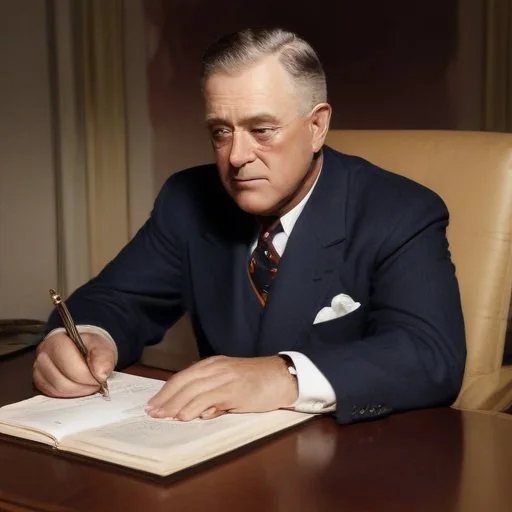
The Lend-Lease Act was a bold departure from the United States' initial policy of neutrality in the war. By providing critical aid to countries like the United Kingdom, the Act signaled a significant shift in America's role in the conflict, from passive observer to active participant.
The idea of lend-lease was first proposed by President Roosevelt in a speech to Congress on December 17, 1940. He argued that the United States had a moral obligation to support the democracies of Europe and Asia, which were fighting for survival against the Axis powers. The proposal was met with skepticism by some, who feared that it would lead to American involvement in the war. However, Roosevelt's persuasive rhetoric and the dire circumstances of the time ultimately won over Congress, and the Act was passed on March 11, 1941.
President Franklin D. Roosevelt was the architect of the Lend-Lease Act, but he was supported by a team of key advisors and politicians who played a crucial role in its passage. These included:
The Lend-Lease Act had far-reaching consequences for the outcome of World War II. Some of the key outcomes and impacts include:
The Lend-Lease Act had a profound impact on American culture and society. It marked a turning point in America's isolationist policies, signaling a new era of international engagement and cooperation. The Act also helped to galvanize public opinion in support of the war effort, as Americans began to see themselves as part of a global community fighting against a common enemy.
While the Lend-Lease Act was widely supported by the American public, it was not without controversy. Some critics argued that it was a step towards American involvement in the war, while others felt that it was a necessary evil to support the Allied forces. Despite these criticisms, the Act remains one of the most significant and enduring legacies of President Roosevelt's presidency.
President Roosevelt's words on the Lend-Lease Act continue to inspire and motivate to this day. Some of his most memorable quotes include:
"We must be the great arsenal of democracy." "We shall fight on the beaches, we shall fight on the landing grounds, we shall fight in the fields and in the streets..." (spoken in support of the Act)
The Lend-Lease Act remains one of the most significant and enduring legacies of World War II. It marked a turning point in America's role in the war, and paved the way for a new era of international cooperation and engagement. Today, the Act serves as a powerful symbol of American leadership and commitment to democracy and freedom.
Harry Hopkins, a close advisor to President Roosevelt, played a crucial role in drafting the Lend-Lease Act. Hopkins was a social worker and politician who had previously served as the head of the Federal Emergency Relief Administration. Despite his lack of foreign policy experience, Hopkins' passion for social justice and his ability to connect with Roosevelt made him an indispensable ally in shaping the Lend-Lease Act.
Hopkins was instrumental in convincing Roosevelt to propose the Act, and he worked tirelessly to build support for it among Congressmen. His commitment to the cause and his persuasive abilities helped to sway many skeptics, ultimately contributing to the Act's passage.
The Lend-Lease Act marked a significant shift in American cultural identity, as the country began to see itself as a global leader and defender of democracy. The Act symbolized a new era of international cooperation and engagement, and it helped to galvanize public opinion in support of the war effort.
The Act also had a profound impact on American art and literature, as artists and writers began to explore themes of internationalism and collective security. The Lend-Lease Act served as a powerful symbol of American leadership and commitment to democracy, inspiring a new generation of artists and writers to explore the role of the United States in the world.
The Lend-Lease Act marked a turning point in American cultural identity, as the country began to see itself as a global leader and defender of democracy.The Lend-Lease Act was passed at a critical moment in World War II, as Nazi Germany was rapidly expanding its territorial control across Europe. The Act was a direct response to this aggression, as the United States sought to support countries fighting against the Axis powers.
In the months leading up to the Act's passage, Germany had invaded Poland, Denmark, Norway, and the Netherlands, and was preparing to launch an invasion of Britain. The Lend-Lease Act was a bold move by the United States to counter this aggression, and to demonstrate its commitment to supporting democratic governments around the world.

The Lend-Lease Act was a costly investment for the United States, with a total value of over $50 billion (approximately $800 billion in today's dollars). However, the Act ultimately paid dividends, as it helped to stabilize the global economy and paved the way for the Allied victory.
The Act also helped to stimulate American industry, as manufacturers began to produce goods for export to countries fighting against the Axis powers. This led to a surge in economic growth, as American businesses benefited from the increased demand for their products.
The Lend-Lease Act was a costly investment for the United States, but it ultimately paid dividends in the form of a stronger economy and a more secure world.The Lend-Lease Act was a divisive decision that sparked intense debate among American politicians. While many saw the Act as a necessary step to support democratic governments and counter Nazi aggression, others argued that it was a step towards American involvement in the war.
Despite these criticisms, Roosevelt remained committed to the Act, and he worked tirelessly to build support for it among Congressmen. In the end, the Act was passed with a significant majority, but it remained a controversial decision that would continue to shape American politics for years to come.