


In the tumultuous summer of 1940, as World War II ravaged Europe, France's Third Republic dissolved into the abyss of surrender, paving the way for the Vichy France regime. On July 10, 1940, Marshal Philippe Pétain, the aged war hero, took the reins as Chief of the French State, marking the beginning of a dark chapter in French history.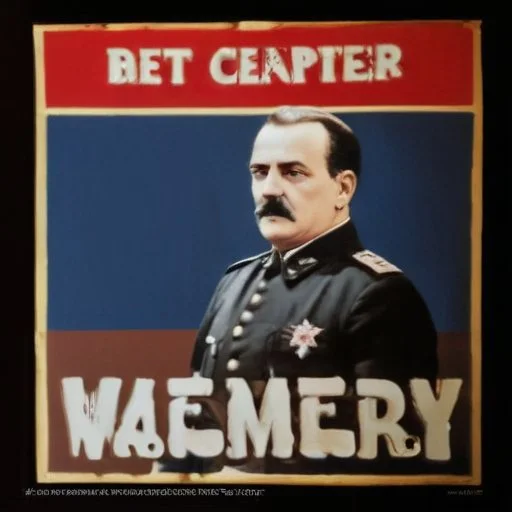
The swift German invasion in May 1940 left France reeling. As the French army crumbled, Pétain, a national hero from World War I, emerged as a savior figure. On June 16, 1940, Pétain became Prime Minister, and within weeks, he negotiated an armistice with Germany, effectively dividing France into two zones: the Occupied Zone, controlled by the Nazis, and the so-called "Free Zone," led by Pétain's authoritarian government from the city of Vichy.
As Chief of the French State, Pétain wielded absolute power, dissolving the National Assembly and the Senate, and assuming legislative and executive powers. He implemented a series of decrees, aimed at restoring order and stability, but ultimately, these measures stifled freedom and democracy. Pétain's government collaborated with the Nazis, enforcing anti-Semitic laws, suppressing dissent, and hunting down enemies of the state.
Pétain's regime remained in power until August 1944, when the Allies liberated Paris. The once-venerated war hero was tried and convicted of treason in 1945, sentenced to life imprisonment. His legacy, tainted by collaboration and authoritarianism, serves as a cautionary tale of the dangers of sacrificing freedom and democracy in the face of uncertainty and fear.
The Vichy regime's dark legacy continues to influence French politics and society. The Gaullist movement, led by Charles de Gaulle, resisted Pétain's government and the Nazi occupation, shaping France's post-war identity. The trauma of Vichy France persists, a reminder of the devastating consequences of ideological extremism and the importance of protecting democracy and human rights.
"France, for her part, will follow the road that I shall show her, the road of honor, the road of duty, the road of discipline..."
— Philippe Pétain, June 22, 1940
Pétain's rise to power and the Vichy regime's collaboration with Nazi Germany sparked intense controversy and debate. Critics argue that Pétain's actions were necessary to prevent complete German annihilation, while others condemn his government's complicity in human rights abuses and the persecution of minorities. As France continues to grapple with its troubled past, the Vichy regime serves as a poignant reminder of the dangers of extremism and the importance of upholding democratic values.
While Vichy France's collaboration with Nazi Germany is uniquely reprehensible, it is not the only instance of a government acquiescing to an occupying power. A comparative analysis of Vichy France, Fascist Italy, and Imperial Japan reveals distinct yet troubling parallels. Each regime leveraged nationalist sentiment, manipulated public opinion, and suppressed dissent to maintain power.
In Italy, Benito Mussolini's fascist regime capitalized on widespread discontent and economic instability, eventually allying with Nazi Germany. Similarly, Imperial Japan's military expansion and nationalist ideology led to its involvement in World War II. Vichy France, however, stands out for its particularly swift and comprehensive capitulation to German demands.
These authoritarian regimes' shared modus operandi – propaganda, censorship, and intimidation – underscores the dangers of unchecked power and the erosion of democratic institutions. By examining these dark parallels, we can better understand the circumstances that led to Vichy France's rise and the devastating consequences that followed.

Born on April 24, 1856, Philippe Pétain was a career military officer who rose to prominence during World War I. His leadership during the Battle of Verdun, where he earned the nickname "The Lion of Verdun," solidified his reputation as a national hero.
During the interwar period, Pétain's conservative and authoritarian leanings became increasingly pronounced. He openly criticized democracy, advocating for a stronger, more centralized state. This ideological shift laid the groundwork for his eventual collaboration with Nazi Germany.
A nuanced understanding of Pétain's life and career reveals a complex, if flawed, personality. His early heroism and later authoritarianism serve as a cautionary tale about the dangers of unchecked power and the corrupting influence of ideology.
The collapse of France's Third Republic and the subsequent establishment of Vichy France must be considered within the broader context of World War II. Germany's swift victories in Europe, Italy's fascist aggression, and the Soviet Union's expansionist policies created an environment in which authoritarian regimes could thrive.
The British Expeditionary Force's withdrawal from Dunkirk and the United States' initial neutrality further weakened France's position, paving the way for Pétain's authoritarian government. Understanding the complex web of alliances, rivalries, and strategic considerations that defined World War II is crucial to grasping the rise of Vichy France.

The Vichy regime's collaboration with Nazi Germany had far-reaching environmental consequences. As the occupying power, Germany exploited France's natural resources, including coal, iron, and timber, to fuel its war machine.
The regime's authoritarian grip also led to the suppression of environmental concerns, allowing industrial activities to flourish unchecked. The long-term effects of these policies can still be seen in France's environmental landscape, with many regions struggling to recover from the ecological devastation wrought during this period.
Historians continue to grapple with the complexities of Vichy France, debating the extent to which the regime was a puppet government or a willing collaborator. Some argue that Pétain's government was a necessary evil, protecting France from total German annexation.
Others contend that the regime's complicity in human rights abuses and its authoritarian nature render any such justification moot. These debates underscore the ongoing significance of Vichy France as a historical event, continuing to shape French identity and inform contemporary discussions on democracy, power, and morality.