


The Erzurum Offensive, launched by Imperial Russia in 1916, marked a pivotal moment in the Caucasus Campaign of World War I, culminating in the crushing defeat of the Ottoman Empire's Third Army. This daring operation, led by General Nikolai Yudenich, showcased the Russian Army's superior training, artillery, and winter gear, ultimately shifting the balance of power in the region.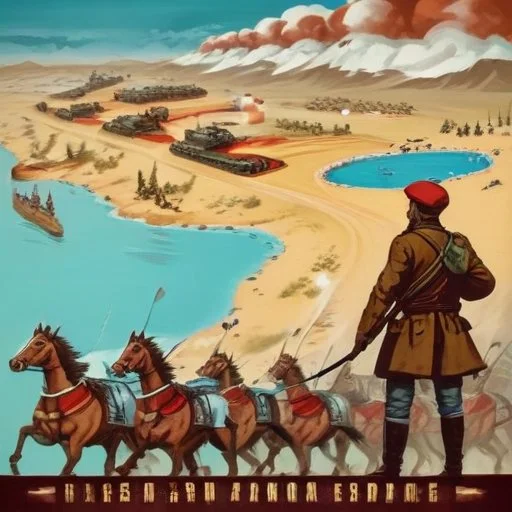
The Caucasus Campaign, which began in 1914, was a peripheral theatre of World War I, pitting the Ottoman Empire against the Russian Empire. Initially, the campaign was marked by a series of seesaw battles, with both sides suffering heavy casualties. However, by 1916, the Ottoman Empire's fortunes had begun to wane, providing the Russian Army with an opportunity to strike a decisive blow.
The Russian Army's success in the Erzurum Offensive can be attributed to its superior training, which enabled troops to adapt to the harsh winter conditions of the Caucasus region. The Russian artillery, renowned for its accuracy and firepower, played a crucial role in softening up the Ottoman defenses. Furthermore, the Russian Army's winter gear, designed to withstand the sub-zero temperatures and snow, allowed troops to maintain a high level of mobility and effectiveness.
The Erzurum Offensive commenced on January 10, 1916, as Russian forces launched a surprise attack on the Ottoman Empire's Third Army, stationed in the Erzurum region. The Russian Army's initial success was swift, with troops capturing key cities and infrastructure, including the strategic Erzurum fortress. The Ottoman Empire's defenses, weakened by a series of setbacks, proved no match for the Russian Army's might.
The Erzurum Offensive's success had far-reaching consequences, including:
The Erzurum Offensive's impact extended beyond the battlefield, influencing cultural and social dynamics in the region. The campaign:
The Erzurum Offensive was not without its controversies, with some critics accusing the Russian Army of engaging in brutal tactics and human rights abuses. However, the campaign was widely hailed as a triumph by the Russian public, boosting morale and reinforcing the notion of Russia as a great power.
The Erzurum Offensive's legacy can be seen in the subsequent Russian advances in the Caucasus region, ultimately contributing to the Ottoman Empire's defeat in World War I. The campaign also served as a blueprint for future military operations, with the Russian Army's innovative tactics and strategies influencing military doctrine in the decades to come.
The Erzurum Offensive remains an important chapter in the history of World War I, showcasing the Russian Army's military prowess and highlighting the significance of the Caucasus Campaign in the war's outcome.
The Erzurum Offensive is often compared to the Battle of Sarikamish, another pivotal conflict fought in the Caucasus region during World War I. While both battles resulted in Russian victories, they differed significantly in terms of tactics and outcomes. The Battle of Sarikamish was a more conventional battle, with both sides engaging in a series of frontal assaults. In contrast, the Erzurum Offensive was a masterpiece of maneuver warfare, with General Yudenich using clever feints and flanking movements to outmaneuver the Ottoman defenders.
A comparative analysis of the two battles reveals that the Erzurum Offensive was a more decisive victory, with the Russian Army inflicting significantly higher casualties on the Ottoman Empire. Additionally, the Erzurum Offensive marked a turning point in the war, as it led to the capture of key cities and infrastructure, and paved the way for further Russian advances in the region.

Enver Pasha, the Ottoman Empire's Minister of War, was a complex and enigmatic figure who played a crucial role in the events leading up to the Erzurum Offensive. Born in 1881, Enver was a charismatic and ambitious officer who rose rapidly through the ranks of the Ottoman military.
Despite his polished exterior, Enver was known for his ruthlessness and willingness to take risks. He was a key architect of the Ottoman Empire's military strategy during World War I, and his decisions often had far-reaching consequences.
In the aftermath of the Erzurum Offensive, Enver's reputation suffered a severe blow. He was criticized for his handling of the campaign, and his popularity among the Ottoman people began to wane.
The Erzurum Offensive had a profound impact on Russian culture and identity in the Caucasus region. The campaign was seen as a symbol of Russian strength and resilience, and it helped to galvanize nationalist sentiment among the Russian population.
In the years following the offensive, there was a surge in cultural production, including literature, art, and music, that celebrated Russian heroism and sacrifice. The campaign also led to an increase in investment in education and infrastructure in the region, as the Russian government sought to solidify its presence in the Caucasus.
Today, the Erzurum Offensive is remembered as a pivotal moment in Russian history, and it continues to be celebrated and commemorated in the region.
The Erzurum Offensive took place against the backdrop of a complex and rapidly shifting geopolitical landscape. The Caucasus region was a key sphere of influence, with multiple powers vying for control.
In the years leading up to the campaign, the Russian Empire had been expanding its influence in the region, while the Ottoman Empire had been struggling to maintain its territorial integrity.
The Erzurum Offensive marked a significant shift in the balance of power, as the Russian Empire emerged as the dominant force in the Caucasus. This had far-reaching implications, as it led to a re configuration of the regional power dynamics and paved the way for further Russian advances.
Historians have long debated the significance of the Erzurum Offensive, with some viewing it as a decisive victory that marked a turning point in the war, while others have downplayed its importance.
One school of thought argues that the campaign was a masterpiece of military strategy, with General Yudenich using innovative tactics to outmaneuver the Ottoman defenders. Others have suggested that the victory was more a result of Ottoman incompetence than Russian brilliance.
Despite these debates, the Erzurum Offensive remains an important chapter in the history of World War I, and it continues to be studied by historians and military strategists today.